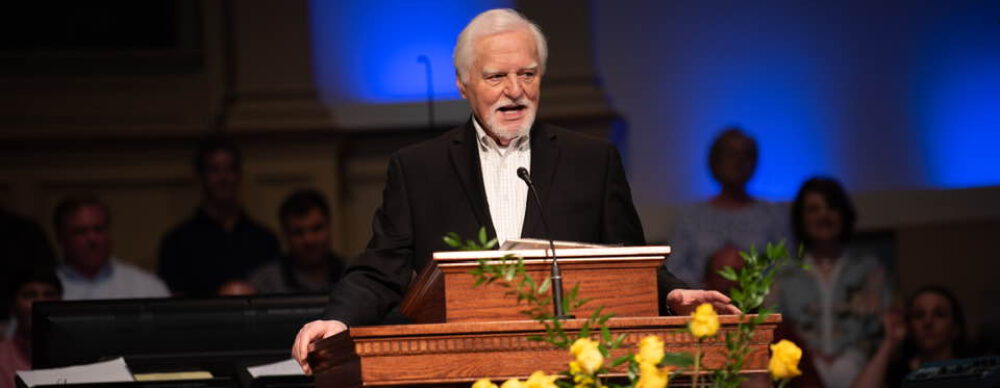
No one is more surprised than I that the Lord has me leading all these deacon training conferences and retreats these days.
I love deacons and treasure the relationship with quite a few from the six churches I served over four decades.. My oldest son is the chairman of deacons in Mobile Alabama’s “West Mobile Baptist Church.”
But I have a few stories about some deacons.
I carry scars from battles with deacons. I encountered a dozen or so along the way with mental health of the worst kind, some with stunted and deformed theology, and one or two who thought they were rightfully entitled to rule over the universe. This website carries many articles on the ministry of deacons. Frequently, those painful experiences and harshest collisions produced the best lessons and, of course, the most interesting stories.
This list of principles is not something set in stone, handed down from Sinai, but represents the gist of the conferences I hold. See what you think.
1. PRAYER: Nothing you will ever do is more about faith than praying.
Our Lord said, “My house shall be a house of prayer.” Everything we do should be undergirded by strong prayers, seeking God’s will and His power, protection, and provision. And we’re not just talking about handing Him our laundry list, but praying prayers of faith, asking God for what we believe to be His will and doing so in Jesus’ name, for Jesus’ sake, by Jesus’ blood.
Prayer is need-driven and faith-powered. The needs will drive you to your knees, but faith will connect you with the Heavens.
Deacons should be the best pray-ers in the church.
2. CHANGE: If you do not like change or cannot deal with it, you’re going to have a tough time following Jesus.
Salvation involves a massive change in one’s life–from death to life, dark to light, hell to heaven. “If anyone is in Christ, he is a new creation.” But the change has only just begun at that moment. Thereafter, the process continues for the rest of our earthly lives, what Scripture calls “sanctification.” Finally, at the return of Christ, we read, “We shall be changed.” That final change is called “glorification.”
Anyone wanting to set the status quo in stone and keep it as it is will soon find Himself resisting the Lord Jesus Christ who said, “I make all things new.”
If I’m any judge of anything, the Holy Spirit is trying to do a new thing in your life even today. We do well when we cooperate with Him.
Deacons should be the change agents in the church.
3. CONFLICT: Every church and every Christian needs a little conflict from time to time.
Conflict is like what my dad used to say about his six children: “I wouldn’t take a million dollars for one; I wouldn’t give you a dime for another.”
Looking back on the struggles you came through, you are able to see a hundred things: the hand of God in all the events, the working of the Holy Spirit in the timing and the people, the plan of the Lord in how He worked things out, the provision He supplied (often just in the nick of time), and the lessons He sent. The Psalmist said, “It is good that I was afflicted that I might learn to fear the Lord.”
Christians without any opposition or trials in life become like a human body that has never known resistance: all flab. Deacons should be able to handle change.
4. SERVANTHOOD: A servant works behind the scenes to make others successful.
At a concert, there are people running around wearing t-shirts which read “Event Staff” on the back. These are not the headliners, not the stars whom you came to see and hear. But without them, nothing would happen. They clean the building, put towels in the bathrooms, arrange the lighting, run the sound, everything. And yet, you did not come to see them and you never learn their identities. They work in the background.
In Luke 17:7-10, our Lord taught that we should tell ourselves, “I am only an unworthy servant, just doing my job.” Say that to yourself again and again, and it will head off a zillion ego problems.
Deacons will not be the only servants in the church, but they should excel in this art.
5. DEACONS: The word means servant and nothing more; if you are not willing to work in the background to support the program, please decline the offer when it comes.
“Diakonos” comes from two Greek words: “dia” meaning “through” and “konos” meaning “dust.” Servants cut across the courtyard, getting their feet dirty, as they did household chores. Today, deacons are servants who don’t mind doing the dirty work, getting their “feet wet or hands dirty,” as we say.
One Sunday night late, a pastor friend got an emergency phone call about a crisis involving a church member. In his car, he called a deacon. As he began telling the deacon where he was going, the man cut him off and said, “I’m out the door.” My friend Pastor Mike said, “He did not say ‘How can I help?’ or ‘Tell me what you want me to do’ or even ‘I’ll be praying.’ It was ‘I’m out the door.’” Mike says, “Now that is a deacon!” I completely agree.
6. PASTORS: The Holy Spirit puts the pastors as overseers of the Lord’s church but not as independent contractors. They are responsible and accountable. (See Acts 20:28)
Hebrews 13:17 says members are to submit to their leaders. But, that verse also says the leaders will give account to God for those members. (I tell pastors this scary scenario is why God has to call people as pastors; no one would willingly volunteer for such a heavy assignment.)
7. CHURCH: Since the church is the Body of Christ, whatever we do to it, we’re doing to Jesus; however we treat the church, Jesus takes personally. (Matthew 16:18; Ephesians 5:25)
People ask me, “Is the church the people or the building and grounds?” They know the answer to that (people). However, since the people meet in that location and it comes to represent so much of who we are and what we are about, what we do for the building–cut the grass, vacuum the carpets, clean the toilets–we are doing for Jesus also. There is a sense in which helping the needy of any description is ministering to Jesus, but in a far deeper sense, we do that when we take care of His disciples. Again and again, when the Lord sent His disciples out to minister He told them, “Whoever receives you, receives me. Whoever rejects you is rejecting me.” (See the end of Matthew 10.)
8. UNITY: Few things matter more to the Lord than that His church remain unified. Everything about its mission depends on it being a unit. Jesus prayed that His followers would be unified “so that the world may believe” (John 17:22). That’s a major point of unity. There are other reasons for it: When the church is unified, the work gets done quicker, it’s easier, relationships are smoother, outsiders are drawn in, the Holy Spirit is enabled to do His work and the Lord is honored.
Paul said Christ is not the author of division. I submit that many of our leaders of the past have put little premium on the need for unity in the church. I’ve pastored deacons who insisted “I have a right to get up and oppose recommendations” in church business meetings, even after those motions had been hammered out in their own meetings. When I said the purpose of dealing with those issues in deacons meetings was to present a well-thought out recommendation to the church in harmony, they protested that as Americans, “I have my rights.” And that, my friends, is what you get when you put immature Christians on deacon boards.
Anyone who insists on “getting everything I’m entitled to” in a church of Jesus Christ needs reminding that if he did, he would be in hell.
9. SUBMISSION: The key to unity is God’s people submitting to one another for the good of the cause; Only the strong can submit, the weak and immature will insist on getting their way. (Ephesians 5:21)
I asked some military people why saluting officers was law. Is it because the officers are better than you? stronger than you? wiser than you? and so forth.
Some answered, “If you were allowed to choose whom you would salute and who you wouldn’t, you would end up choosing who you would obey and who you wouldn’t, and the training would break down. When you faced the enemy, you would be in big trouble.” Submission is a big deal in the military.
Another said, “It’s for the common good.” When we submit to those who are “over us,” it makes the work more efficient, makes the plan work as it should, settles a hundred ego problems before they start, and prepares us to face the enemy.
10. FELLOWSHIP: 95 percent of the first-time visitors who walk into your church are not looking for a great sermon or choir program, but for fellowship; if your people love the Lord and one another and welcome outsiders into their midst, you are going to reach a lot of people for Jesus.
Hospitality is a huge part of a church’s fellowship. Welcoming newcomers into our midst and assimilating them into the fellowship never happens without planning, and needs constant monitoring. Churches–like every other organization on earth–slide into cliques and introverted group without someone keeping the pressure on so the members will keep looking upward toward Jesus and outward toward the world to which they were sent. But let them begin looking inward at one another and they soon separate off into little clannish groups from which everyone else is excluded.
11. COURAGE: If you do not have the heart to face a wrongdoer in your congregation–or on your leadership team–please decline when asked to take a leading role in your church. Only the courageous can lead the way.
Courage does not come easily for some. When Joshua took over for Moses (after sitting on the bench for 40 years!), again and again he had to be told “be strong and courageous!” (Three times in late Deuteronomy and four times in Joshua 1.) Apparently, Timothy had a problem of the same nature. Paul kept telling him to “let no one despise your youth” and to be strong and forceful. Speak up. Stand up.
Sometimes, the one deacons have to confront is the misbehaving pastor himself, and that will be the hardest thing they’ll ever have to do. At other times, it’s one of their own number they will have to deal with. If they cannot do that, they should resign and let someone else lead out.
12. FENCES. Everyone must guard himself against the various foes that threaten to rob us of our joy in the Lord, our usefulness in the kingdom, our relationships with our brothers and sisters, and our leadership of our home.
Fences must be erected, must be guarded, and must be constantly repaired. We must “avoid the appearance of evil” even, meaning we should protect ourselves against anything we do being misinterpreted so far as we are able.
“He who serves as a deacon well obtains a great standing and high confidence” in the Lord’s work.