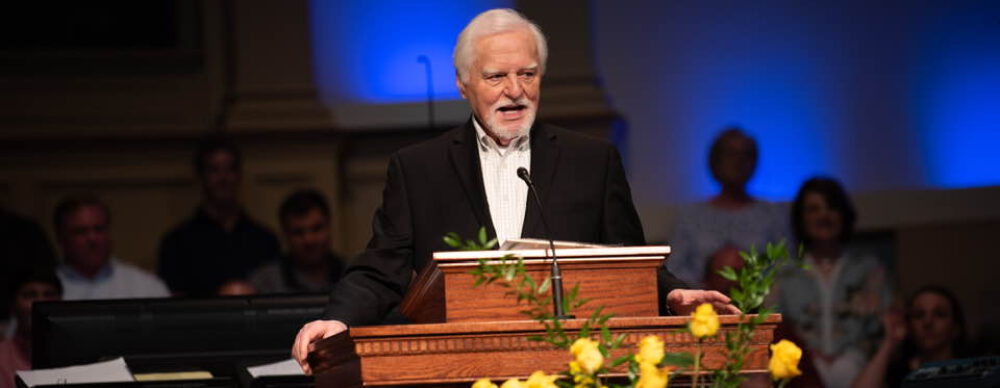
You can see that the church is investing in their retirement.
Here’s my story. It has made a world of difference for me.
In the 1970s, our denomination woke up. Leaders realized churches needed some guidance in preparing for their ministers’ retirement. So, they held conferences around the country and invited churches to send representations. I was serving First Baptist Church of Columbus, MS, a county seat town with an Air Force base and a woman’s university. The pastor before me had logged 26 years and retired with his wife to their hometown of Humboldt, Tennessee. I was in my mid-thirties and frankly, had not given the first thought to retiring some day.
My minister of education Bill Hardy attended the conference. The leadership suggested churches invest an amount equivalent to ten percent of the ministers’ salary in his retirement. The agency in charge of our investments was called The Annuity Board of the SBC. At some point in years following, it became Guidestone and they began inviting non-Baptists to invest with them. These days, they control a whopping amount of money for many thousands of God’s servants.
When I left Columbus, the next church–the FBC of Charlotte, NC–did the same 10%. Then, the next church–the FBC of Kenner, LA (metro New Orleans)–did not due to a church split 18 months earlier and heavy indebtedness. Eventually, they put 1.5% into the retirement fund. (Regrettably, I do not recall what we did for the other ministers and staff. I hope we were faithful.) And fourteen years later, when I became DOM for the Baptists of metro New Orleans, they once again invested 10% into my retirement.
So, here’s what happened.
I retired in June of 2009. I was 69 years old. And I got some awful advice. Someone at Guidestone called to suggest I take a 20-year annuity. “It pays 6 % now, but it’s about to drop to 3%,” he said. What that means is that for 20 years I would receive an amount equal to six percent of my investment total. And, it would end after those 20 years were up.
“I don’t think so,” I said.
My account was invested in what Guidestone called a medium-aggressive fund. So, I left it there. And filled out the papers to receive a monthly stipend of $2,000 as a housing allowance. And nothing more. Twenty-four thousand a year.
It was the best decision ever.
These days–seventeen years later–I’m still receiving $24,000 annually–and every few years, as the account builds, I withdraw enough to buy a new car. I’ve done that four times now, That is, I have paid cash for the new car, out of my retirement fund. And the fund total is still far more than it was when I retired.
In the year 2029 I will have logged two decades in retirement. Twenty years. And I’m still reaping the benefits of decisions made by churches long ago.
Oh, and yes, I receive a monthly check from Social Security. And many churches where I preach, magazines I write for, and agencies for which I do cartoons–they all pay me a little. It’s not much more than my expenses, but I need to include it here.
My counsel to you
–One. Find out what your church is doing to invest in your pastor and ministerial staff in their retirement years. And if someone says “They’re too young to worry about that,” my response is, “This is the very time to start!”
I’ve heard that Albert Einstein said the greatest miracle of the ages is the miracle of compounded interest. Whether he did or not, I have no idea. But it’s still a truth.
So, ask your bookkeeper or finance chair. If they have no records of money going for this, your church isn’t doing anything. And it should.
–Two. Find out if your denomination has an agency which assists and advises ministers on these matters. Southern Baptists do. Every state convention office will have someone on staff who does this.
That person will be glad to hold a conference in your area in which churches send financial leaders.
–Three. You give some leadership to this. Once a conference is set up, start contacting churches to send representatives.
–Four. Ideally, you want churches to do ten percent each year above and beyond the salaries of the ministers. That is, they do not take this from the minister’s pay. No one can handle that kind of sudden decrease. So, churches may have to start small, with 1 percent or 2, and increase it gradually.
–Five. But the churches will need to commit themselves to doing this. Leadership changes over the years and the finance chair this year may be replaced by someone who sees things differently. So, best to have the church vote to do this, and then for leadership to stay on top of it until this becomes the established practice for your church.
–Six. What about the rest of the staff, the office and custodial staff? Answer: Anyone employed by the church is eligible. In fact, a person can participate with Guidestone out of his/her own pocket even if the church has not decided to do so.
Now.
I’m out of my league here. I’m a preacher and cartoonist and writer, not a financial adviser. So, I’ll leave it here.
There are plenty of other financial programs. There are Roth IRAs and such. Other denominations have their own annuity programs. I’m merely suggesting you see if your church is investing in the future retirement of your ministers.
I’m remembering something that happened over a half century ago. The Social Security Administration announced that ministers could opt out of SS if they wished. And some of my friends did. “Man, who cares?” someone said. And another said, “Jesus will be back before I retire.” But here we area, all these years later. And they are having to figure out how to finance their retirement on a lot less than they could have.
I tell ministers to be smart here.
I hope you will help them do that. Thank you in advance.
I’m blessed today because of some decisions made by God’s people in the 1970s.
My own situation involves managing complex retirement funds. Sometimes the required legal steps differ significantly based on local statutes.