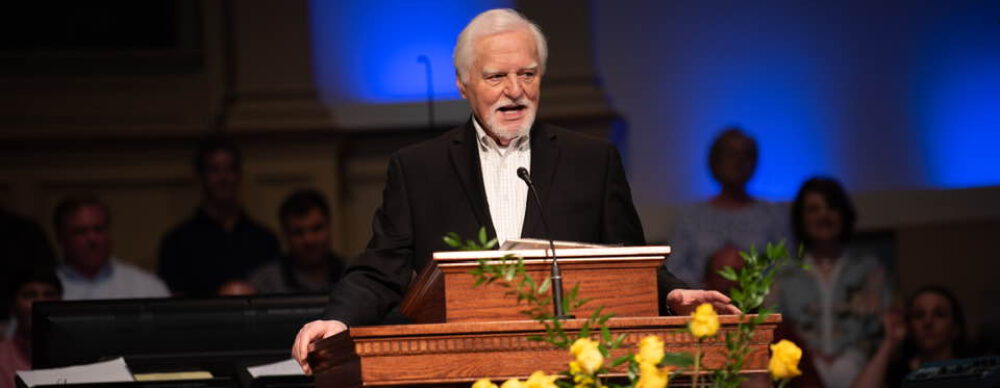
“God was well-pleased through the foolishness of preaching to save those who believe.” (I Corinthians 1:21)
On Facebook, I asked the question, “How do preachers burden their hearers and undermine their own effectiveness?” The answers poured in.
Now, we start with a few assumptions. First, every comment came from someone who either is a preacher or loves them. Second, let’s admit that no minister preaches as well as he would like. We would all love to improve.
So, anyone for whom this is not the case may get up and leave the room now. Nothing that follows will pertain to you.
A full generation after I began pastoring, I was overcome by an intense need to improve my preaching effectiveness. Google my name with “I prayed for my preaching and got an answer” and see how that turned out.
Here then are ways preachers burden our congregations, according to the experts on the subject, the preachers themselves.
1) The sermon has multiple points with sub-points.
The sermon which seems to go on and on with its points and sub-points is hard to follow. The hearer loses himself/herself in details and the big picture gets crowded out by all the undergrowth.
Young, beginning preachers seem to be the primary offenders here. They try to do too much in their half-hour and end up doing far less than they could have. They bring in every pertinent text and answer every possible objection. They literally bury their people under points and principles and lessons.
Haddon Robinson popularized the “one big idea” in preaching, which calls for the preacher to hone his focus to one central theme and build everything in and around that. This encourages the minister to avoid side trips, detours, and complexities, anything that detracts from the main message.
Clarity is everything.
2) We deliver sky-scraper sermons (one story on top of another).
I am a lover of a good story. When Austin Tucker wrote The Pastor as Story-Teller, he had me from the title. Then, when he invited me to read the manuscript in advance and included one of my stories, he became my best friend forever. (Buy it used online.)
A well-placed story that is “just right” can take an average message and make it forever memorable.
The preacher who smugly resists using stories because “I just preach the Word” might want to reconsider. After all, Scripture says Jesus never preached without telling stories (Mark 4:34).
That said, however, we must not give our people too much of a good thing. The story should introduce or bring together, illustrate or drive home the point of the sermon. It should not become the point of the sermon. Story after story–even great unforgettable ones–cloud the subject and bury the listener under too much “stuff.”
3) We become overly scholarly.
When I was in college and beginning to grow spiritually, I loved it for the preacher to tell us the Greek word for this or the Hebrew word for that.
But not everyone feels that way. Some people roll their eyes impatiently and practically hold their breath until the preacher gets past what they see as that little display of oneupsmanship. The pastor thinks he’s helping the congregation, and actually may be blessing several . But the overwhelming majority are ready to get into something that speaks to them.
The smarter a speaker is, the clearer he can communicate.
4) We give the hearers nothing practical.
Harry Emerson Fosdick is credited with telling preachers, “No one ever comes to church wondering whatever happened to the Jebusites.”
Those of us who love the details of history and the finer points of Bible exposition should keep this in mind. The people filling the auditorium, who are giving you their undivided attention for a half-hour or more, have come to church for a hundred reasons–worship and fellowship being toward the top–but they will leave frustrated if the message does not give them some practical pointer on living for Jesus in a fallen world.
This perhaps more than anything else accounts for the popular success of preachers like Joel Osteen. Regardless what you think of him or his theology, give him credit for being an excellent communicator and for leaving his audience with specific things to do once they leave the arena.
5) We overlook lots of great stopping places.
The preacher has held our attention for 20 or 25 minutes. He has really connected with the people, he has made his point and driven it home perfectly. Now is the ideal time to send us home on a high note. Instead, he drones on and on. He thinks of something else to add, perhaps a story he left out of an earlier point. He belabors the application. He tries to herd us toward the public invitation but keeps stalling as though he’s afraid no one will respond. So, he talks us to death.
The congregation begins to fidget. They know the sermon is over. In fact, everyone in the room knows it except the man behind the pulpit.
One of the hardest lessons for young preachers to learn is when the sermon ends, sit down. I guarantee you that doing so will impress many in the congregation better than any insight the message delivered.
6) The focus of the message is all over the place.
I’m guilty of preaching pointy-headed sermons. It’s far easier than you might think. Your text is a story in the Bible that lends itself to numerous applications. Because you love this story–and in your study you came across some great insights that have nothing to do with the central thrust of your message–you feel that to leave out any of its lessons and principles would be shortchanging your people.
So, you tell them everything you ever learned about Bartimaeus, the blind beggar of Jericho (Mark 10 and Luke 18), or the Gadarene demoniac (Mark 5), or the conversion of Saul of Tarsus (Acts 9, 22, and 26). When church is over, all anyone can recall about the sermon is the name of the main character you preached about. If there was “one big idea” in the story, it was lost in the forest of points and sidepoints.
Is there a place for such a message? Yes. In an informal setting where you and others are studying the Word open-endedly, deal with everything. When there is no attempt to build a unified lesson on a single theme, you and the class want to hear all that text has to say. From the others in the room, there is give and take, questions and answers, contributions and comments.
In a church sermon where there is almost no direct audience participation, the burden is on the preacher to keep matters clear, his principles relevant, his language focused, and the audience with him.
7) We take alliteration to the extreme.
Your sermon has 5 points and they all start with the letter P. Or seven points, all of them beginning with the letter R.
Why?
“It makes it easier for the congregation to remember,” a preacher says.
No, it doesn’t. It’s actually a distraction. Even a silliness.
There may have been a time–may have been!–when outlining sermons was made simpler and more memorable that way. But it is long past. These days, your people are puzzled at this little quirk of preachers, making all the bones of the sermon’s body identical.
In fact, outlines made up of words like “the principle, the power, the place, and the people,” are useless. Even when church members are able to remember these words the next week, they still don’t have anything. Outlines are more effective when they embody positive principles and make full statements.
8) We’re too wordy.
A friend accused preachers of “circumlocution.” I had to look up the word. It means talking a subject to death. I’ve done that.
Seven-year-old Holly Martin turned to her mom in church one day and asked about something I was belaboring from the pulpit: “Mother, why does Doctor Joe think we need this information?”
What a great question! Thank you, Holly.
Every preacher ought to be stopped halfway through his message and made to answer that question!
Someone told me his grandfather once said to a young preacher, “Son, you ran out of soap but kept lathering!”
The teacher of preachers par excellence, Calvin Miller, now in Glory, would encourage ministers to take a central idea of the sermon, and then make every point relate to it. One idea, many aspects.
Looking over this article, I’m probably being too wordy. For one thing, 13 points is too many. And a paragraph on each should be enough. (In defense, let me say that writings are different from sermons. In a piece like this, you can quit reading at any time, get up and do something else, and come back to it later. Try that in a sermon.)
9) We rely too heavily on PowerPoint and those fill-in-the-blank outlines.
I’ve seen pastors plaster whole paragraphs of quoted material over the screen. The typical worshiper is overwhelmed by this, and if it continues, will zone out.
Years ago, when pastors were handing their people outlines with spaces to be filled in, I did my share of that. Eventually, I gave it up for many reasons, chief among which was that I found it distracting. If anyone was helped by it, I couldn’t tell.
Nor do I use PowerPoint for the same reason. In seminary classrooms when all the other professors were displaying their material on screens, I retained my dinosaur-status and refused to do it. I like the eye-to-eye contact and reject anything that interferes with it.
I sometimes tell congregations, “Many of you like to take notes during sermons. Good. But may I say a word to you about what to write down. Don’t worry about writing my outline down. In fact, you can’t always find one in my sermons. Instead, write down anything the Holy Spirit tells you to. Write down something you want to remember or look up or do later.”
10) We bring in too much historical stuff.
I do love history. And the pastor who tells of something involving old Sennacherib or Nebuchadnezzar (or Napoleon or President Eisenhower, for that matter) has my undivided attention.
But a little of that goes a long way.
Enough said.
11) Our illustrations are so old, if Adam were to come back today, he would recognize them.
I doubt if anyone uses those old books of “one thousand sermon illustrations” any more. I hope not. Most were just padding.
It’s been said that any incident which occurred more than 20 years ago is ancient history to the average person in the pew. Twenty years ago? I was 66 years old! Man, that was like last week.
You can get by with an old story once in a while, preacher. Congregations are patient and tolerant with pastors they love. (And aren’t we glad!) But the stories that will rivet their attention speak of something recent, something you read about this week, a thing a child said to you last Sunday.
Now, may I make a suggestion? If your illustration is ancient, don’t tell when it happened. “Some time ago” or “One day” will date it sufficiently. The exception is when the dating of the incident is necessary to the story. In that case, go for it: “In the days when radio was king and everyone gathered in their living rooms at night to find out what was happening in the world….” “When I was a child, before hardly anyone had a television set, the kids in my neighborhood would play outside every night until dark….”
12) We can make the most exciting message in the world sound dull.
This may be the cardinal sin of preaching, to take Heaven’s good news and make it mind-numbingly boring.
That takes skill, but some of us manage to pull it off.
The iron-clad principle to keep in mind goes like this: In your study, if you find yourself bored with the message, it’s a sure bet your people will be bored with it, too. When this happens, stop what you are doing and drop to your knees and ask the Lord what He wants to do in this sermon. Whatever else we know of the preaching of Jesus, He was never boring. In Mark 3:20-22, we see three reactions to His preaching: a) crowds followed, b) his family accused him of insanity, and c) the opponents slandered him. That’s good preaching!
Finally, brethren.
A Facebook friend said she hates the way preachers will say “finally” several times as though they were winding up the message, and just keep right on. So, we will take the hint and stop.
There. God bless you, pastor. We love you and thank God for you. Don’t obsess about any of this stuff. Just get out there and give us and the Father in Heaven your best, and it will be enough.