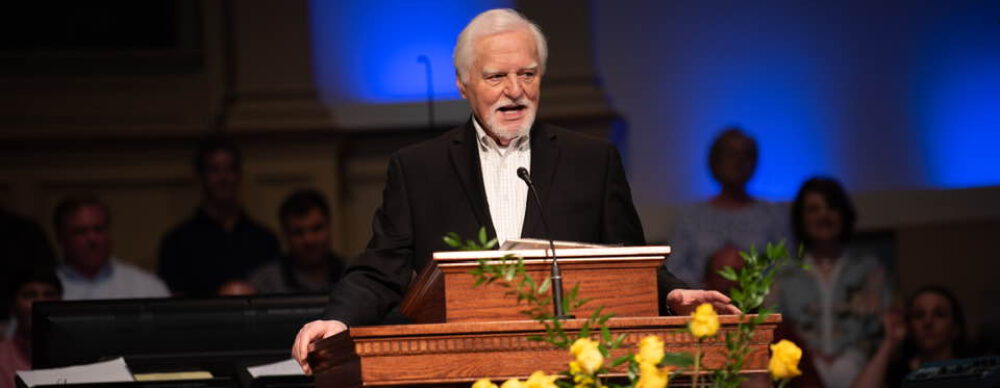
What’s a pastor to do when ousted from his church?

An online preacher magazine says a pastor fired because of his alcoholism is bitter at his mistreatment by that congregation’s leaders.  Not good.

I’ll skip that article, thank you.  On the surface, I’d say he deserved what he got.  But then, I’m neither his judge nor their advisor.  But when a fired preacher exudes bitterness, that does concern me.

No one has a right to pastor the Lord’s church.

The bitterness feels like he no longer trusts the Lord.  Read Acts 16 again, preacher, and remind yourself how God loves to use setbacks and what appears to be defeats for His purposes. It’s sort of a divine alchemy.  But the one thing required for that to happen is trusting servants who know how to sing at midnight (Acts 16:25).

That God would allow any of us to preach to His people year after year, declaring Heaven’s message to the redeemed, without giving us what we truly deserve–the fires of hell come to mind, frankly–shows Him to be a God of grace.  Why don’t we see that?

Whenever I hear a Christian talking about not getting what he deserved, I run in the opposite direction, lest the Father suddenly decide to give the fellow what he’s asking for!

So, you were fired.  Okay.  Can we talk?

Call it whatever you will.  Perhaps they dressed up the terminology and told the congregation you were taking an extended leave, with pay for three months.  But you weren’t coming back.  Or, that you were taking a well-needed sabbatical for rest and study. But you weren’t coming back.  Or that you were going to the “wilderness” for some retraining and redirection for your ministry. But you weren’t coming back.

Here’s what you will do: You will hold your head up and go forward and look to the Lord who called you into this work in the first place, asking Him to do with it whatever pleases Him most. Period.

Repeat:  Hold your head up!  Look to the Lord.  Give this whole business to Him.  And keep on doing that until no trace of resentment can be found on your person.  Even if it takes years!

Sure, it’s hard.  No one is saying otherwise.

Continue reading →

When the stiff, inflexibles are in control of the church

“You stiff-necked and uncircumcised in heart….”  (Acts 7:51). 

“No one puts a patch of unshrunk cloth on an old garment, for the patch pulls away from the garment and a worse tear results.  Nor do men put new wine in old wineskins….” (Matthew 9:16-17).

Let’s start with an intriguing quote from a great churchman….

“The church recruited people who had been starched and ironed before they were washed.”  –John Wesley

Not sure of the context of Wesley’s quote, but I like it because it so accurately sums up the situation of a small contingent within every church.  Now, I have to say this conjures up memories of my childhood.  Mom did her own washing and ironing, and often, to starch a shirt or blouse, she would soak it in a bucket into which she had mixed up the dry starch with water. These days, anyone starching at home uses a spray, I expect.

There’s nothing like a great starched shirt.  I love them. Trace Cleaners does mine. My wife loves me but not enough to do that!

Now then, some church members have been starched and ironed before they were washed.  A great metaphor!  But what does it mean?

“Starched and ironed” means they are now–

–prim and proper

–firmly set and fixed in their ways

–but they are missing something essential: An experience with the living God by the blood of Jesus Christ.  Scripture promises “the blood of Jesus His Son cleanses us from all sin” (I John 1:7).  But these people have bypassed that experience for one reason or the other.

As a result, they are–

Continue reading →

59 things not to say to a preacher

1. “I enjoyed your little talk.”

2. “Is what you said true, or was that just preacher talk?”

3. “I heard (famous preacher) preach that same sermon on television.  He did it so much better.”

4. “Could you come to my home and preach that sermon to my husband?”

5. “You ought to hear the pastor at our church.  He’s been to seminary.”

6. “Our church is so much bigger (better, friendlier, whatever) than yours.”

7. “The restroom is out of paper.”

8. “My cousin said I would like your preaching. It’s all right, I guess.”

9. “Someone–I’m not saying who–told me to tell you….”

10. “Can I come by your office in the morning?  I might need a couple of hours of your time.”

Continue reading →

The pastor is called to an ignorant church; what to do

“But grow in the grace and knowledge of our Lord and Savior Jesus Christ” (II Peter 3:18).

The pastor was excited about the new assignment God was giving him. In a parting comment to a friend, he assessed the spirituality of the church he was leaving behind:

“There is enough ignorance in this county to ignorantize the whole country.”

We could wish such churches were rare.  Unfortunately, they’re not.

What happens when a pastor gets called to a church like that? What’s the new pastor to do when the congregation does not know the Word of God and have no idea of how things should be done or why it matters.

Such a church often exists only to condemn sin and sinners, knows only slivers of Scripture, sees pastors as slaves of the whims of the congregation, and is ready to reject any minister who believes the church should feed the hungry, take a stand for justice, and/or invite in the minority neighbors.

Veteran preachers have stories of those churches, tales of run-ins with those leaders, and scars from the battles they have waged to set matters right.

–One pastor told the group of ministers meeting in his fellowship hall, “This building is actually owned by a member of the KKK. We rent it from him.”  The rest of us naively thought the Ku Klux Klan had died out ages ago. Here they were living among us in our own southern town.

–One lady visible in church leadership told her pastor (me!), “I don’t know what the Bible says but I know what I believe.”

Continue reading →

The toughest job in any church

There are few easy jobs in the typical congregation and plenty of really difficult ones. My candidate for the hardest elected position is chairman of deacons.

The absolute toughest and most critical, of course, is the position of pastor. He’s the point man and so much rides on his faithfulness. A close second to that is the deacon chairman.

I say this in full recognition that in our denomination at least–the Southern Baptist Convention–deacons are a varied lot. What they do and how they minister is strictly up to the individual church. Some function as boards of directors, some are teams of servants, some work as a steering committee composed of chairs of every committee in the church, and some are true spiritual leaders.

But there is one thing true in 99 percent of our churches: the chairman of deacons is the number one lay position within the congregation.

On paper, the deacon chair is simply the moderator of the monthly meeting of his group. But in actuality, he (and in the rare instance, she) is the go-between for the pastor and the congregation.

The congregation is having a major problem that involves the pastor. Someone has to visit the shepherd for a confrontational sit-down with him. It falls to the deacon chairman.

Someone or some group within the congregation is out of line. They are attacking the pastor unfairly. For the shepherd to confront them seems self-serving and puts him on the defensive. Someone else needs to do this. The chairman of deacons inherits the job by default. There is no one else better situated.

When you are nominated by the church as a deacon, they convene a council to examine you, then the church ordains you. It’s a big deal. We need to do something just as significant when the deacons choose their leader. The job is the weightiest in the church when done well.

A deacon chairman needs four qualities; if he misses even one, the church could be in trouble.

Continue reading →

How to tell you’re no leader

Woe unto you when all men speak well of you, for so did their fathers to the false prophets. (Luke 6:26)

Let’s just come right out and say it up front:

Unless someone is not constantly on your case, mad at you, irritated, and upset with you all the time, you are no leader.

The would-be leader who fails to recognize this will be constantly bewildered by the reactions of the people he has been sent to serve.

He comes into a church with a divine mandate. (This is not pious talk. He has been called by the Heavenly Father into this ministry and sent by Him to this church. If that’s not a divine mandate, nothing is.) He proceeds to take the reins and lead out. To his utter amazement, the very people he expected to welcome his ministry, to support his vision, to affirm his godliness, to volunteer their service–those very people–stand back and carp and criticize and find fault.

This was the last thing he expected.

Because he’s human, he begins to wonder: Did I make a mistake in coming here? Am I doing something wrong? Are these people not God’s children? Should I stay? Should I leave?

My answer: You’re doing just fine, preacher. Stay the course.

Continue reading →

The church’s dirty little secret

“Then we will no longer be infants, tossed back and forth by the waves, and blown here and there…” (Ephesians 4:14).

“Church is the only place on earth where people can throw hissy fits and get away with it.”  –a friend serving his first church after seminary.

My minister friend seemed to think he had made a discovery about the kingdom, something few people knew.

I told him I was sorry he had to learn this dirty little secret about church life.

I asked for the story that had led to this discovery.  He had two.

A church member attending his class complained because she could not find her workbook. The pastor told her he had borrowed it for another class, and she was welcome to use his.  She said, “Okay. I’ll go home then.”

And she stalked out.

The minister said, “Would she have done that at work?  At the doctor’s office? I think not.”

But she had no problem with putting her immaturity on full display at church.

On another day, a man stormed out of a church leadership meeting because his idea for a fundraiser had been rejected.

My friend said, “Would he have done that in a college class?  At work?  At home?  At the store even?”

He would not have.  And this guy was a church leader!

The church–which is the institution which we Christians should respect most– ends up being the least respected by many.  And the pastor the least respected professional.

My friend said, “Situations like these used to keep me up at night. By God’s grace, they don’t any more.”

I’m sorry anyone has to learn this reality about church life; I’m glad my friend is sleeping at night.

A couple of observations come to mind, neither of them original with me.

Continue reading →

Why change is hard for some of God’s people

I sometimes tease our young pastors that “in all the world, there are only three people who enjoy change, and none are members of your church.”

It’s a common perception in our churches that the Lord’s people seem to be resistant to change. And there is certainly plenty of anecdotal evidence, as flockless shepherds step up to tell how they lost their pulpits when they tried to change a schedule or a program.

But, look around at the people attending our churches. They seem to handle change fairly well in other areas of their lives. They’re on computers, own X-boxes, play farm games on Facebook, send emails, and stay in touch with the world by their smart phones. No one at church drives a 1948 Packard because he doesn’t like change. No woman still wears the hair styles of the 1930s (as they did when I was a kid in the 1940s and ’50s). Their clothing is fairly up-to-date.

And yet, I can take you to an even dozen pastors right now who carry the scars of battles they fought trying to get the Lord’s people to make even the simplest of changes.

What’s going on?

Here is my take on why change is hard for God’s people. And the news, I have to say, is not good. The Lord who said, “Behold, I make all things new” (Revelation 21:5) is probably not very pleased with those who hold onto what He did in the past and refuse to accept the new thing He is doing today.

The Lord who repeatedly commanded that we “sing unto the Lord a new song” (Psalm 33:3; 96:1; etc.) is probably not impressed when we refuse to sing anything but the songs we grew up under.

Why Change is So Hard for the Lord’s Frozen Chosen.

By the way, these are in no particular order, other than as they occur to me.

1. Change feels like loss.

–“If we add choruses to our worship service, we will have to cut out some of the hymns. But I love the hymns. Why should I give up my wonderful hymns for some cutesy little tunes someone wrote in his garage?”

–“If we add an additional worship service, we will divide the congregation. I’ll not see my friends unless we attend the same service. I am ag’in it.”

–“When I go on a diet, I lose weight and get healthier, which are all good. But I also have to quit wearing some things in the closet I love. And give up chocolate ice cream. So, no diet for me, thanks.”

2. Change challenges our belief system.

–“It was good for Paul and Silas; it’s good enough for me.” Yes, sir–give me that old time religion.

Continue reading →

7 things to keep in mind when discussing religion

If anyone advocates a different doctrine, and does not agree with sound words, those of our Lord Jesus Christ, and with the doctrine conforming to godliness, he is conceited and understands nothing; but he has a morbid interest in controversial questions and disputes about words, out of which arise envy, strife, abusive language, evil suspicions, and constant friction between men of depraved mind and deprived of the truth…. (I Timothy 6:3ff).

Some people debating religion are this way, Paul.  Conceited and ignorant, rabble-rousers and mean-spirited.  I’ve sat across the table from them more than once.  It’s no fun, as you know.

But some are sincere and faithful brethren trying to get this right.

Help us, Lord.

If you are a Southern Baptist, as I am, you may find yourself having a problem with the theology of some people whom you happen to like and respect as brothers and sisters in Christ.  You respect them and would like to be closer friends, but this “thing” they believe and teach stands between you. So…

You ask if the two of you can discuss those differences.  Not a debate, you insist, and certainly not an argument.

Some would say you’re being naïve for thinking you can have such a discussion without emotions entering into it, and the rhetoric heating up.  But you decide to see if you can.  The prize is worth the effort.

Understand going in that…

One.  People don’t just believe doctrines; they have a whole belief system.  And that system usually results in them flocking with others of similar beliefs, so that ends up becoming their culture, their entire world.  And when you question their beliefs, in their mind you are undermining their entire set up. So, they quickly become defensive, as though you had attacked their mother.

A Mormon–someone belonging to the LDS faith (or system)–doesn’t just believe some things about Joseph Smith and some other things about the Scripture, which, if you can refute you have dislodged them from their errant beliefs (as you believe).  They are part of an entire set-up.  All their friends are in that system.  So, for them to consider dropping their religion because they learned it was in error is also asking them to drop their friends and change their entire lives.  So, helping someone transition out of that system becomes a huge process.

Lord, help us to be patient with each other. 

Continue reading →

10 lessons I’ve learned about the church, all gained the hard way

When I began pastoring–that would be 61 years ago, in 1962, I’d just finished college and gotten married–what I did not know was there were 100 things about the church of the Lord Jesus Christ I still had to learn.  What follows is a few of those.  And yes, I’m still learning.

In no particular order….

One. Bigness is overrated.

“It doesn’t matter to the Lord whether He saves by the few or the many” (I Samuel 14:6).

Most pastors, it would appear, have wanted to lead big churches, wanted to grow their church to be huge, or wanted to move to a large church.  Their motives may be pure; judging motives is outside my skill set. But pastoring a big church can be the hardest thing you will ever try, and less satisfying than you would ever expect.  (Now as a very-senior citizen, I find myself admiring and even envying those pastors who put in decades serving churches in small or rural communities.  And I hope they know how well they have things!)

Small bodies can be healthy too; behold the hummingbird or the honeybee.

Trying to get a large church to change its method of operation can be like turning around an ocean liner.  The Lord’s parable about the mustard seed (Matthew 13:31-32 and Luke 17:6) should forever disabuse us of the lust for bigness.

I groan at the stories of pastors who have manipulated God’s people and lied about numbers in order to create the illusion of bigness.  Forgive us, Father!

Two. Lack of formal education in the preacher is no excuse.

The pastor of the small church often has far less formal training and education than he would like. As a result, he often feels inferior to his colleagues with seminary degrees. I have two thoughts on that…

One.  It’s a mistake.  He can be as smart as they are and more if he applies himself.  Let the Lord’s preachers not be overly impressed by certificates on the wall or titles before their name.

Two.  He can get as much education as he’s willing.  All seminaries have online programs that make seminary education attainable, practical and affordable. So there is no excuse.

Continue reading →