Pergamos: Scary Church! (Third of the Churches of Asia Minor)

(ninth article in our series on the Seven Churches of Asia Minor.  Revelation 1-3)

“And to the angel of the church in Pergamos, write:  ‘These things says He who has the sharp two-edged sword: ‘I know your works….'”  (Revelation 2:12ff).

The cities of Ephesus, Smyrna, and Pergamos were called “royal cities,” and they competed with each other. Ephesus was the great political center, Smyrna the great commercial center, and Pergamos the great religious center.

David Jeremiah calls Pergamos “the inner city church.”  Other names by which this church is called include “Adulterous Church” and “the Compromising Church.”  I call it “The Scary Church.”  Belonging to this church is a risky proposition!

Pergamos was famous for its library, second-largest in the ancient world, behind only the one in Alexandria, Egypt.  Said to contain 200,000 rolls of parchment.  And none of them on microfilm!

Continue reading →

Smyrna: Second of the Seven Churches of Asia Minor

(eighth article in our series on the Seven Churches of Asia Minor.  Revelation 1-3)

“And to the angel of the church in Smyrna, write:  ‘These things says the First and the Last, who was dead and came to life:  I know your works….'”  (Revelation 2:8ff)

Suppose a friend of yours was in the cross hairs for a massive hurricane or killer tornado, one bearing down on him with a fury.  You would do all you could to alert him and to help him get out of danger. Likewise, our Lord sees that the believers in Smyrna are about to receive a great persecution.  His letter is to warn them to “buckle up,” to get ready.  There’s no escaping it, so all they can do is get prepared and keep their eyes on the Lord.

This is the shortest of the seven letters, only four verses.

The City–

Population was 200,000.  It was a seaport on the Aegean Sea.  Smyrna boasted the largest theater in Asia.  The old city was destroyed by the Persians and rebuilt by Alexander the Great.  The city experienced an earthquake in AD 178 (which is long after the period we’re dealing with).  The Greek poet Homer was borne here.

This is the only city of the seven still functioning, with the other six being archaeological ruins.  Turks call it Izmir.  It’s said to be a beautiful place.

The name Smyrna means “myrrh,” a perfume for the dead.

Continue reading →

Ephesus: The church that forgot to love!

(seventh article of our series on the Seven Churches of Asia Minor.  Revelation 1-3)

“To the angel of the church at Ephesus, write: These things says he who holds the seven stars in His right hand, who walks in the midst of the seven golden candlesticks: ‘I know your works….'” (Revelation 2:1ff.) 

The first of the seven churches of Asia Minor is Ephesus.  Its letter is found in Revelation 2:1-7.

Blessed are you among churches, Ephesus. 

You were begun, it would appear, by the highly esteemed husband-wife team of Aquila and Priscilla.  On his way home from the Second Missionary Journey, the Apostle Paul left Aquila and Priscilla at Ephesus but did not stay himself.

Ephesus had the ministry of the gifted Apollos, who would have been a media darling in our modern age from all evidence.  (Move over, Joel Osteen!)

Paul spent three years ministering in Ephesus.  (Acts 19 mentioned 2 years and 3 months, but in Acts 20, Paul tells the Ephesian leaders he spent three years there.)  This was the longest time he gave to any one congregation.

Then, Ephesus was pastored by Timothy and later by the Apostle John.  They had had the best.

Continue reading →

Pastor: What to pray when your ministry is on the line

“Lord God of Abraham, Isaac and Israel, let it be known this day that you are God in Israel, and that I am your servant, and that I have done all these things at your word” (I Kings 18:36). 

I was pastoring a church that had survived–just barely–a massive split a couple of years before I arrived.  Many were still carrying guilt over how they had behaved or anger over the misbehavior of others.  Or both.

And since these people had ousted the pastor who had provided the spark for all this turmoil, it soon occurred to a strong handful that they could do the same to me.

So, for the first years of my ministry in that church–which actually lasted nearly fourteen years–I had to put up with the detractors, people who were determined to find fault with everything I did and turning it against me.

And then one day I noticed how Elijah had prayed on Mount Carmel.

Continue reading →

Why you need a little resistance in your life

“Where there’s no friction, there’s no traction!”  –Overheard from an elderly Baptist preacher in North Carolina 30 years ago

Tim Patterson, executive of Michigan Baptists, had a great insight about catfish and codfish–natural enemies–on Baptist Press the other day..

In the northeastern part of our country, codfish is a big deal. However, shippers discovered that freezing the fish to ship destroyed the flavor.  So, they tried shipping them alive in tanks of seawater.  In addition to that being too expensive, for some reason the cod still lost their flavor and arrived soft and mushy.  Something had to be done.

Eventually, someone hit on a solution. After the codfish were placed in the seawater tanks, one more thing was added:  catfish.  Their natural enemies.

“From the time the cod left the East Coast until they arrived at their destinations, those ornery catfish chased the cod all over the tank…. When they arrived at the market, the cod were as fresh as the day they were caught.  There was no loss of flavor and the texture was possibly better than before.”

There’s a lesson there.

Continue reading →

Our wish for the church’s preacher-killers

They asked Andrew Murray the greatest thought that had ever entered his mind.  “My accountability to God,” he said.

My pastor friend Albert still carries scars from his last tough assignment.  And now, he tells me, he faces a crisis in his present church.

The issue, you will not be surprised to learn, has nothing to do with the community at large, the unchurched he is trying to reach, or the surrounding culture.

The problem Albert faces is internal.

“Twice the treasurer has threatened to cut my pay if I announce plans to stay on.  He tells everyone that our church cannot afford a pastor.  A couple in the church is spreading gossip about me.  A recent survey of the congregation assessed me and my ministry–which is fine–but the board chairman plans to discuss it at the upcoming annual meeting without clueing me in on the results ahead of time.”

Nothing about this bodes well for Albert.  (I suppose I’ve seen too many of these disasters-in-the-making to be optimistic.  Some people are determined to have their way and run “their” church as they please.)

He concluded, “Pray for wisdom, shrewdness, strength and peace for my wife and me.”

Ask any pastor.  The stresses from these forces are preacher-killers.

I’ve been reading the recently published “Valley Forge,” Bob Drury and Tom Clavin’s account of General George Washington’s turning a bedraggled, dispirited, starving, half-naked army into a fighting force that defeated the best-trained militia on the planet, the British.  What strikes the reader is that while battling the British and contending with both the frigid weather and the sparse supply of food and clothing, Washington was constantly being undercut by Congress and generals who wanted his job.

The internal strife must have been worse than the external.

Continue reading →
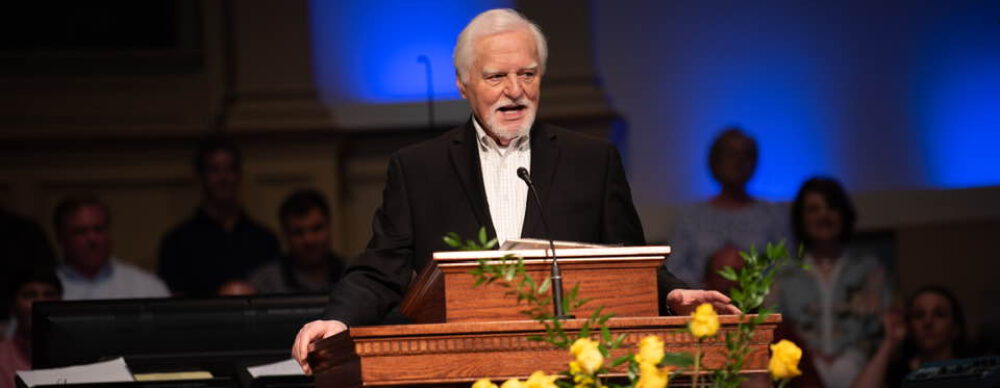
Crisis Management: How to keep our people during a crisis

“Behold, I send you forth as sheep in the midst of wolves” (Matthew 10:16).

We can’t say the Lord didn’t warn us. Although, clearly, some did not get the word.

In Matthew 10:16-42 our Lord is preparing His people for their future ministry with its pressures, persecutions, betrayals, and conflicts.  He tells us how things will be, what to expect, and what actions we should take when bad things occur.  To our shame, our people are rarely taught this, and thus are blindsided when turmoil erupts in a congregation.

And so, when the enemy attacks the church, God’s people panic and flee like chickens in the barnyard when a hostile dog arrives.

We all pay a big price for our failure to prepare the people.

It’s a familiar story, one which I heard again today.  When the pastor resigned suddenly due to his own foolish behavior, many in the congregation panicked and went into a tailspin.  The leadership wants to carry on the program, but people are leaving the church in droves.  What to do? Can anything be done at this late hour to keep members from jumping ship?

The best time to act is two years ago. (“Oh, thanks a lot, wise one.  You’re a big help!”)

Seriously.

Continue reading →

Taking a stand against wickedness: What to do?

Unrighteousness is being aggressive.  Evil is on the march.  The world, the flesh, and the devil are having a field day. What should God’s people do?

A lot of people who call themselves Christians disagree with Scripture’s answer to that question.

In most cases, this aggression takes very specific forms.  A new city ordinance discriminates against churches and makes it impossible to do ministry.  A perversion of sexuality has become acceptable and local authorities insist that it be taught as the norm in schools.  A decent public figure with traditional values is being targeted by wicked people and slandered.  The list is unending.

Many calling themselves followers of Jesus Christ would say, “Organize! Confront! No more Mister Nice Guy! Take the fight to the enemy!”  “Show them you can be as mean as they can!”  “We have the power of God on our side!”

“After all,” they will say, “Jesus took a rope and cleansed the temple!”  “Elijah confronted the prophets of Baal on Mount Carmel.”

When God’s people begin name-calling, verbally attacking, and using the world’s methods, eventually someone will get a gun and go calling.  In recent years, we’ve had extremists in the pro-life movement shooting up abortion clinics and murdering doctors.

Never mind replying that “You and I are not Jesus” and “Neither are we Old Testament prophets.”  He has not sent us to do such things.

Continue reading →

Put yourself in the pastor’s place; what would you do?

I want to say a word about the pastor’s difficult situation. The hope is someone may decide to cut him a little slack when he does something you disagree with or does not come through the way you were counting on.  

You have no idea what tough calls pastors have to make.

As an example, take the Judge Brett Kavanaugh situation. This controversial appointment for the Supreme Court is sucking all the air out of newsrooms these days and dividing the nation. Few people are neutral.

Recognizing that this piece will still be on our website long after this crisis has been resolved and fades into history, I need to give a little background.

Judge Brett Kavanaugh was nominated by President Trump to fill the vacancy on the Supreme Court.  Kavanaugh is a staunch conservative, we’re told, and his rulings over the years on the bench seem to bear that out.  He appeared before the Senate Judiciary Committee, endured a few days of their grilling, and seemed to be set for confirmation, albeit from a nearly evenly divided Senate.  Then, Dr. Christine Blasey Ford, a university professor, came forward saying that when she was 15 and Kavanaugh two years older, he sexually assaulted her at a party when he was drunk. He denied the charge.

So, on Thursday, September 27, 2018, Ford and Kavanaugh each appeared before the Judiciary Committee to answer questions.  She was “100 percent sure” that Kavanaugh was her attacker.  He was just as adamant that he was not.

And that’s where the matter stands as I write.  The American people seem torn as to who is telling the truth and what it means.

Continue reading →

A word to those who have been “hurt by the church”

“And one will say to him, ‘What are these wounds in thine hands?’ Then he will say, ‘Those with which I was wounded in the house of my friends” (Zechariah 13:6). 

Wounded in the house of “those who love me” is the literal interpretation of the Hebrew there, according the footnote in my Bible.

It’s called friendly fire in military lingo.

Recently, after our article “Why professing Christians never attend church,” the responses poured in, positive and negative.  The latest note, however, prompts what follows.

A reader wrote, “What about those who have been hurt by the church?  Your article doesn’t address that (as a reason for believers dropping out of church).”

He listed several instances of people wounded by the church….

Continue reading →