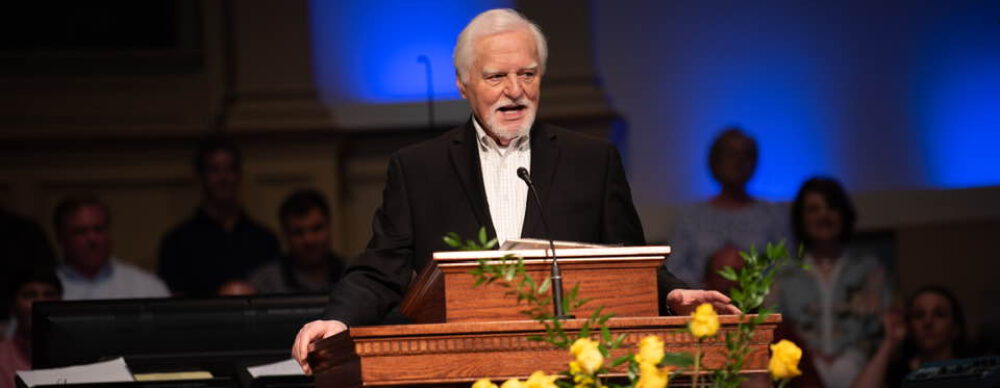
Ephesus: The church that forgot to love!

(seventh article of our series on the Seven Churches of Asia Minor.  Revelation 1-3)

“To the angel of the church at Ephesus, write: These things says he who holds the seven stars in His right hand, who walks in the midst of the seven golden candlesticks: ‘I know your works….'” (Revelation 2:1ff.) 

The first of the seven churches of Asia Minor is Ephesus.  Its letter is found in Revelation 2:1-7.

Blessed are you among churches, Ephesus. 

You were begun, it would appear, by the highly esteemed husband-wife team of Aquila and Priscilla.  On his way home from the Second Missionary Journey, the Apostle Paul left Aquila and Priscilla at Ephesus but did not stay himself.

Ephesus had the ministry of the gifted Apollos, who would have been a media darling in our modern age from all evidence.  (Move over, Joel Osteen!)

Paul spent three years ministering in Ephesus.  (Acts 19 mentioned 2 years and 3 months, but in Acts 20, Paul tells the Ephesian leaders he spent three years there.)  This was the longest time he gave to any one congregation.

Then, Ephesus was pastored by Timothy and later by the Apostle John.  They had had the best.

Continue reading

Why study the “seven churches of Asia Minor” in the first place

(6th in a series on the Seven Churches of Asia Minor.  Revelation 1-3)

“Now, all these things happened to them as examples, and they were written for our admonition, upon whom the ends of the ages have come” (I Corinthians 10:11).

When I asked on Facebook why we should study the Seven Churches of Asia Minor, a professor friend gave what must be the simplest, clearest and best answer:  “Because it’s easier than anything else in Revelation.”  I laughed out loud, realizing that he had expressed precisely what I have felt over the years in turning to that book.

My New Orleans buddy Jim Smith came up with he most creative answer: “Because the churches of Asia Major weren’t so interesting?”

But, back to the question:  Why should we study letters to seven churches we would never have heard of otherwise?

Maybe the Lord is using it for discipline? Like putting us through boot camp, giving us something really hard–and it is that–to toughen us up for whatever lies ahead.

Maybe He wants us to be historians?

Does the Lord somehow need His children to know what went on two thousand years ago?  Are we to be trivia buffs regarding the first century of believers?  History experts?  Why does this stuff matter?

It’s a legitimate question, one every generation asks.

Continue reading

Jesus’ last word to the church: Repent.

(Fifth in a series on The Seven Churches of Asia Minor. Revelation 1-3)

“Truly, these times of ignorance God overlooked, but now commands all men everywhere to repent” (Acts 17:30.  Paul’s message to Athens.)

Contrary to popular opinion, the Lord’s final word to the Church was not the Great Commission (Matthew 28:18-20).  It was the message of Revelation 2-3.  To five of the seven churches of Asia Minor, that final word was: “Repent.”

I was 27 years old, pastoring a small church on Alligator Bayou west of New Orleans, a recent seminary graduate, and being interviewed by a pastor search committee.  The chairman of the committee, a distinguished businessman named Lawrence Bryant, said to me, “Pastor, what do you believe about repentance?”

I answered, “There is no salvation without repentance.  Twice in Luke 13 our Lord told people ‘Except ye repent, ye shall all perish.'”

What I did not know was that this was a big deal to that astute layman.  Lawrence Bryant had been a lukewarm church member all his life and knew from personal experience the kind of flawed product easy believism turns out.  At the age of 43–ten years before our encounter–he had been righteously, gloriously, fully saved, and nothing was ever the same.  He wanted none of the easy-going churchism that so often passed for the genuine article if he could help it.

He came to the right boy.  The Lord had been impressing upon me the importance and necessity of repentance in Scripture and in life.

The Greek word for repentance metanoia means to have a change of mind which results in a life change.  The message is preached throughout Scripture, but particularly in the New Testament.  “Behold, now is the accepted time; behold, now is the day of salvation” (2 Corinthians 6:2).

You’re traveling a highway. Suddenly, you realize you’re going the wrong way and look for the next opportunity to do a U-turn.  I’ve done that a hundred  times.  Before the change of direction, there is a change of mind.

Continue reading

The Lord takes His churches to the woodshed

(Fourth in a series on the Seven Churches of Asia Minor.  Revelation 1-3)

“My son, do not despise the chastening of the Lord, nor be discouraged when you are rebuked by Him.  For whom the Lord loveth He chasteneth, and scourgeth every son whom He receives” (Hebrews 12:5-6).

The Lord Jesus was unhappy with His churches.  Five of the seven congregations scattered across Asia Minor (present-day Turkey) were already getting off-track and needed some swift attention.  The two exceptions were Smyrna and Philadelphia.  But the other five churches received stern rebukes.

To all the seven churches of Asia Minor, the Lord gave four things (with slight variations for Smyrna and Philadelphia):

HIS ANALYSIS.  This is His report card.  His “state of the state” message.

HIS WARNINGS.  Repent or else.

HIS INSTRUCTIONS.  Remedial actions the Lord would like to see.

HIS PROMISES.  To Him who overcomes, blessings await.  Each church gets its own promise.

These four blessings–for they were that–were not given to the unbelieving world, not to pagan religions, and not to political powers.  They were gifts from Heaven to seven congregations for whom the Lord Jesus had great expectations and important roles to play.

Continue reading

Playing these little games with God’s Word

(Third in a series on John’s Letters to the Seven Churches of Asia Minor.  Revelation 1-3)

“John to the seven churches which are in Asia….” (Revelation 1:4).

Did you know if you take the seventh letter from the 7th chapter of each book of the Bible, it forms a secret message?  I didn’t either.  But it’s no weirder than some of the schemes people come up with to make Scripture say more than it was intended.

The cults are notorious for finding secret messages in Scripture.

God’s faithful children must be careful not to fall for such schemes and not to try to read hidden messages into God’s Word.

His Word is sufficient.

I’m deep into studying the first three chapters of Revelation, for the umpteenth time in my life.  There is so much here.

Continue reading

“Who does Jesus think He is?” (First of several articles on Revelation 1-2-3, the “Seven Churches of Asia Minor.”)

(The Seven Churches of Asia Minor, based on Revelation 1-3, is the subject of the Winter Bible Study in SBC churches. )

“The Revelation of Jesus Christ…. the faithful witness, the firstborn from the dead, and the ruler over the kings of the earth” (Revelation 1:1-5).

An  Episcopal church or a United Methodist church receives a letter from the bishop which is read to the congregation the following Sunday.  The letter scalds the church for its failure to live up to its obligations, keep its pledges, or honor certain commitments.  Following the reading, a discussion breaks out within the membership.  Several people, who may have joined the fellowship only recently, are concerned and want to know, “Who does the bishop think he is? What gives him the right to rebuke us?”

The minister is glad to answer the question.  “We are not on our own out here. We are a member of this denomination. The denomination owns this church.  The bishop is the local ruling authority for the denomination. We may or may not like his assessments and rulings, but there they are.”

Those of us whose churches observe congregational forms of government never receive letters from the bishop for the simple reason that we don’t have them.  Our churches are autonomous (self-governing, independent) and cooperate to whatever extent we can, feel led, or choose to.

So, here are the seven churches of Asia Minor (present-day Turkey):  Ephesus, Smyrna, Pergamos, Thyatira, Sardis, Philadelphia, and Laodicea.  They receive this circular letter which is to be read, no doubt copied, and then sent on its way to the next church.

Five of the seven churches are told to “shape up or ship out.”  That is, they’re told to “Repent or else.”  Only two of the churches, Smyrna and Philadelphia, get off without a rebuke.

Continue reading