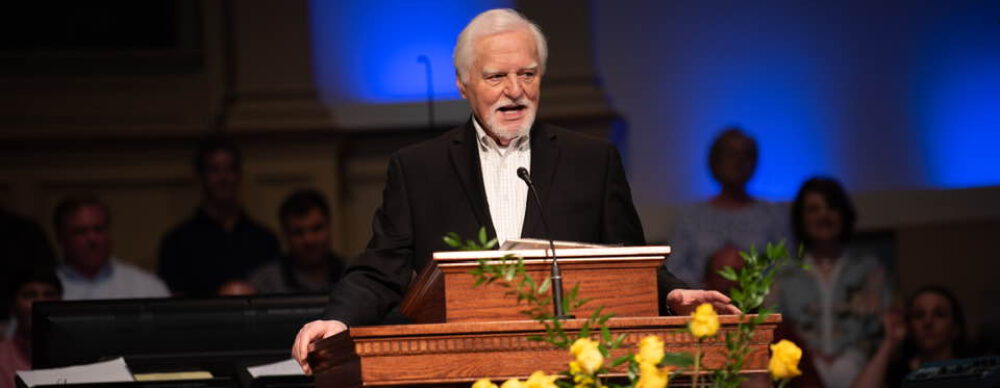
How to tell you have arrived as a big-shot preacher

Okay.  Tongue firmly planted in cheek now…..

The Lord called you to preach the gospel and you answered. You went off to a Bible college or theological seminary of one kind or the other, and you got yourself some degrees which you now display prominently on your wall. You finally got past those tiny churches which many consider boot camp for the pastoral ministry and now you are uptown in a fine facility with your name boldly plastered on the sign out front as the (ahem) senior pastor.

Have you “arrived” in the ministry?  Well sir, here’s some of the ways you can tell….

1) You have a Bible published with your very own commentary notes.  “The Official Jerry Bigshot Bible.”

It still has the basic 66 books of the Holy Scripture of course, but no one is buying it for that. They purchasing it for the wonderful, scintillating, incisive–and insert a lot of other dynamic adjectives here!–notes at the bottom of each page.

How in the world Martin Luther pulled off the Reformation without your assistance is anybody’s guess.

2) You have two secretaries.  One who works for you and the other who works for her.

Your secretaries sometimes lord it over the rest of the office staff since they work for the (ahem) head guy, but hey, that’s life and it’s to be expected.  After all, they take phone calls for you from leading pastors around the country, publishers of major printing establishments, and denominational executives.  They are in high cotton and if they’re a little prideful, well, who wouldn’t be?

3) You have research assistants to do your Bible study for you.

You can recall when you had time to check out the root of that Hebrew word.  You used to enjoy taking a full morning at the seminary library. But those days are behind you.  You’re just too busy for that any more. So, that young intern sure comes in handy.  His sermon ideas have given you some messages that have been well received, too. He’s going to make someone a great preacher one of these days. Hopefully, not too soon.  You are depending on him too much.

4) You get invited to large events to speak. Or, if you don’t, you leave the impression you do.

And you never get invited to the small churches and small events, because to be blunt about it, those people know you are “out of their league” now that you have arrived. If you were invited to Mount Pisgah at Route Four Podunk, you would have to fudge and tell the pastor how much you would love nothing better than doing this, but your schedule just will not allow it, and thank you for calling and have a blessed day.

Surely the Lord will forgive your little lie. You were just trying not to hurt the guy’s feelings, after all.

Continue reading

A guide to mistreating worshipers

“….they treated the Lord’s offering with contempt” (I Samuel 2:17).

The first rule of worship leadership should probably be stated as Try Not To Get In Their Way.

When  people come to worship, if you cannot help them, at the very least try not to interfere with what they are doing.

The sons of Eli the High Priest were nothing but trouble. Hophni and Phinehas–who doesn’t love those names!– “were wicked men; they had no regard for the Lord or for the priests’ share of the sacrifices from the people” (I Samuel 2:12-13).

God literally calls them SOBs.  “Sons of Belial” is the Hebrew expression translated as “wicked men” or “corrupt.”

Scripture has not a single positive statement about these miscreants.

These men stand as warnings to every kingdom worker to tread softly and serve honorably.  We are stewards and not owners; servants and not lords.  We should encourage worship and not place obstacles and burdens upon the worshipers.

We are to help people worship and not divert it into our own purposes.

The people can worship God without you, O thou shepherd of the Lord’s flock.

If we cannot help them do it better, we should back off and remove ourselves from the picture.

Continue reading

What a pastor’s heart looks like

(This is a reposting of an article from a few years back.  It’s still timely, as you can see.) 

“Father, forgive them. For they do not know what they do” (Luke 23:34).

They were killing Jesus.  They would run up and spit on Him, then back off and laugh and call Him blasphemous names.  They would quote His words back to Him and dare Him to come down from the cross and prove Himself.

They were mean-spirited and ugly and hatefilled.

Jesus loved them.

As they killed Him, He prayed for them.

That, my friends, is a pastor.  A shepherd.  A lover of God’s people.

The heart of a pastor is a thing of wonder.

Something inside me wants to say preachers either have hearts of a pastor or they do not.  And if they do not, they should reject every invitation from search committees to become pastors because it’s a perfect set-up for disappointment on his part and disaster on theirs.  The preacher who can deliver a fine sermon but who is unavailable and ineffective during the week one-on-one should ask the Lord to show him other ways to use his gifts and calling.

The pastorate is not for him.

On the other hand, I imagine a large segment of pastors have dominant urges to study and preach, but with a minor, if you will, in the actual pastoral work. Even so, any minister of the Gospel without a strong appreciation for the people of God and his accountability to God for their care and nurture is missing something essential in his makeup.

Case in point.

Hunter and have wife have been family friends for many years. But from our frequent conversations over the last few years, Hunter’s pastor seems to have been AWOL the day Heaven handed out the quota of “pastors’ hearts.”  (That would be one per person, presumably.)

Continue reading

Heresies inside my church

“For the time will come when they will not endure sound doctrine….”  “Preach the word….with great patience and instruction” (2 Timothy 4:2,3).

The best way to deal with bad theology in the church is for the pastor to always preach the Word.

Just hang in there, year after year, teaching and preaching God’s unchanging truth.  The changes in your people will come as you remain faithful.

The word “orthodox” means “right thinking.”  Straight shooting. Sound doctrine. Solid reasoning.

We think of heresy as something the bad guys do, the “spiritual gift” of cults, and the aberration of the rebellious. After all, aren’t all heretics nuts? (We interrupt to recommend a book. A half century ago, Walter Nigg wrote “The Heretics” to establish that the great heresies in church history were the work of some pretty smart people with real grievances, and not ‘nuts.’  Reading it was life-changing for me.)

As Walt Kelly’s comic strip ‘possum Pogo once noted, “We have met the enemy and he is us.”

There is enough heresy inside the walls of your church to start twelve new cults by breakfast.

In a half-century and more of churchmanship–pastoring, assistant pastoring,and denominational involvement–I have seen these heresies, beggars riding in king’s chariots, as the saying goes….

1) “If you are having trouble in your Christian life, clearly it’s because you are not saved.”

So–you struggle with temptations, with disciplining yourself to a daily time of prayer and the Word, with controlling your temper, and a thousand other things. “Obviously,” someone says, “You have never been saved.”

The solution is for you to “this time, get it right.” So, you go through all those spiritual contortions–praying, seeking, crying, pleading, and performing autopsies on yourself–hoping that “this time it takes.”  You ask the pastor to rebaptize you because “if I was not saved before, it was not real baptism.”

Right thinking–“orthodoxy”–says it would help a great deal if you knew the Word. Christians struggle with temptation, they war against wickedness in high places, they fight a never-ending battle to conform their desires to the mind of Christ.  Anyone teaching otherwise is a deceiver.

Continue reading

20 things pastors should not love too much

“Do not be excessively righteous or overly wise” (Ecclesiastes 7:16).

Most of us would not include those excesses in a list of which to be wary.  But for most, I imagine the list might look more like this…

One.  We should not be in love with the sound of our own voice.

The preacher who delights too much with his own voice will outtalk everyone in the room and drone on far longer in sermons than is wise.  Better we learn to tame that critter, then put him to use in the service of the Lord.

Two. We should beware of loving those extra desserts.

More and more these days, the overweight preacher is the norm.  Sometimes the culprit is that he announced from the pulpit his favorite dessert to be lemon icebox pie or banana pudding, and now well-meaning church members keep him supplied.  Sometimes, it’s the church dinners where ladies bring a dozen or more home-made desserts that would tempt a saint.

Three.  The preacher who loves golf too much may be asking for trouble.

Golf can be a great servant but is a poor master.  A great diversion but a poor vocation. It can fill a great need when kept in its place, but can wreck lives and careers when allowed to expand uncontrolled.

Four.  The pastor who specializes in taking people on trips to the Holy Land could be endangering his ministry. 

He may be falling prey to the financial enticements such a sideline can offer.

Continue reading

10 lessons I’ve learned about the church, all gained the hard way

When I began pastoring–that would be 61 years ago, in 1962, I’d just finished college and gotten married–what I did not know was there were 100 things about the church of the Lord Jesus Christ I still had to learn.  What follows is a few of those.  And yes, I’m still learning.

In no particular order….

One. Bigness is overrated.

“It doesn’t matter to the Lord whether He saves by the few or the many” (I Samuel 14:6).

Most pastors, it would appear, have wanted to lead big churches, wanted to grow their church to be huge, or wanted to move to a large church.  Their motives may be pure; judging motives is outside my skill set. But pastoring a big church can be the hardest thing you will ever try, and less satisfying than you would ever expect.  (Now as a very-senior citizen, I find myself admiring and even envying those pastors who put in decades serving churches in small or rural communities.  And I hope they know how well they have things!)

Small bodies can be healthy too; behold the hummingbird or the honeybee.

Trying to get a large church to change its method of operation can be like turning around an ocean liner.  The Lord’s parable about the mustard seed (Matthew 13:31-32 and Luke 17:6) should forever disabuse us of the lust for bigness.

I groan at the stories of pastors who have manipulated God’s people and lied about numbers in order to create the illusion of bigness.  Forgive us, Father!

Two. Lack of formal education in the preacher is no excuse.

The pastor of the small church often has far less formal training and education than he would like. As a result, he often feels inferior to his colleagues with seminary degrees. I have two thoughts on that…

One.  It’s a mistake.  He can be as smart as they are and more if he applies himself.  Let the Lord’s preachers not be overly impressed by certificates on the wall or titles before their name.

Two.  He can get as much education as he’s willing.  All seminaries have online programs that make seminary education attainable, practical and affordable. So there is no excuse.

Continue reading

Why some are disqualified for serving in the Lord’s work

“Now, I urge you brethren, keep your eye on those who cause dissensions and hindrances contrary to the teaching which you learned, and turn away from them.”  (Romans 16:17)

Not everyone is qualified to serve and lead in the Lord’s church.

Don’t miss that– “to serve and to lead.”  In the Lord’s work, serving and leading often consist of the same activities, performed by the same people. The Lord’s best servants are the congregation’s best leaders. Those who lead best are humble servants willing to stoop and wash the feet or rise and lead the charge, whatever the situation requires.

The one unwilling to serve is unqualified to lead.

A pastor told me about a minister his church had been considering bringing on to join his staff. When she balked at a background check, refusing to let the leadership look into her history, all the red flags went up and they called a halt to the proceedings. Something in her background apparently worked against her usefulness to that church. Finding this out before she came on board may have helped the church avoid a major problem.

The list of factors which disqualify people from serving and leading in the Lord’s church is endless, as it would include unbelief, a carnal lifestyle, moral problems, criminal records, a history of violence, and so on.  However, there is a more selective list of conditions which disqualify otherwise good and respectable church members from serving and leading:

1) You are not qualified to serve/lead if you are unwilling to work in the background without recognition.

If you require recognition and appreciation, we will continue in our search for workers, thank you.

It’s not that you might be required to work in the unseen background, but your unwillingness to do so says volumes about your spiritual condition.  A couple of verses come to mind…

Continue reading

My personal story of Billy Graham

I was in a congregation of ministers at Birmingham’s First United Methodist Church once in the early 70s when Billy Graham entered the room.  A shock wave moved across the auditorium.  It was amazing, and I had no explanation for it.

He was God’s man.  No question about it.

During the last years of the 1980s, I pastored Charlotte’s First Baptist Church and visited with Billy and Ruth Graham on several occasions.  His sister Catherine was in my church, along with her family.  On several occasions we shared a waiting room while their friend and my congregant Dr. Grady Wilson was in surgery.   Once I handed them a notepad and asked them to write their favorite scripture verse and sign it.  That this was a presumptuous thing to do never entered my mind.

Billy jotted down “Psalm 16:11” and signed that familiar name.  I said, “I’m glad you wrote that because I’ve quoted that verse for years as Billy Graham’s favorite.”  Ruth Bell Graham laughed and said, “My favorite keeps changing!” As I recall, she wrote Proverbs 3:8-13 and signed it. My secretary had those two notes framed and they hung in my office for years, until I donated them to a fundraiser for a New Orleans ministry.

In November of 1987, the entire Graham team came to our church for the celebration of Evangelist Grady Wilson’s life.  My funeral message that day was rebroadcast worldwide on the Hour of Decision radio program which was so popular for a generation or more.  (I’ve teased that I should put that on my resume!)

In those days I recall how people in Charlotte spoke about Billy’s mother.  Mrs. Graham had been such a powerful witness for Christ, they said, and they told of Bible studies she had led in the retirement home where she had lived her last days.

But my favorite BG story concerns our first meeting.

Continue reading

How pastors discourage their people from using the Bible

“The law of the Lord is perfect, restoring the soul… They are more desirable than gold, yes, than much fine gold; sweeter also than honey and the drippings of the honeycomb…. In keeping them there is great reward.” (Psalm 19:7-11)

The Bible loves the Bible.

From one end to the other, God’s word tells us how wonderful is God’s word. Better than gold and sweeter than honey it is. Job said, “I have esteemed the words of Thy mouth more than my necessary food” (Job 23:12).

We preachers believe this. And we say those words to our people. We like our people to bring their Bibles to church, open them as we read and preach, and use them when they return home.

There is nothing wrong with our aspirations in this regard.

When it comes to connecting our people with God’s word personally to the point that they will become ardent readers and diligent students of Scripture, we should give ourselves a C-minus, however. And sometimes, an F.

Without any study to back it up, I say categorically that the typical member of our churches–those who fill your pews each Sunday and are your best supporters, pastor–takes his Bible home and does not open it until the next time you rise to preach.

There is something bad wrong here. As a general rule, we pastors are doing a poor job of encouraging our flock to love the Word and live in the Word so that they might live “by” the Word.  That is the point after all. Jesus said, “If you know these things, blessed are you if you do them” (John 13:17).  It is the doing of the Word which is our goal (James 1:22).

Question: In what ways are we dropping the ball? How are we failing to encourage our people to love God’s Word and to live in it?

We’ve pinpointed seven ways.  You may think of more.

1) A pastor discourages his people from opening their Bible, reading it, and loving it when he overdoes the Greek and Hebrew bit.

You know the routine. The pastor reads a verse, then says something like, “Now, the Greek does not say that. This verb in the Greek is a past pluperfect intransitive and when coupled with an indirect object of the active preposition means ‘sometimes but not always.’ So, the translators got it wrong here.”

You want to run out the door screaming.

Continue reading

What I learned in choir rehearsal

“Come before Him with joyful singing” (Psalm 100:2).

During the time I sang with the choir at our church, I loved singing for the worship service, but had to make myself go to rehearsal.

Rehearsing songs–whether for church or school assembly or for the juke joint down the street–is hard work.

Gradually, I began to see some patterns forming. Eventually, those shapes merged to form life-lessons that have remained with me all these years.

1) I do not like new songs.

The minister of music would say, “Joyce, pass out the new music,” and I would cringe. I did not read music and did not do well trying to negotiate my way around these clothes-lines of blackbirds.  The piano is picking out the melody of the song and I’m working to get it.  This is no fun.  It’s work.

But a funny thing happened. The following week, when the director passed out that music for the second time, I was interested in that piece.  It had possibilities. And the third week, I kind of liked it. By the fourth week, the preparation for actually singing it in church, I was in love with it and had been humming it all week.

But you know what happened, I expect. At rehearsal, the minister handed out some new music once again. And again, I cringed. “I hate learning new music.”

2) We sound better together than we do separately.

Even the good singers, when called on to do a little solo in rehearsal to help the others, even they were not all that great.  And of course, I was the very definition of mediocre. But a funny thing happened. When we all joined our voices together, the result was something magical.

I wonder if that’s the reason for church.  If perhaps we work better and worship better and pray better in concert with brothers and sisters than we do alone.

Continue reading