We all need a Barnabas from time to time

In the early New Testament church, Barnabas distinguished himself by his generosity and his kind spirit. Originally named Joseph–not a bad name at all, I think you’ll agree–the congregation dubbed him “Mister Encourager,” a free translation of Bar-Nabas, “Son of Comfort.” Trace his work through Acts chapters 4-15 and you’ll quickly see why he has become a hero to many of us.

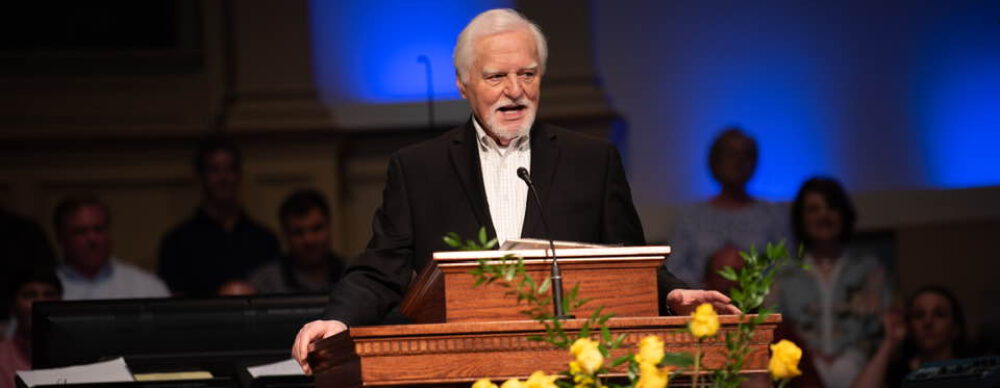
Monday night, at our annual evangelism conference, held this year in the brand-new sanctuary of the great First Baptist Church of LaFayette, Pastor Dennis Watson of Metairie’s Celebration Church preached. Tuesday, I bought a CD and listened to the sermon again on my drive back to New Orleans.

Dennis recounted the day many years ago when he was driving around the country interviewing outstanding pastors. He had made an appointment with Perry Sanders, the legendary leader of the LaFayette church, who has served there since 1959, building one of the state’s strongest Baptist churches in the middle of Acadiana. He checked into a hotel and called Perry who told him, “You’re not staying there; you’re staying at my house. Check out.” Dennis said, “I’ve already paid in cash.” The inimitable Dr. Sanders said with a twinkle in his eye no doubt, “Son, you are in PerrySandersville. I’ll take care of it.” A few minutes later, the manager of the hotel knocked at the door and gave Dennis his money and written directions to the Sanders home. Welcome to LaFayette. (Steve Horn has come to succeed Dr. Sanders, and is sharing the pastoral duties for a time. I drew him a cartoon in which someone was saying, “Steve is the only pastor in Louisiana who is trying NOT to imitate Perry Sanders!” The rest of us probably are.)

“New Orleans has long been known as ‘the city that care forgot,'” Dennis Watson said in his sermon. “But my people and I pray for it to become ‘The City that Cares For God.'”

“A representative from the Franklin Graham organization asked me how I thought we were going to get the gospel to the world.” Dennis answered, “I suppose through the media, through great crusades.” “No,” the man said, “Through disaster relief. When catastrophes strike around the world, disaster relief teams are able to get into countries that would never receive our missionaries, because we go to help them and minister to them in their hour of great need.”

The Graham worker continued, “After the tsunami hit Southeast Asia, in one small country in that part of the world, a group of Muslim leaders approached our workers and said, ‘We want to apologize to you. We have attacked you and fought you and even killed some of you. But when disaster struck, you were the only ones to come help us.'”

Continue reading

Love in deed. Yes, indeed.

On Sunday, two town hall meetings were held at the First Baptist Church of Belle Chasse. I drove down for their 10:30 worship service, then stayed for one of the gatherings.

Belle Chasse is a lovely little river community just below Gretna, barely inside Plaquemines Parish. The First Baptist Church has for decades been one of our stronger churches in the BAGNO association. They’re pastorless these days and the town hall meeting, led by interim pastor Paul Hussey, was to start the congregation thinking about future directions for their church. The other meeting in their building was members of the destroyed churches of South Plaquemines, further down the river.

For years the Plaquemines Baptist Association has been made up of five small churches: Port Sulphur, Buras-Triumph, Riverview, City Price, and Venice. The director of missions for New Orleans has had the responsibility of working with them, keeping their books, etc., but over the years the churches let it be known they had no desire to join the larger association lest they be swallowed up and forgotten. A quick glance at the map shows these communities downriver on a thin strip of land down state highway 23, continuing 65 miles below the Naval Air Station at Belle Chasse. From my house to our furthest church is over 80 miles. Decades ago, most of these churches were bigger and stronger, running in the hundreds. With the oil bust some years ago, members moved away to find jobs, and the churches fell onto hard times. Some were running less than 20. Now, all five of the churches are gone.

As it turned out, the dozen or so who gathered for the South Plaquemines meeting were all members of the Buras-Triumph Church. Pastor Frank Ducharme relocated to Scott, LA, and has sent word that he will not be returning. With the exception of Pastor Lynn Rodrigue of Port Sulphur, that seems to be the case of the other pastors. Not that there’s anything to return to at the present time.

We discussed the need for the Plaquemines Association to merge with BAGNO. We discussed erasing the names of the five churches in Plaquemines and starting from scratch at first, with only one church that would be centrally located downriver. We would pour our resources into it until the population returned sufficiently to justify beginning churches in the other communities.

Continue reading

My favorite Katrina story

One of our pastors is speaking at the Louisiana Baptist Evangelism Conference next week in LaFayette and asked some of us to funnel our favorite Katrina stories to him. Presumably, he’ll pick a couple that fit his sermon best and share with the folks at the meeting.

I told him the story of a Shepherd named David. No, not the one in the Scriptures. David Rodriguez, pastor of the Horeb Baptist Church in Gretna. Great guy. He’s Hispanic, but speaks English better than I do, and is married to Ninfa, one of our associational secretaries.

When word circulated on Saturday, August 27, that Katrina was taking dead-aim at New Orleans, David and Ninfa Rodriguez decided to do something bold and even daring. They contacted almost every member of their church and invited them to evacuate together.

At this point, they needed to find a camp or assembly somewhere that could accommodate their crowd. With the assistance of Freddie Arnold in our office, they tried the various Baptist camps around the state and finally contacted Curt Iles at the Dry Creek Assembly in western Louisiana. “Come on,” he said, “we’ll be glad to take every one of you.”

When they pulled out of New Orleans Sunday morning around three o’clock, there were 150 in their caravan. They arrived at Dry Creek around eleven and settled in.

Continue reading

One more reason I believe in the Heavenly Father

Driving to the associational office Friday morning, I was doing all right until I turned off the interstate onto Elysian Fields Avenue and headed north toward the lakefront. After about mile, my eyes became teary and I almost had to pull over. After all this time, the sight of the deadness of this neighborhood is so depressing I can’t take it. I began to analyze my tears. It’s not about this Burger King or that Walgreen’s. They’ll be back. It’s not about that particular house or the ruined car over there. It’s just everything. The place is so dead and so empty, and every house represents a family that has hit a brick wall, that’s living away from home, that is hurting and wondering what to do now.

I said through my tears, “Dear Lord, I don’t know what to do about it! What can I do to help these people?” I’m not real sure how to explain this, but God spoke back. “It’s not about you. You can’t do much. This is about what I’m going to do.” At that point, I lost it again.

Walking up to the office, I thought, “Why are we even here? No one knows we’re here. Nobody is coming to see us. We don’t even have phones. We could do our work better at home.” I had not been there ten minutes when I heard a voice in the reception area.

Continue reading

Helping the helpers in New Orleans

I spent all of Thursday afternoon calling on three of our SBC mission centers in New Orleans. Friendship House, overseen by Kay Bennett, used to minister to troubled and needy women and their children. The Rachel Sims Center and the Carver Center, administered by Larry Miguez and Linda Middlebrooks, formerly devoted themselves to inner city kids and their families. These days, everything has changed. In short, the people aren’t here any longer. So, the North American Mission Board assigned these missionaries and those at the Brantley Center, formerly devoted to the homeless and run by Toby Pitman, to help us host volunteer groups coming in to help restore New Orleans.

I had no appointments today, so after spending the morning in the associational office, mainly devoted to writing letters, I headed out to visit the centers. We’ve been sending teams of visitors to their facilities, and I felt it was time I checked to see how things were going.

“We have lights and water, but no phones and no internet.” I told Kay Bennett that she was describing our situation in the associational office. The Friendship House sits near the river on Elysian Fields Avenue, a block from the backside of the French Quarter. A couple of missionary interns working at the center were plowing their way through mountains of supplies sent from all over the nation. “We had to quit taking clothes,” Kay said. “We have no place to put them. I thought about piling them in the parking lot and inviting anybody and everybody to take them. But that sounded like a bad idea.” She went on, “We have lots of helps for people cleaning out their homes. Sometimes our volunteers just drive around, looking for people working on their houses, and donate these large tubs that are filled with cleaning supplies and gloves and masks, brushes, you name it. People are so appreciative. Sometimes they want to talk and that’s where the witness comes in.”

They have a number of volunteers–from Arkansas, I think–who have been staying there for weeks, switching every week or so with a new crew that comes in to relieve these. “One team is working on Dr. Kelley’s house at the seminary today,” she said. “The rest of them are gutting out homes in the neighborhood.”

“I see you still have that tree in your front yard.” She laughed and said, “I’ve called the city and asked if someone can haul it away. But there it sits.” Actually, the Friendship House has no front yard, just a sidewalk. The massive tree, brought down by the hurricane, could have taken out the side of the building, but it went perpendicular. Crews have cut the limbs off and hauled them away, leaving the massive torso sprawled near the front door like the worst in modern art.

Continue reading

Encouraging the encouragers

At Wednesday’s pastors meeting at the First Baptist Church of LaPlace, we crammed a great deal into two hours and a half. Our friends from the Baptist Convention of New York–Milton Kornegay and Richard Taylor–spoke to the group of fifty or so, offering the support of prayer, volunteer crews, and finances. Later, I overheard Milton extending invitations to a couple of pastors to bring their wives to New York for brief vacations. One of the pastors began, “I don’t know. There are so many more deserving than I.” I said, “Bob. Shut up. You’re going to talk him out of it.” We all laughed. It was a wonderful gesture of our NY friends.

Joe Williams (FBI chaplain with experience at the Murrah Federal Building and Ground Zero) reminded the pastors of plans for a day-long getaway for fellowship and discussion with other ministers and their wives. This event will be provided soon by our North American Mission Board, under Joe’s direction. The director of the State Mental Hospital at Mandeville visited our meeting today and addressed the pastors on the need to take care of themselves. “I’ve talked with two pastors who have been running day and night since Katrina,” he said, “and they’re in bad emotional trouble. I probed a little and found that neither one of them has been keeping up with his prayer time and Bible reading. They say the phone starts ringing when they get up in the morning and they don’t stop running until night and they’re tired all the time.” He explained that a number of suicides and suicide-attempts have been registered since the hurricane, not saying they were specifically among the clergy, only that people have to take care of themselves. He had an interesting philosophy in dealing with potential suicides. “I tell them, ‘Things will be better in fifteen minutes.'”

Ty Salter and Carl Deitz, from the financial department of NAMB, detailed the types of loans our mission board can make to churches, and asked to meet with pastors during lunch. Ty said they came as much to listen and find out what the churches’ needs are, as much as to share information.

“Who needs an electric organ?” I asked. A director of missions in North Mississippi had called me with information about one. “We’d love to have it.” Pastor David Arceneaux of Gentilly Church said, “I hope it’s not too large. We’ll have to store it upstairs since our ruined sanctuary is still wide open to the world.” DOM Frank Lay will drive the organ down here himself. Tangible encouragement to a devastated church.

“The latest word is that Billy Graham is coming to our Festival of Hope!” Pastor Dennis Watson of Celebration Church reminded everyone of the Franklin Graham crusade scheduled for March 11-12 in our New Orleans Arena, the basketball arena next door to the Superdome. “And that’s not all. Billy Graham told Franklin that he and Ruth both want to come. And we understand that George Beverly Shea and Cliff Barrows will be here! Franklin has said that his father will preach at the Sunday afternoon meeting!” Dennis added, “The only worry now is that the New Orleans Arena won’t hold the crowd.” Nice problem.

Continue reading

Chocolate or gumbo: which will New Orleans be?

Monday was Martin Luther King Day and the mayor of New Orleans took this opportunity to insult most of the residents of his “new” city and offend the president to whom he is appealing for big money to restore the city.

Mayor C. Ray Nagin was speaking to some sixty people on the steps of City Hall. After envisioning himself having a conversation with Dr. King in which the slain civil rights leader did not like a single thing going on around here, Nagin said: “It’s time for us to rebuild a New Orleans, the one that should be a chocolate New Orleans. And I don’t care what people are saying Uptown or wherever they are. The city will be chocolate at the end of the day. This city will be a majority African-American city. It’s the way God wants it to be.”

That was just the first of several strange statements he made in that brief speech.

The radio talk shows were flooded with callers decrying his speech. WWL radio replayed excerpts several times and the entire speech once or twice. I sent this letter to the editor Tuesday morning: “Had a white mayor stood on the steps of City Hall and called for the city to become majority White, he would have been branded a racist from one end of this country to the other.” Then, referring to the excellent coverage in Monday morning’s paper on Grace Baptist Church, I wrote: “On Monday, your front page featured a multi-racial church in the Bywater section that is ‘colorless,’ as Pastor Bill Rogers said. On Tuesday, the front page has the mayor of New Orleans calling for the city to be “chocolate.” The contrast could not be starker.”

City Councilman Oliver Thomas, an African-American being pushed by some to run for mayor, is quoted in the paper: “Everybody’s jaws are dropping right now. Even if you believe some of that crazy stuff, this is not the type of image we need to present to the nation.”

In that brief speech, Nagin also said, “…God is mad at America. He’s sending hurricane after hurricane…. Surely He is not approving us being in Iraq under false pretenses.”

A friend heard that and said, “This is the mayor who’s trying to get the president to help us?”

Continue reading

Honoring the people who make a difference

This is about a church changed by a teenager, Debbie, and one blessed by my “daughter”, Mary. You’re going to love both stories.

I’ve told you about Grace Baptist Church on Rampart Street in New Orleans. It’s just over a hundred years old, its pastor is 76-year-old Bill Rogers (who is, incredibly, about to get an earned doctorate from our seminary in Louisville), and it has maintained a great witness for the Lord through some extremely difficult times. Now, Monday, January 16, they made the front page of the Times-Picayune. And not just the front, the church took the upper half of the front page with the kind of great publicity you couldn’t purchase.

The headline reads “Together in Faith,” and the over-sized caption near the large color photo showing people hugging reads, “When 16-year-old Debbie Curtis-Barbarin stepped through the doors of Grace Baptist Church in 1973, she brought with her a new era of diversity.” The article covers a celebration Sunday in which the church remembered the day Debbie first attended and started it to becoming a color-blind, accepting congregation. When she walked into the church that day, as soon as she noticed it was a whites-only affair, she decided to leave and not return. That’s when people started coming up, welcoming her. An elderly couple who were so kind made the difference, she said, and she came back. In time, her entire family started attending. The church “now boasts one of the most diverse congregations in the Gulf South,” according to the paper.

The Bywater neighborhood surrounding Grace Baptist Church is still largely vacant. There’s so much rebuilding and renovating yet to do, with displaced residents driving in from outlying cities to work on their off-days. Grace has been running 25 or so since Katrina, but Sunday 70 were present. “This church is totally colorless,” said Pastor Rogers in the article. And for that, he said the church owes a brave teenager a great deal. Today, Grace counts among its congregation natives of Honduras, Costa Rica, Nicaragua, and Canada, as well as locals who are descendants of Irish, German, French, and African.

Incidentally, they led young Debbie to the Lord and baptized her not long after she started attending. She is now a clerk in the finance office of the federal government in New Orleans, lives in a FEMA trailer in Slidell, and commutes to the church where she teaches a Sunday School class.

You’ve heard the Ray Bolz song “Thank you for giving to the Lord,” which envisions people coming up to you in Heaven pointing out the little acts of faithfulness you did on earth which God used to influence them. I’m convinced that is precisely what will happen there. But suppose we got started early; suppose we began telling those special people how important they are to us now, today.

Continue reading

“Welcome Home” over four months later

Sunday morning, two of our churches in the devastated area of New Orleans held worship services for the first time since Katrina.

At 9 am, I worshiped with 25 members of Elysian Fields Avenue Baptist Church, meeting in the home of Bob and Linda Jackson, a block behind the church. The area still has no electricity and the Jackson’s home had been gutted down to the bare floor and wall studs. With the temperature outside in the high 40s, everyone bundled up and warmed one another. The Jacksons, now teaching at the seminary, are former missionaries to Africa. “We’re used to this,” Linda laughed. “No building, no heat. This is how we did it for years.” Pastor Ken Taylor welcomed everyone, and with tears in his eyes, brought everyone up to date on the church’s situation.

“It appears that our church buildings will be a total loss,” he told the members. “We had no flood insurance, and we do not know what kind of settlement we’ll get.” He continued, “We’re hoping to be able to build a smaller church, one more suitable to our needs.” With the large sanctuary and a small congregation, they had gone to worshiping in the fellowship hall in recent months.

Interspersed between the spirited worship choruses, members gave testimonies. Paula Stringer told of entering her devastated home and finding paper scattered everywhere. “One page that stood out from the rest,” she said, “contained Psalm 77.” She read some of the Psalm, particularly the final verses, as everyone marveled at their relevance to our situation. “The clouds poured out water, the skies gave forth a sound…the sound of thy thunder was in the whirlwind, the lightnings lit up the world, the earth trembled and shook.” “No one saw your footprints, but you were there,” Paula finished, “You led your people like a flock.”

Pastor Ken invited me to say a few words, after which I left to make the 10 am service at Suburban Baptist Church, some three or four miles further east. I jokingly said if Suburban church was this cold, I might think of a third church to go visit and use that as an excuse to leave early.

Village de l’Est Baptist Church and Pastor Thomas Walters were meeting with Pastor Jeff Box and the Suburban folks today, the first post-K service for either. There must have been a hundred or more in attendance. To my surprise, they had electricity. No gas, so the church’s heaters weren’t working, but one little space heater–and the crowd–warmed up the fellowship hall. The projector flashed an image of a dove in flight on the wall in front, with the words “Welcome Home.” People were hugging and laughing; it was a grand occasion.

Continue reading

Why can’t things be simple.

Late Thursday evening, I told Margaret if she didn’t mind, I was going to a movie. I knew enough about “Munich” to know it was a story I was interested in and that she would not enjoy it. Three hours later, I walked out of the cinema with mixed emotions. Following the killing of the Israeli athletes at the 1972 Olympics in Munich, Germany, a small band of commandos sought out the assassins and exterminated them one by one. This Steven Spielberg movie is quite different from anything he’s has done before, and I thought it might be the diversion I needed. What did I need? Probably a good western. A good old-fashioned clear-cut moral tale of good and evil, with good winning decisively. But it was not to be.

The protagonist (that’s the hero, remember?) was not a professional killer but a family man, deeply troubled by the revenge killings he had to do. The bomb-maker was tormented because he saw Judaism as all about righteousness–“It’s a beautiful thing, right?” he said–and ended up destroying himself with one of his creations. In short, there was wrong on both sides, perhaps a little right on each side, and me caught in the middle. This was not the movie I had wanted.

I’m in the middle of a novel about the Battle of Waterloo, Lord Wellington and Napoleon and all that; it’s my bedtime reading and I get about 5 pages done before turning off the light, so it’s taking forever. But I’m about to lay it aside. The sides get too complicated, too many good guys on the bad side and crazy people on the good side. I don’t need this at this point in my life. I have enough complication in the real world.

Wednesday morning, the Times-Picayune presented the report of the Bring New Orleans Back Commission that was released later that day. Some of the recommendations from this distinguished panel include halting all renovation and rebuilding in the flooded zone for 4 months, turning large areas of the city into parks and greenspace, building a regional transit system which would include light-rail to Baton Rouge, streamlining local government (consolidating many offices, cutting out excessive assessors and courts and judges), and preparing a flood control system based on the Dutch model. I’ve not read the actual report and at this point, don’t know how to get hold of one, but only the synopsis in the newspaper. Immediately, however, people started hollering throughout the city.

Continue reading