Easter and Other Stuff

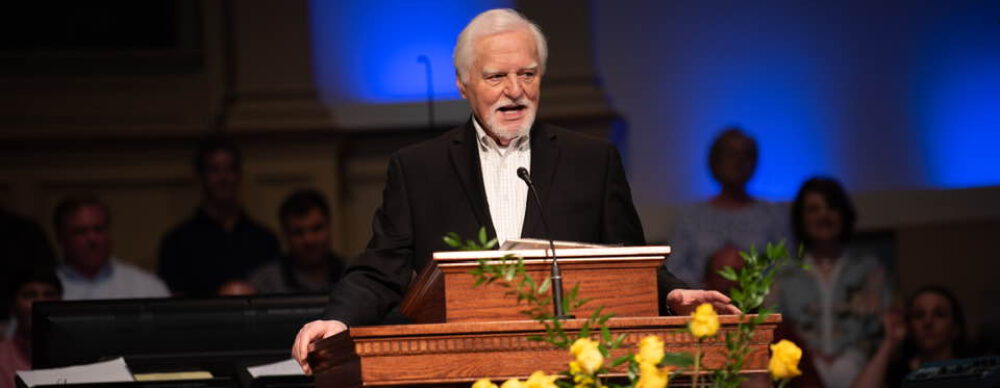
Sunday morning, Thomas Strong, pastor of Metairie Baptist Church, was preaching on Mark 12 in a message he called “Preparing for Easter.” He told this story from a writer named Joyce Halliday.

An elementary schoolteacher was asked to go by the burn unit of the local hospital. A child had come through a tragic house fire, and was in critical condition. The instructions were rather odd. “Go by and talk to him about nouns and adverbs.” She thought that was bizarre, but someone had decided it would help the child, and anything that would do that, she was in favor of.

A nurse showed her into the PICU. The child was wrapped in bandages with only portions of his face visible. The nurse said he had been unresponsive up to that point. The teacher pulled up a chair and introduced herself, then said, “They asked me to come by and talk with you about nouns and adverbs.” So she did, feeling more and more foolish the whole time. After a bit, she wished the child well and left.

The next day, she decided to check on the child. As she approached the intensive care unit, a nurse met her in the hall. “What did you do yesterday?” The teacher stammered and began apologizing. “I know it was silly to talk with him about nouns and adverbs, but those were my instructions. I’m sorry.” The nurse said, “No–whatever you did worked wonders. Come and see.”

The child was still in bandages, but his face was animated and he was speaking. Why had a little lesson like this changed him so much? The boy said, “I knew they wouldn’t ask a teacher to talk to me about nouns and adverbs if they thought there was no hope.”

Thomas Strong said, “God would not have sent His Son for a people for whom there was no hope.”

Somewhere I read that people can live 6 weeks without food, 2 weeks without water, but not a day without hope.

Some texts that come to my preacher-mind are these….

Continue reading

What the Average Guy in the Pew Forgets if He Ever Knew

In Doug Munton’s excellent book, “Seven Steps to Becoming a Healthy Christian Leader,” I was fascinated by an account of Colonel Lucien Greathouse, a Union officer in the Civil War. Munton was speaking in Vandalia, Illinois, and while browsing the old cemeteries there he ran across the tombstone for Col. Greathouse.

That gravestone must have been rather wordy because Munton reports that it says Greathouse “led his command in forty pitched battles,” and quotes two generals with strong endorsements of the officer. General William Sherman, under whom Greathouse served on the march into Atlanta, said, “His example was worth a thousand men,” and General John Logan called him “The Bravest Man in the Army of Tennessee.”

On July 22, 1864, on the outskirts of Atlanta, Greathouse was killed, holding in his hands the American flag. Then, the kicker….

Munton writes, “And when he died in July of 1864, he was two months past his twenty-second birthday.”

This week, I shared that story with a couple of young pastors in my office. I said to them, “There’s a sermon illustration there. I don’t know what it is, but there’s one there.” We spent the next few minutes analyzing this brief account of the young officer’s life and untimely death, and finally figured it out.

What made this man so remarkable, of course, is his youthful age for that high a rank. As uncommon as that seems to us, it appears to be the rule that in wartime, rank advancements can occur at lightning speed. We recall that George Armstrong Custer was made a general in the same Union army at the age of 23. Then, when the war ended, he was dropped back to the permanent rank of captain, a real comedown. When he died at Little Big Horn in 1876, I think he was a lieutenant colonel.

Back to the story of Colonel Greathouse and the point our young pastors came up with: In wartime, the usual rules go out the window and you take drastic steps to accomplish daring purposes.

I asked the pastors if any had heard the news that morning. The FBI Special-Agent-in-Charge of the New Orleans office, Jim Bernazzani, was reporting a new initiative his office is conducting against the drug trade in our city. The night before, in cooperation with the New Orleans Police Department, the Jefferson Parish Sheriff’s Office, and ATF, the FBI had arrested some people who were selling the purest of heroin to students at one of our inner city high schools.

A 15-year-old student had died from the heroin, and the men who had sold the drugs were caught and charged with her murder. The FBI agent told his audience that law enforcement officers were horrified to find our teenagers messing with the hardest of drugs. Then, he told what they’re doing about it.

“My men are going to see the parents of these schoolkids. We’re knocking on their doors and telling them what their teens are up to, and calling on them to get involved in their lives.”

“Isn’t this unusual?” he was asked. “Absolutely. We’ve never done anything like this before. But we are in a war on drugs, a war to save our kids, and we’ll do whatever it takes.”

There it is: in wartime, you take extreme measures to accomplish drastic purposes. Nothing routine applies any more.

Continue reading

Good Deacons

This week Freddie Arnold and I are ordaining men as ministers and deacons, it appears. Sunday morning, we helped the Vietnamese Baptist Church ordain a missions pastor and two deacons, then that afternoon participated in a deacon ordination council at Christ Baptist Church in Harvey for three men. Wednesday night of this week, Edgewater Baptist Church on Paris Avenue will be ordaining deacons and we’ll be there.

Of course, we’ll be part of a team of ministers and deacons performing this function. I’m not the bishop and we don’t confer sacerdotal powers upon the candidates. (Look up the word.) We gather as sincere Christian men seeking to ascertain the Lord’s will and to bless His church. We try to encourage these men, guide them, and even teach them to the extent we can.

I enjoy participating in these events for several reasons, but mostly because the time to make a good deacon is at the beginning. Get him started off right. Pastors can tell you how important their ordination council was to their subsequent ministry, that they recall many of the questions asked and the counsel given during that rather difficult hour or two. I am not silent at these things. After 45 years in the ministry, you’d have a hard time coming up with a church situation I haven’t seen.

I have the scars to prove it.

I often quote some of my favorite deacons to these mostly young men coming on in this service to the Lord and His church. I served with these men years ago, and most are in Heaven now. Since they are no longer able to pass along these nuggets of wisdom, I consider it my duty to stand in for them.

I tell them what Rudy Hough, a horticulturist, always said to incoming deacons. “From now on, people will be coming to you from time to time with criticism for the ministers. I’d like to tell you how to handle that. Tell the person to come with you right then and you’ll go see the minister in question and deal with it. If they go with you, fine.”

“However,” Rudy continued, “if they refuse to go with you, tell them you’ll go but you will be using their name. If they agree, fine. But if they refuse to let you use their name, that’s the end of it. Tell them you will not take anonymous criticism to the ministers.”

Continue reading

Unresolved Issues

Someone has pointed out that in novels, unlike in real life, loose ends must always be tied up.

If you plan to read the latest John Grisham novel, “The Appeal,” and haven’t yet, and don’t want me to ruin the ending for you, you might want to skip this. When you finish the book, come back and leave your own comments at the end of this.

I went to the John Grisham website, www.jgrisham.com, hoping to leave a comment, but there’s no place for one. He’s now at the point where he no longer cares what his readers think. He’s writing for himself. I’m seriously considering letting him buy his own books in the future and ending my financial support for whatever kick he’s on.

My family and I are long-time Grisham fans, going all the way back to “The Firm” and “A Time to Kill.” We buy the latest book, and pass it around until all the adults have read it. My wife started on “The Appeal” last night and announced ten pages into it that it’s vintage Grisham and she’s already snared.

I don’t have the heart to tell her–and won’t–how it ends. In a word: frustratingly. The issues the book deals with are still unresolved. If Grisham begs to differ and says he resolved it, but just in a negative, losing way, I say, “Same difference.”

I have enough frustration in my personal life without having to shell out nearly 30 dollars to buy his version.

In the mid-1980s, when I went to pastor the First Baptist Church of Charlotte, I was pleased to discover we were broadcasting our 11 o’clock morning worship service live on the NBC affiliate, the greatest station in the Carolinas. It was costly but gave us a great outreach. I’d not been there a month when a viewer who identified herself as an older widow wrote to complain. The broadcast was ending before I completed my sermon. She said, “It feels like you’re having a nice visit with someone and suddenly, in the middle of a conversation, they get up and walk out of the house and leave. It’s most frustrating.”

Thereafter, I made sure to end the sermon while we were still on the air.

My hunch is that Mr. Grisham has grown bored with writing novels. Either that or cynical. Or maybe just tired.

Continue reading

Spring Cleaning

I cleaned out my fireplace today, confident that we’ve seen the last of cold weather for this year. My daughter-in-law Julie hates cold weather; I love it and grieve that winter in New Orleans lasts about a week or two. But, each year, by the last of February, Spring arrives and the weather warms. The birds woke me up outside my bedroom window this morning. The high today is about 68, a perfect temperature.

After some early morning errands, I determined that I would do the least pleasant job at my house today: clean the patio furniture. Here’s the story on that.

When we moved into this house 14 years ago, we bought metal furniture for the back patio–it’s covered but not enclosed–with cushioned seats and backs. When we lived in North Carolina and Mississippi, we loved our back porch and enjoyed late-night sessions out there. However, we discovered something about New Orleans that makes porch-sitting difficult. The air is dirty.

A week after washing the furniture, I’ll be able to run a wet cloth across the arms and backs of the furniture and remove a layer of fine dust. Go all season long without washing the patio furniture and you will not want to come anywhere near my back porch. Today, the water was filthy and the washrags were practically ruined, they’re so black.

Someone come visit us quickly, while the back porch is still clean.

In the last week, two recent visitors to New Orleans have written letters to the editor of the Times-Picayune saying how much they loved their recent excursions here and that they are trying to rearrange their lives to move here. The Chamber of Commerce loves that sort of thing.

I would assume those visitors got caught up in the parades and music, as well as the meals in the fine restaurants. What I wonder though is whether we should tell them about the dirty air, the noise, the round-the-clock congestion on the interstates, and the crime. New Orleans has incredible architecture and some unique neighborhoods, but it also has weird politics and the hottest summers on the planet. We have wonderful people and some incredible churches, but we also have potholed streets and some neighborhoods where you wouldn’t want to walk at night.

Continue reading

Well, It’s Louisiana

When Mike Huckabee won the Louisiana presidential primary last Saturday, 43 percent to John McCain’s 42 percent, he rightfully expected to walk away with the lion’s share of the state’s delegates to the Republican convention. But he got none. Nada. Nothing. For reasons I can only attribute to insanity, our state Republican committee had previously decided that in order to get any of our delegates, a candidate would have to win more than 50 percent of the vote. As it turned out, no one got any.

When advised of this anomaly, Huckabee said, “Well, it’s Louisiana.”

Some columnists in the paper took exception to that–how dare he!–but everyone I’ve heard mention it agrees with Huckabee. What a ridiculous rule.

The only consolation I can think of is that we’re not the only ones making weird rules and strange exceptions in this presidential election year. When Florida Democrats decided to move up their state’s presidential primary to early in January–I forget the date–the National Democratic Committee ruled that their election would not count and forbade any Democratic candidates from campaigning there. The citizens, meanwhile, apparently oblivious to the pettiness of the DNC, voted in huge numbers. Hillary Clinton won, even though no candidate campaigned–it’s not like that was necessary; the citizens watch TV and read–and now her people are pushing for her to be granted the delegates from Florida. The DNC has no way out. Give her the delegates and Obama cries foul; give no one any of Florida’s delegates and the voters of that state have been disenfranchised.

Someone ought to work out a system for every state in the Union. But they won’t. We’re Americans; we like the disarray.

The Louisiana-ness of our state must be catching.

Dumb crooks made the local news last night. In Slidell, three young men had cased McDonald’s and decided to steal the night’s deposits when the manager went to the bank. One of the trio sat inside the fast food eatery and called the other two outside when he left with the bag of money and checks. Outside, they held him up and stole the bag. Alas, it contained chicken mcnuggets. Police caught the three culprits.

What I wonder is how you would like to be rotting away for 20 years in Angola and some con ask you, “What are you in here for?” and you have to answer, “For stealing a bag of chicken mcnuggets.”

Well, it’s Louisiana.

Continue reading

The Pastor Gets Into the Community

Eddie Painter has been pastor of Barataria Baptist Church in the little town of Jean Lafitte, Louisiana, for one year now, and the attendance has doubled. Tonight, the church is electing a building committee to plan additional space. I think I saw today how everything is coming together.

Get your map down. Jean Lafitte is hard to find, as the U.S. government and the State of Louisiana discovered in the 1810s. The privateer–first cousin to a pirate–lived down in Barataria Bay with his gang of cutthroats and brigands and their families. I seriously doubt if anyone knows to this day exactly where they made their headquarters since so much of the land mass that made up the wetlands this far south is now underwater. Historians tell us Lafitte had a wealth of supplies which his men had taken off enemy ships, much of which was then slipped into the black market of New Orleans. Initially, Andrew Jackson rejected any thought of involving Lafitte in the defense of New Orleans until he saw the man had what he needed: experienced fighting men with lots of firepower. Jean Lafitte came out of the Battle of New Orleans a hero.

“The school down here is supposed to be one of the best anywhere,” Eddie Painter said. He and his wife Lisa have two teenage daughters, Ellie and Angel. “We love this place.”

“In the early service this morning, we had 34,” Eddie told me at church. The 11 o’clock service which I attended was filled, easily 65 to 70. The music was all hymns–“What a Friend,” “In the Garden,” and “I Am Thine, O Lord”–but the pianist and organist played them double time and the congregation sang out lustily.

When Eddie rose to welcome everyone, he said, “I have an announcement to make: I have bought a pair of white boots.” Everyone laughed. These are the rubber boots which shrimpers and other fishermen wear on the boats to guard against the slippery decks. Status symbols in this part of the world.

“And this week, I got my commercial fishing license!” That did it. Laughter and applause. “I’m on my way to becoming a permanent resident!” Cheering.

Continue reading

Here We Have No Continuing City

When they ask if I attended any of the Mardi Gras parades this year, I just say ‘no.’ They never ask why not and I never tell. The simple reason is that I’d be out of place.

I don’t like feeling out of place. I’ve been there enough to know it’s no fun.

George Gobel used to say, “Have you ever felt like all the world was a tuxedo and you were a pair of brown shoes?”

The lady from the chamber of commerce called to apologize. That night they were honoring a member of my church, one of our leading deacons who was an uppity-up in the finance world, at a lavish banquet in the hotel down the street. I was supposed to have gotten an invitation, she said, but someone failed to send it, and would I please try to come. I knew what had happened, that someone had just thought at the last minute, “We ought to invite his pastor.”

I said, “Thank you. If I can, I’ll be there.” The cocktail hour was scheduled before the banquet, so I figured it would give me time to say my hello to the deacon, then slip out. I walked into the banquet area and was stunned by the scene: a crowd of the city’s elite, all decked out in tuxedos and evening dresses, was milling around, cocktails in hand. These were the beautiful people of our city, the ones who run the largest corporations and foundations and whose images adorn the society pages.

Meanwhile, I was wearing the clothes I had left home in that morning, a tan sport-coat and grey slacks, which after eight hours were beginning to look like I had slept in them.

I walked around the room, feeling like that dream we all have had where you are in a crowd with no clothes on. I kept searching for a familiar face, anyone at all whom I knew. I never did see the guest-of-honor, but after five minutes of torture from feeling so out of place, I decided to go home and enjoy a quiet evening with the family.

Home. My place.

Continue reading

What Grace Means

One of the ways I know the Father is talking to me is when the same message arrives from several different sources. Take today, for instance.

I’d been thinking a lot about grace. In teaching Romans–I’m about to do that for the sixth time since the first of January–the subject of grace figures prominently into Paul’s presentation of the gospel message. In that epistle, he keeps hammering on the fact that if salvation is by grace, then it’s not by works, not by law, not by heritage, nor birth nor merit of any kind whatsoever. If salvation is by grace, then no human can take credit for it and no one can boast about receiving it. It’s of God from first to last. All we can do is receive it or reject it.

A front-page article in the Times-Picayune for today (Thursday, February 7, 2008) was headlined “N.O. nuns play role in Giants’ miracle.” Subtitle: “Their medal provides divine intervention.”

Sister Kathleen Finnerty, Superintendent of Schools for the Archdiocese of New Orleans, used to head a school in New York City where Giants’ owner John Mara’s children attended. Since she and the nuns of the Ursuline Convent are big football fans, rooting especially for local boys Payton and Eli Manning, they were praying for the Giants to win the Super Bowl game last Sunday evening. Sister Kathleen told the newspaper, “Some of the sisters down here are 80 to 90 years old, and they are football addicts. So, when the Giants made the Super Bowl, one of them said to me, ‘We can’t let Eli down. We have to get Our Lady in on this.'”

That’s what she said: “We have to get Our Lady in on this.”

Continue reading

The Day After

“What is that smudge on her head?” I wondered, as I carried my cafeteria tray past a woman in a booth. “Oh yeah. Ash Wednesday.” It was the largest smudge I’d ever seen a priest leave and looked a little like she had fallen on a coal scuttle. Guess he felt she needed a little extra.

Funny how the Mardi Gras season goes full tilt right up until midnight, then shuts down abruptly at the stroke of 12, and everyone goes home. The street sweepers come out, and by Wednesday morning Canal Street looked as clean as it ever does. Lent has arrived, and with it a full slate of religious observances. Yessir, we can go from the flesh to the spirit at the stroke of the clock!

The text message I received from Greg Hand this morning at 1 am was one for the books. His Vieux Carre’ Baptist Church, one block over from Bourbon Street, was hosting friends from around the country who came to bear a witness for Christ during this weekend. The message read: “Four baptized Wednesday a.m. Five total for the holidays.”

Continue reading