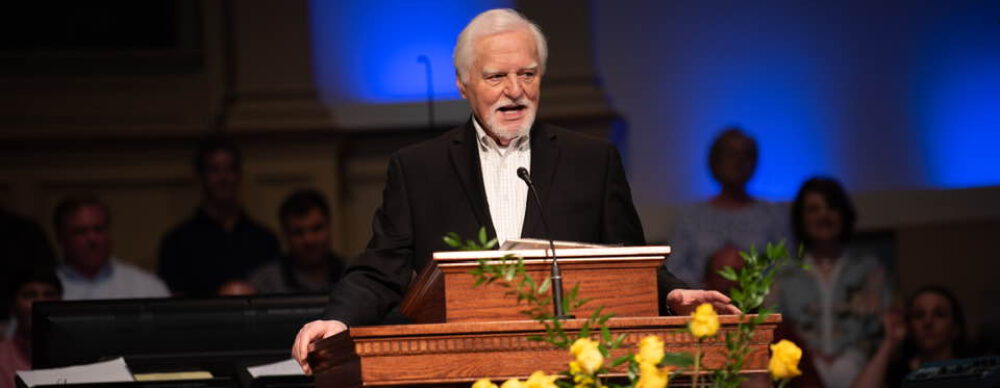
Sheriff Harry Lee Died Monday

He has been sheriff of Jefferson Parish since 1980. There has been no one like him on the political scene in this state before and won’t be after. One of a kind. At the same time, the most frustrating bull-headed strong-willed character and the kindest gentlest sweetest strongest leader. Take your pick. No one was neutral about Sheriff Lee.

He was second-generation Chinese-American. His family ran the House of Lee Chinese Restaurant on Veterans in Metairie for many years. He served as a driver for well-known Congressman Hale Boggs before getting a law degree and entering the political fray himself. He was big. The gastric bypass surgery he had four years ago pared off a good deal of excess weight, bringing him down 90 pounds from a high of 375. But he was still big. And opinionated. And wonderful and narrow minded. Love and feared.

In a state that has turned out more than its share of political characters, Lee ranks up near the top. Since the deputies worked at his pleasure, he said, “That means they have to please me.” And they did, otherwise, they sought other employment. These people hired for law enforcement sold tickets to Harry’s annual fund-raisers which raked in large amounts of cash. Lee then donated money to various candidates he wanted elected, bought ads for positions he took, and assisted churches and community organizations. He then expected–and received–the votes and support of those groups. There was nothing subtle about this man. What you see was what you got. Like it or not.

I suppose he was a Catholic, not sure. In an email Monday evening from Robert Storey, the Youth For Christ worker in our area, I learned that Sheriff Harry had given testimony to Robert’s wife Kathy–who works for the Sheriff’s office–that he had found a new closeness to the Lord and a peace with God recently. He expressly asked that Kathy participate in his funeral.

Last year, Harry was found to be with leukemia. A tough kind of cancer, fast-moving, the type that moves in and kills you quickly, as we were made to understand. He spent time in and out of hospitals in California getting strong doses of chemotherapy and other drugs, and then was in and out of Anderson Hospital in Houston. He had a great weekend, we’re told, even going fishing with his grandchildren. Sunday, he suffered some kind of attack, couldn’t get his breath, and was rushed to Ochsner. Evidently, he went into a coma, perhaps from the medications they gave him. No one wanted to say to the world what everyone feared, that the end may be near. Turned out to be nearer than any of us thought.

The sheriff’s office in this parish gets a certain percentage of sales taxes. Since the money does not come from the parish council, Sheriff Lee resisted any attempts from the council to look at his budget. He was not chosen by them, but elected by the people, same as them, so he felt no accountability to them. Therefore, no one on the planet that I know of, has a clue as to precisely how he spent the money in his office’s budget. We’re talking many millions of dollars a year.

Tell me if that’s not frightening. And yet, even with such an obvious problem about the sheriff’s office operations, political leaders in this part of the state were afraid of the man. They did not dare cross him. Now that he is dead, they will say the finest things about him–and there is much good to be said–but I suspect that a great sigh of relief has just gone up from all those who did not have the courage to stand up to what he did and what he would not do. He was the law. And I don’t just mean ‘the sheriff’.

Continue reading

VISION STATEMENTS

Our association is conducting what is called a “Strategic Study” these days, under the direction of seminary professor Reggie Ogea, to make some crucial decisions about the future of our work in New Orleans. Lately, we’ve been hammering out vision and mission statements. A “vision statement,” we’re told, is a word picture of what you intend to become. The “mission statement” is how you plan to get there.

One of the candidates for judge in Jefferson Parish has drawn a reaction to her billboards. Underneath her name and picture are these words: “One Tough Judge.” Critics point out that she is not a judge, and that putting that phrase on her ads implies that she is. Since the public loves to re-elect officials doing a good job, the intent of the candidate seems to have been to mislead the voters into voting for her.

She pulled the ads and had her advertising people add one more phrase in smaller letters just above the disputed line. Now it reads: “will make a” and then under that, ONE TOUGH JUDGE.

I suppose we could say that “one tough judge” is her vision statement. Getting elected is her mission.

Monday and Tuesday of this week, a group of ministers will be flying into New Orleans to take part in our VISION TOUR. A team composed of representatives of the seminary, our association, the state Baptist convention, and the North American Mission Board have planned activities over this two-day period to acquaint our visitors with the local religious landscape, hoping to interest some or all in either starting a new church here or helping to sponsor new starts.

Most of our meetings will be at a hotel near the airport. Seminary students who work with Professor Jack Allen have done demographic studies of certain neighborhoods where new churches are needed, and will be making presentations. Tuesday morning, we will board a number of church vans and tour these areas. We plan to feed them some New Orleans cuisine and let them know how much we appreciate their coming this way.

“Come and see” is an invitation found all through Scripture, and a great answer to those questions about what goes on in your city, your church, or your spiritual faith. Don’t take my word for it; come check it out. See for yourself.

Continue reading

A BRIEF SERMON…about money

Three years ago, I became a charter member in what was then called the D-Day Museum on Magazine Street downtown. Later, it became the “official” World War II Museum. I bought a brick on the walk just outside the front door to honor my father, enscribed with his name and what he did during the war (“Dug the Coal that Powered the Ships”). And I dutifully sent in my annual membership fees of $35 dollars at first, and now seems to have climbed to $140. I still write them a check though. It’s a great museum.

Today another appeal came from the museum. They’re going on line with the “official” listing of the charter members. Would I please check how my name is listed (“Mr. Joe McKeever- River Ridge, LA”) and send this back to them, alongwith another $140 dollars. Oh, my dues are current. They just want more money for the expansion they’re doing.

I have sometimes thought the main benefit of membership is that it entitles one to receive letters asking for more money. They seem to come at a regular clip, several times a year. Those poor non-members never do get these things.

Oh, and the letter said I would be happy to know that the actual count of “charter members” of the museum is now up to 170,000. Apparently, they keep the charter membership rolls open for the first couple of decades.

Reminds me of the time I “joined” the support team of our public radio station here, the one that airs classical music in the day and “All Things Considered” in the evenings. By “joining,” I mean I sent them a check. That’s all it took. Thereafter, I was bombarded by requests for more money.

If anything, I felt penalized for having contributed. “Poor sucker. You sent us money? That must mean you have more money! We want it. Send it now.”

Now, I have been pastoring churches since I was 22 years old and have long forgotten, if I ever knew, what it was like to be a regular, normal member of a church. But I find myself wondering….

Continue reading

BEFORE YOU LEAVE US

As I write, my parents are ages 91 and 95. Carl and Lois McKeever still live in the house Dad built in 1954, just on the next hill from the old homeplace hand-crafted by Mom’s father in the years just after 1900. Across the country lane from Mom and Dad lives my sister Patricia and her extended family. She cooks a big meal for the folks every noonday, and any kin within driving distance gets there for the feast. Mom does breakfast for her and Dad, and the evening meal is leftovers.

Our younger sister Carolyn lives in Jasper, some 15 miles away. Several times a week she drives up, bringing groceries. One of Dad’s pensions from his years as a coal miner goes straight into direct deposit from which she writes the checks for household expenses. Older brothers Ronald and Glenn live in the Birmingham area, from 50 to 70 miles off. Ronnie has the power of attorney and manages the other pension and covers their utilities and other expenses. Glenn and I–I live in New Orleans, a seven-hour drive–provide the cheering and emotional support for the others.

There’s a lot to be said for having a large family. If nothing else, in your later years, they sure do come in handy. Mom and Dad birthed seven children, with the 1939 son dying soon after his birth and Charles, born in 1944 and the last of the brood, leaving us too early in April of 2006. Ronnie is the first-born, arriving in 1935, and I came onto the scene in 1940.

I call Mom every morning on my cell phone, usually while driving across town to my office. I know it’s not good to use a cell phone while driving, but I do. I get in one lane and stay there, and try to pay attention to what’s going on around me.

These mornings, Mom reports, “Pop is going downhill.” His weight has dropped into the 140s from a lifelong robust 200 pounds. As a child, I thought he was the strongest man in the county. For his size, he probably was. And smart. He mined coal for a living, then raised a crop on the farm and did anything necessary to make that happen. Once as a child, I saw him tear down an old Farmall tractor and lay it out on the ground, hundreds and hundreds of strange parts. Then, he put it back together and it ran. Nothing he ever did impressed me more than that.

Being the first-born of a family of 12 children, Dad had to drop out of school after the seventh grade and go to work, first carrying water for a planer mill, then, two years later, doing a man’s job inside the coal mines. He put in 35 years without a loss-time accident before a heart attack and other problems almost took his life in 1961, and the doctors put him on disability.

You could never have told us back then that 46 years later, he would still be with us. For most of these years, we have felt he was living on borrowed time, and we sure have appreciated the kindness of the Heavenly Lender.

The longtime pastor of our home church, Rev. Mickey Crane, comes by to visit a couple of times a month, Mom says. He calls on his cell phone from the front yard so Mom will come to the door, and stays an hour. Mom thinks he’s one of her sons, he’s such a part of this family.

Ronnie called me yesterday. He’s reserving some more spaces in the church cemetery for various family members and wanted to know if I would like two, for Margaret and me. No money is involved, so I said to go ahead. The massive tombstone with Mom and Dad’s names–everything is there except the dates–stands in place near Charlie’s. I’ve taken Dad’s picture standing beside it; I knew the day would come when I’d want to imagine him standing there beside me. But Mom has not wanted to see their monument. She laughs, “I have this dread about being in the ground.”

I assure her, “You won’t be. You’ll be with Jesus.” She says, “I know. But when I was a child, we would hear reports of people being buried alive. Maybe someone made a mistake and thought they were dead. That always worried me.” I tried to get a laugh out of her and said, “Mom, that’s one worry you don’t have. If you’re not already dead, the embalming fluid in your veins will finish you off!” I’m not sure how much comfort that gave her, but I thought it pretty well took care of the matter.

Continue reading

CONVERSATION WITH THE DIRECTOR OF MISSIONS: “Earn Thy Respect.”

“Can I ask you a question? It’s kind of embarrassing.”

“That’s the best kind.”

“You know our church has been helping that missionary school in Dar es Salaam. Sending them books and a few dollars?”

“I didn’t know that. Sounds good. How did you get connected with Tanzania?”

“After the young lady from our church served as a Missionary Journeyman in that East African country, she put us in touch with the missionaries. They were trying to build a school to train pastors and I thought we ought to be able to help them. I just got back from there.”

“So what happened?”

“It’s almost embarrassing. On the last day of my visit, they held an assembly of the students and faculty and gave me an honorary degree. A doctor’s degree, if you can believe it.”

“I do. I know of pastors who have been honored in similar ways. It’s the way a school has of thanking a friend who has helped them.”

“So, what do you think of that?”

“Of what? Them giving you the degree?”

“No. Of me using it. Calling myself doctor.”

“Oh. I see what you’re getting at. You have this lovely Doctor of Divinity certificate and it looks so impressive and you’re wondering about using it here at home. Calling yourself Doctor Carlton Henrutty, is that it?”

Continue reading

Stand Back From the Cross

You know the story of the death of Jesus on the cross. There must be a thousand intriguing aspects of the crucifixion of our Lord, with each one supplying unending sermons and books and songs from men and women of this faith.

From the Old Testament, we have the prophecies, the sacrifices, the priesthood, the altars, the feast days, the types, and the special passages such as Psalm 22 and Isaiah 53, which point to Jesus’ death on the cross as God’s one, all-purpose provision for our everlasting salvation.

In the New Testament, we see Jesus’ predictions of His coming death, the arrest, its effect on the disciples, and the various trials before Annas, Caiaphas, the Sanhedrin, Pilate and Herod. We are stunned by the scourging and the harsh treatment given our Lord, intrigued by the cross beam which Jesus bore up the hill, and fascinated by the side stories of Barabbas who saw Jesus die in his place, Simon who bore the cross for Jesus, the dying thieves who went out into eternity, one cursing and the other rejoicing, and the soldiers who gambled for his garments. There was Judas who betrayed Him, Peter who denied Him, Thomas who doubted Him, and John who stood by the cross. We preach sermons, compose oratorios, and write books on the seven last words of Jesus from the cross. We consider the medical aspects of the crucifixion, the historical account, the soteriological features, the geography, philosophy, and the emotional impact of our Lord’s death.

There seems to be no end nor any bottom to this incredible story. You can get as detailed as you wish, go as deep as you choose, for as long as you like in studying it. Untold numbers of Bible scholars have devoted their entire careers to any one of these aspects of Jesus’ death on Calvary.

But just this once, back off from it. Take a long look at the larger picture, not at the fine details. See what stands out, what impresses you most.

Here is my answer. Four large facts stare us in the face as we behold our Lord’s death on that cross.

Continue reading

A Tale of Two Churches

I visited two churches today, Sunday, September 23, and the contrast could not have been more stark. For obvious reasons, I will not name them. What follows is not for them, but for churches and pastors who could benefit from what these two have to teach us.

One had 91 in attendance, the other half that. The first one has a stable pastor with a great attitude and a winning personality. He loves the Lord, is committed to the Word, and has a genuine affection for the people. The other church has no pastor and hasn’t for some time.

The first church is on the upswing; the second church on the decline. The Upswing church relocated less than a year ago from a neighborhood that had rapidly changed around them to the point that none of their members lived nearby. They purchased the campus of a church of another denomination that had gone out of business in post-Katrina New Orleans, not more than 2 miles away. The “new” plant is lovely in every way, located in the heart of a solidly middle-class neighborhood, a perfect reflection of their membership. In leaving behind their old neighborhood, they turned over their plant to the mission congregation which is just like the people who live around them.

There is an adage in church-growth that a congregation will reach people who are like themselves. That’s why an elderly membership has trouble attracting young folks, an Anglo congregation has difficulty reaching African-Americans, traditional churches are usually unable to attract post-modernists, and so on. The African-American congregation of the mission church is reaching their neighborhood and this “new” Anglo congregation is reaching the people in their adopted area.

Meanwhile, the second church, the Downswing congregation, is struggling to stay afloat. They are an older generation and absolutely wonderful people, but are declining numerically and running a financial deficit every month. The leaders are investigating various avenues to survival, from sharing their buildings with another congregation to reverting to mission status under the supervision of a stronger church.

I was delighted to see that both churches received new members this morning. The Church-On-The-Upswing also dedicated several families with small children toward the end of the service. A gentleman introduced himself and told how he and his wife had just joined the church, and that he will be baptized soon. The pastor’s wife said she knows another couple who plan to join next Sunday.

Both churches are Anglo, both are in middle-class respectable neighborhoods with attractive buildings and lovely green lawns, and both are made up of the kind of people who would fit right in with just about any Southern Baptist church in the country.

So, why is one on the upswing and the other in trouble?

Continue reading

THY KINGDOM COME

“Thy will be done on earth as it is in Heaven.” (Matthew 6:10)

O Lord, I pray for thy will–for your purposes to be put into play, your plan to be fulfilled, your wants and desires above all else to come true in my life and this world.

Thy will be done on this planet as it is in Heaven.

Thy will be done in this hemisphere as it is in Heaven.

Thy will be done in the United States of America as it is in Heaven.

Thy will be done in Louisiana as it is in Heaven.

Thy will be done in New Orleans as it is in Heaven.

Thy will be done in my River Ridge neighborhood as it is in Heaven.

Thy will be done on Park Ridge Drive as it is in Heaven.

Thy will be done at 601 Park Ridge as it is in Heaven.

Thy will be done in my family as it is in Heaven.

Thy will be done in me as it is in Heaven.

Continue reading

CONVERSATION WITH THE DIRECTOR OF MISSIONS: Confront Thy Problem

He introduced himself as Bryan, said he was from a church of our denomination in a town an hour away, and had read my article which ran in Rick Warren’s Pastor’s Toolbox. I asked which one.

“The one called ‘Dealing with Difficult People in Your Church’,” he said. “Remember it?”

“Oh, I do indeed. And that brought you here today?”

“In a way. My question to you, sir, is what if that difficult person is the pastor?”

“We didn’t address that possibility, did we?”

“No. You touched on some good points, and I don’t have any problem with that. You said there will be difficult people in every church, that God will use them to get the rough edges off our ministry, and that we should stay focused on the Lord, because ‘it’s not about you.’ How’s that?”

“I’m impressed. But, tell me about this difficult pastor.”

“He’s the obstacle to every creative idea anyone ever has. He refuses all counsel except his own. He insists on every decision going his way. When members come to him for counsel, he breaks their confidence by repeating what they told him. He pits friend against friend. I’ve even seen him turn a husband against his wife in order to protect his position.”

“Wow. This is heavy. He sounds like a nightmare.”

“That’s not the half of it,” Bryan said. “He talks out of both sides of his mouth, doesn’t mind lying to you, and misuses his position as pastor in order to excuse his family from sin.”

I said, “Bryan, you and I just met. So, you will understand my caution here. I’m going to be your counselor on this matter, but I’m not anyone’s judge. If things are as you say they are, this guy is a serious problem and needs to be removed, not only from your church, but from the ministry. But I assume he has his own version of this story.”

“I understand all you have is my word. I could have brought a dozen church leaders with me to back it up. But I didn’t come for you to pass judgment. I just wanted to get your opinion about what to do. It’s tearing our church up.”

“How has it affected things?”

“Attendance is down. Contributions are awful. People are demoralized. The staff is discouraged, and we’re thinking of getting our resumes out.”

“Bryan, has anyone tried to deal with this? Has he been confronted with his behavior?”

“We tried to obey the order in Matthew 18. But whenever anyone has gone to him privately or in twos or threes, he cuts off contact with them and ostracizes them from the church.”

“No doubt he says God called him to that church and he’s in charge.”

“Almost word for word, that’s what he says.”

Continue reading

CONVERSATION WITH THE DIRECTOR OF MISSIONS: LOVE THY BRETHREN

I welcomed the pastor into my office and thanked him for coming.

“What’s this all about?”

I said, “Not unlike being sent to the principal’s office. Remember that?”

“Am I in trouble?” The very idea was foreign to him, since he knew I have no authority over him. Directors of Mission are the leaders of Baptist churches and pastors in a given area to the extent that they will let us lead. As with so much in Baptist life, it’s all about voluntary cooperation.

I said, “It’s more that you’re in a key position, being the pastor of one of our stronger churches, and–as it was reported to me–you have an attitude that is going to create a huge problem for you, for me, for our churches, and for your church.”

“By all means,” he said, “tell me what it is.”

“You tell me. I’d like to hear from you your personal view of the work of the association.”

“That’s all this is about? Well, this will be a short meeting.”

“Anytime you’re ready.”

He said, “The association exists for the benefit of the smaller churches. Our church is a large church. There might have been a time when we needed what the association offers, but that time is long past. We will participate in the work of the association from time to time, but not as much as under the previous pastors. We have too much to do that has nothing to do with the association.”

“That’s it?”

Continue reading