Reforming the Deacons (22): The Final Word on the Subject

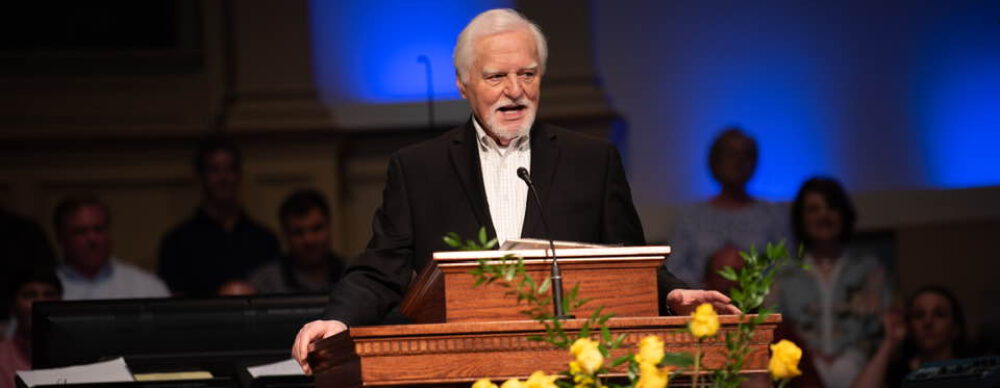
Last Sunday, I had an off day from preaching, so was able to worship with our home church, where I pastored 1990-2004.  As I took my seat and opened the worship bulletin, I noticed we were nominating deacons. Inside was an insert with the names of 18 or so men, and blanks enough to nominate another dozen.  I think we have an active group of 24 plus a few lifers.

Over the next twenty minutes of hymns and announcements and prayers, I scribbled in the names of several good men.

My son Neil, currently chairman of deacons, was singing in the choir. Just before the sermon, they all came down, and he and wife Julie sat behind me. He slipped me a note, “Dad, several people have written your name in as a possible deacon. Are you ready to go over to the dark side?” That was a joke.

I smiled and shook my head. That’s not even anything to pray about. My calling as pastor/preacher is still in force and, I expect, will be the rest of the way home.

After church, I told Margaret about this. She said, “That’s all Pastor Mike needs–the former pastor to be a deacon.” We both laughed at that. She remembers as well as I do the conflicts I’ve had with a few deacons over nearly a half-century of pastoring.  But according to all reports, our deacons here are servants and only that.

Some have asked where we’re going with this “reforming the deacons” series, and how many more articles.  Since I did not start out to write an entire series, but simply took each subject as it occurred, I have no answer.  But, I’m thinking this one should be the final word, perhaps a summation of what has gone before.

Continue reading

Reforming the Deacons (21): “The Divorce Issue”

A safe course here would be to spend all our energies pursuing the multi-faceted question “Can a divorced person be a deacon?” and at the end, choose the safest and most reasonable exit without coming down on a firm position.  But where’s the fun in that?

“Let deacons be the husbands of one wife, ruling their children and their own houses well” (I Timothy 3:11).

There it is. One simple sentence that has divided and perplexed and frustrated the Lord’s faithful people for eons.

Let’s state our position up front so there can be no doubt. As a general rule, divorce disqualifies a man from service as either a pastor or deacon. However, there are exceptions.

And by “exceptions,” I most definitely do not mean we must convene an investigating committee to search out the reasons for the man’s divorce and establish a) that he was sinned against or b) that he was unsaved at the time and has since come to the Lord. This kind of scrutiny over a person’s ancient history is outside the capability of any preacher on the planet.  All we have to do is look at the Roman Catholic Church’s annulment processes to see a) how complex this can get and b) how hypocritical it all appears to the outside world.  We will grant that their intent is good, but the product is a disaster.

The exception–that is, the divorced men who can be considered as deacons–applies when the divorce occurred decades ago and the man has lived an exemplary and godly life since.

That’s where I am at the moment. Good people will agree and disagree, and I’m fine by that. We each have to come to our own conclusion as to the Lord’s will.

This is an emotional, volatile subject.

Yesterday, I posted this question on Facebook: “Can a divorced person be a deacon?” An hour later, we had over 40 responses. This morning, the number is approaching 150. And, as one might expect, the answers were all over the map.

Continue reading

Reforming the Deacons (20): “What the Bible Does Not Tell Us–And We Wish It Would”

Writings about deacons tend to fall into two groups: the mind-numbingly boring and the scripture-exceeding authoritative.

The dull writings are well-intentioned, we will grant. The writers tended to be denominational servants assigned to this strata of church leadership. I imagine that someone above them felt that a book on this subject would be in order, would do some good, and would sell.  They proceeded to write the book which hundreds and thousands of churches bought and then taught to their people for generations. What such books refused to do, however, was to deal with practical questions, issues which bug us to this day. (For some of those questions, keep reading.)

The overly authoritative writings regarding deacons may be reactions against the boring publications, but more likely are responses of the writers to misguided deacon groups they have come up against.  In trying to correct the errors, the imbalance, or the tangents these deacons have veered upon, the writers cancel out all interpretations but their own.

Let’s try to avoid both those ditches and stay in the road here.

Continue reading

Reforming the Deacons (19): “The Ultimate Test”

My friend, Pastor Rob, resigned. He called to inform me and to say I would not be leading the revival we had scheduled in his church.

“What happened?” I asked.

The story Rob related was the back end of what he had told me some months earlier when he became the pastor of that church. A couple active in leadership roles had been living together as man and wife for several years, but without having ever married.

Scripture calls this fornication.

When my friend Rob had agreed to become their pastor, he did so on the condition that the deacons would deal with this issue and not foist it off on him as the new shepherd. They agreed to do so. Less than a year into his ministry, nothing had been done and the pastor was being attacked by the man and woman as a trouble-maker. They and their supporters in the church griped that all was well until this new preacher came, and he’s stirring it up.(Understand that I’m abbreviating the story and omitting a great deal.)

When the pastor asked the deacons if they intended to act, the chairman said, “Preacher, I guess we’re just cowards.”

So, my friend resigned and moved away with no new church in sight.

He did a courageous thing.

Those who allowed this situation to fester did the cowardly thing. (One could make a case for the previous pastor being a coward too, since he left that situation intact for the next preacher to deal with.)

The ultimate test of a deacon is whether he has the courage to take a stand against a hypocrite who is doing great damage in the Lord’s church; whether he is willing to stand up for his church, for his Lord, for the calling of God. (Granted, this is true also of pastors. But we are addressing deacons here.)

Continue reading

Reforming the Deacons (18): “What Unity Means Within the Deacons”

I’ve seen this happen.

The deacons studied a proposal, discussed it at length, found they were divided, and took a vote, resulting in a split decision. The majority decided to go forward and brought the recommendation to the congregation in the monthly business meeting.

After the chairman of the deacons had his say, another deacon stood to oppose it. This opened the door for a floor fight between the two factions within the deacon body, while the congregation sat and watched in stunned silence.

As the new pastor of that church, I had been caught off guard by this. At the next deacons meeting, I brought up what they had done and tried to analyze it with them. And succeeded in making almost all of them angry at me.

Continue reading

Reforming the Deacons (17): “Teach the Deacons (and Other Leaders) to Welcome These”

When Henry was elected a deacon, his family was elated. When he was ordained, they were proud. But when his phone rang late one evening with a church member on the other end of the line complaining about the pastor, no one but he knew it. When he was cornered after church by a sister with a complaint about church finances, Henry felt ambushed. When he received an anonymous letter from someone claiming to be a member of the church with a serious charge against the youth minister, he was completely bamboozled.

Henry was completely unprepared.

He was learning that church members often see the deacons as a conduit to the “powers that be,” as a safe way to register discontent, as a means of getting their concerns addressed without their having to go public.

But no one had told Henry to expect this or how to handle it.

In teaching churchmanship to deacons and other leaders, pastors should prepare them for the unexpected barrage that will be coming their way. They should expect it, learn to recognize it, and know how to deal with it. In time, with a little experience, they may even come to welcome the criticism, the phone calls, the anonymous letters.

Here is my list of unexpected developments leaders should be prepared to deal with. You’ll think of others.

Continue reading

Reforming the Deacons (16): “Teach Them Churchmanship”

We pastors make many mistakes in our dealings with deacons, which is probably understandable.

In a lifetime of ministy, a pastor might log a half century leading as many as ten churches. That means he will encoiunter ten different arrangements of deacons–one per church–some good, some not so good, and hundreds of deacons of all kinds. The pastor who does this and emerges unscathed is a rarity.

Most pastors sooner or later find themselves facing one or more deacons for whom “servanthood” and “servant-mindedness” are not found in their lexicons. They are all about power and control, and right now this pastor is in their crosshairs and has been identified as the enemy.

Deal with a few of those and you will walk gently into all future gatherings of deacons.

I know they are few and far between. Most deacons are good and honorable men (and yes, women too, in some churches; but in our SBC they are relatively rare) who want only to bless and serve. But it just takes a few to create havoc.

One of the greatest mistakes we pastors make is to assume either that our deacons already know all they need to, or that they do not want to learn more. My experience is that a right-spirited servant of the Lord–deacon or not–wants to learn more, to grow more, to serve better.

Pastors should create opportunities to teach their deacons good churchmanship. Here’s what that means.

Continue reading

Reforming the Deacons (15): “Let the Veterans Teach the Rookies”

There were some 20 or 25 deacons in the room, men of all ages and backgrounds, some professional, some blue-collar. I was privileged to serve as their pastor and over a pastorate of nearly thirteen years, had only a great working relationship with them.

One night, a young deacon stood in the meeting. Something was bothering him.

“I’m wondering if anyone noticed what happened in the last church business meeting.”

Silence.

“One of the members–I won’t say who–made a motion that the landscaping committee be asked to spend up to $3,000 to redo the lawn in front of the children’s building.”

More silence.

“That’s not right. That should not have happened.”

The chairman said, “We’re not quite following you, Tommy.”

Tommy stood back up and said, “She should have brought that to the deacons before taking it to the church. That’s what deacons are for. She was out of order.”

In the stunned silence that followed, one of the older deacons, a storeowner downtown, a man with a heart as big as the state, said very quietly, “My brother. This is a Baptist church. The church can do anything it feels God wants it to do, and does not have to run anything by the deacons.”

That’s all he said. He said it sweetly and softly and solidly.

There were no more questions, and not one time in my remaining years in that church did a deacon try that little power play.

Older, wiser, veteran deacons have so much to offer the young, incoming men.

Continue reading

Reforming the Deacons (14): These Men Have No Business Being Deacons

Larry expects to be elected a deacon of the church he and Eloise recently joined. After all, why shouldn’t he? He owns the paper mill at the edge of town and employs a third of the men in the church. His tithe is probably twice that of any other contributor. In any assembly of men, his voice is the strongest, his persona the firmest, and his authority unquestioned.

A word to Larry’s church: Do not elect this man to anything.

Nothing disqualifies a Christian from being chosen for service more than a sense of entitlement: “I deserve this. I expect it. I’ll be disappointed if I don’t get it.”

I’m no prophet, but I know what will happen if Larry is made deacon. Five things will soon begin to occur:

Continue reading

Reforming the Deacons (8): “How to Begin a Major Overhaul”

The old joke–it’s probably more of a parable–has the mice plotting what to do about the cat. Finally, they decided to tie a bell around the cat’s neck so they could hear it coming.

The only thing they could not agree on was who would bell the cat.

It’s one thing to talk about reforming the deacons, and another thing to do it.

How would one go about it? Where would you start?

Let the deacons take the initiative.

Why them? Because the alternative might create an uproar unnecessarily.

Imagine someone standing in your church business conference to propose a complete reorganization of the deacons, including qualifications, membership, assignments, accountability, and limitations.

Now, imagine this coming as a complete surprise to the deacons.

Imagine further that the deacons are being run–and I do mean “run”–by a few strong-willed individuals who see this as their way of controlling the church and its ministers. And in their mind, that’s a good thing.

You may as well have called them crooks and challenged them to a duel. They are shocked, stunned, enraged, and ready to tear the church up to salvage their honor and prevent this from happening.

That’s why you’re not going to do it. (There is a good reason no mouse volunteered to bell that cat. It’s a suicide mission.)

NOTE: We assume here that the deacon body is in need of wholesale changes, a “drastic overhaul.” If something less than that is needed, you may choose to skip what follows.

Let the deacons take the initiative.

Ideally, if the church’s deacon system is not working or is causing more trouble than it is solving, all the deacons will see and acknowledge it, and will agree to bring the matter to the church.

If that’s the case, the church will do it in a heartbeat.

The second approach is not as clear-cut but better than the alternatives of putting up with the defective status quo or springing it on the deacons in a business meeting.

Continue reading