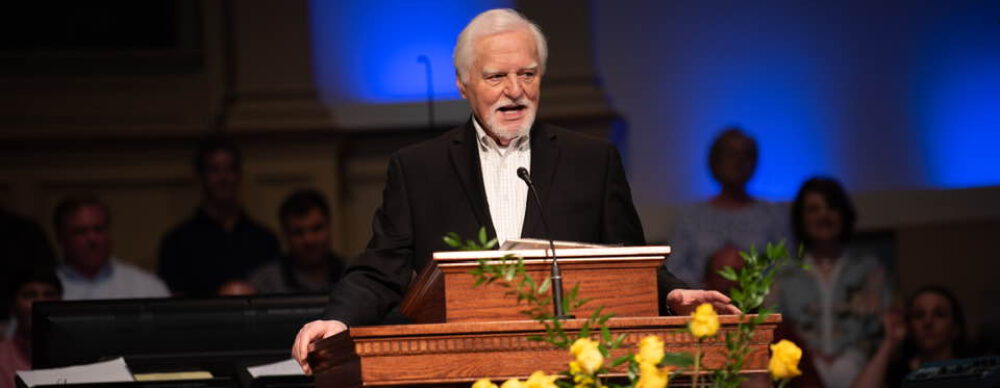
8 ways to avoid calling the wrong pastor

A news article on how to avoid buying a lemon when purchasing a car caught my eye. It gave the usual stuff such as reading the information on the window sticker, checking the maintenance record, studying the interior, the exterior, the tires, etc.

The thought occurred to me that there should be some equally dependable methods for churches when verifying the reliability of the new pastor they are considering.  Veteran workers in the Lord’s vineyard all have their stories of churches that acted too hastily, of committees that did not do their background work or leaders who made a pastoral choice due to pressure from some strong individual.  In each case, the church paid a severe price for their errors.

There should be some foolproof way to guarantee that the new pastor is everything he claims to be and all the committee hopes and promises he is.

There isn’t.

Sorry. You thought I was going to give ten iron-clad ways to get this absolutely right every time and guarantee that no pastoral candidate would ever be a dud?  There is one huge reason why that cannot happen.  To see what that is, skip all the way to the conclusion.

That said, however, there is much a pastoral search committee can do and should do in an attempt to successfully bring the best possible candidate to their church.

Here are my suggestions along that line…

Continue reading

Like being let out of jail

My first pastorate was the most frustrating of the six churches I shepherded. But I made a discovery that was like striking oil or stumbling over a gold vein.

Here’s what happened.

Just after finishing college, we married and I took a job. The plan was to work for two years and pay some bills, save what we could, and then head to seminary in New Orleans. That, incidentally, is precisely what we did, I’m happy to report.

In the meantime, I wanted to pastor a church. The problem was I was Southern Baptist and had just graduated from a Methodist college (Birmingham-Southern) with a degree in history and political science. My training in preaching, in church leadership, and in theology were practically non-existent.

Not exactly the kind of credentials an SBC pastor search committee was looking for.

Thanks to the recommendation from a preacher friend of my brother Ron, a tiny church some 25 miles north of the city invited me to fill the pulpit. After a couple of Sundays, they apparently decided to live dangerously and made me their pastor. I was elated.

I would remain there for the next year and two months. My short tenure furnished one of the most forgettable periods in that church’s long history. But it taught me a hundred lessons more precious than gold, lessons found only in the school of experience and nowhere else.

The most inspiring moment in that pastorate, however, came the day something hit me which had never occurred to my untutored mind. It came with such force that I laughed out loud at the prospect:

I could resign this church and they would call someone better. I would be free and they would go forward. It was a win-win proposition.

The question on the mind of readers is why leaving that church was a new thought to me. Delicious, even.

Continue reading

What pastors should not do about search committees

Just to be safe, you may wish to go ahead and plant your tongue firmly in your cheek.  While the subject is serious, my treatment of it will be only somewhat so.

Let me begin by telling you that in a long ministry (I began pastoring in 1962 and I’m still preaching and ministering), I have literally talked to over a hundred pastor search committees.  In fact, during one three-year period, I counted up and realized I had dealt with an average of one search committee every month, thirty-six in all.

So, pastor, let’s say you’ve been invited to meet with the search committee from the First Church of Butterfly City, and you’re plenty excited.

You’ve been at your present church a number of years now and have about run out of ideas, patience, and energy.  A change would not only be good, it might save your life, your ministry, and even your marriage.

Now, pastor, simmer down.  Do not let yourself become too excited….

First, pastor, you must not assume anything.

–Do not assume the Butterfly committee has done its background checks.  It’s completely possible they may begin tonight’s meeting with, “And who are you again? And where are you serving?”  Assume they know very little about you.

–Do not assume that you are the only candidate the Butterflyians are interviewing.  Committees have been known to invite a series of preachers for interviews, after which they will decide which ones are worth the trouble of traveling to hear them preach.  Assume–until they say otherwise–you are one of several they are looking at.

–Do not assume you are their number one choice and start dreaming of moving to that wonderful church in Butterfly City. This is no time to be calling the chamber of commerce for information on the nearest schools.  This is not yet the time to start doing background checks on the church.  Assume this is just for your encouragement and their education until the Lord and events say otherwise.

Continue reading

Ten biblical truths you might not want to hear

From the beginning, the Lord’s people talk a better game than we live.

So many biblical truths look good on paper and sound great when we’re spouting them.  And yet, judging by the way we live, the Lord’s people probably do not believe the following…

One.  God sends the pastor to the church. 

Churches survey their congregation to find the kind of pastor everyone wants in the next guy.  People lobby for a candidate they like and rally against one they don’t.  And they vote on the recommendation of their committee.  And after he arrives, when some turn against him, they send him on his way.

Do we really believe God sends pastors to churches?  They are God’s undershepherds (see I Peter 5:1-4) and appointed by the Holy Spirit as overseers of the church (Acts 20:28).

Two.  God hears our prayers, cares for our needs, and answers our prayers.

In the typical congregation, what percentage of the people are serious about their prayer life?

If we believed that God hears, cares, and answers, we would be praying over every detail of our lives.  “Pray without ceasing” (I Thessalonians 5:17) would define our very existence.

Three. It is more blessed to give than to receive.

God wants His people to be givers, generous in every area of life.  As a member of the church, He wants us to be sacrificial givers.  (See I Corinthians 8:1ff).

Continue reading

What pastor search committees fear most

“Why did you fear? Where is your faith?” (Mark 4:40)

“For we walk by faith, and not by sight” (2 Corinthians 5:7).

You should read my mail.

Well, maybe you shouldn’t.  You might come away disgusted with the notion that our churches operate in faith, trust God supremely, and always want to do the honorable thing.  Some do; many do not.

A young minister I know is well-trained and very capable, has been called of God and has a heart for ministry.  Some church is going to love having him as pastor.  If they ever decide to call him.

For some reason, pastor search committees are deathly afraid of him.

Time and again committees invite him to visit their church, interview him, and then, because of factors known only to them, pass him over in favor of safer candidates.

I said to him: “By now you know the typical pastor search committee operates more out of fear than from faith.”

They seem to be afraid that….

–they will make the wrong choice.

–the congregation will reject their recommendation.

–some influential church members will scoff at their choice

–they will be seen to be extremists of one kind or the other: Calvinists or Arminians, liberal or fundamental, right-wing nut or social activist, independent or too dependent.

–that in calling someone “different,” they will be seen as doing something unusual, strange, or even “by faith,” Lord help us.

Or possibly, they fear that they shall be seen as operating out of fear.

Continue reading

The pastor was wronged by a search committee. What can he do?

My friend stirred up a furor.

Writing on Facebook, my friend Stan told of a pastor search committee that has just angered him by their treatment of a wonderful young pastor.

As he told it, the committee and the pastor met on several occasions, they heard him preach numerous times, and it was clear to all that “this was of God.” The process worked itself out over several months. The committee voted unanimously that this pastor was their choice.  The pastor himself agreed.

All was well, it seemed.

And then one day, the chairman phoned the pastor. “I have bad news,” he said.  “While everyone is unanimous that you are our choice for the church, however, when we voted on bringing your name before the church as our recommendation, two members of the committee voted ‘no.’”

The vote was 7 for and 2 against.

The two ‘nay-sayers’ on the committee told the rest of the group that while they loved the pastor-candidate and agree he seems to be “the one” God is leading them to, “We just don’t want to go with the first person we talked to.”

They wanted it to be a popularity contest.  Find out “who else is out there.”

Since search committees are expected to bring only unanimous recommendations before the church, the chairman felt he had no choice but to accept his committee’s actions and shut down their dealings with that pastor.

You can imagine how the pastor felt after hanging up the phone.  Disappointment.  Anger perhaps.  Frustration. Puzzlement.

There was nothing the pastor could do about this.  He was at the mercy of the committee.

Continue reading

When the salt of the earth needs sweetening

While researching a subject on-line, I found myself reading some attacks on ministers from fellow ministers. These men of God, assuming that’s what they are and I’m not saying one way or the other, were taking no prisoners.

“That pastor is a liar!” “Preachers lie to you when they say….” “Ten lies preachers tell you.” “That preacher is an agent of hell!”

It was painful.

When those sent by the Father as shepherds of His sheep use such blistering rhetoric, we fail our assignments in numerous ways: we dishonor the Lord, shame the church, needlessly slander our brethren, set poor examples for the people in the pew, and we hold the gospel up to ridicule by the world.

How about a little sweetening, I wonder. And then I remember something.

A friend says there are two kinds of preachers: those who enter the ministry whole and those who enter in order to become whole.

Give me the first kind any day of the week. The second group can be scary and dangerous.

The second group, I believe, is composed largely of ministers with bad mental health.

Here is what bad mental health looks like in the pulpit on a Sunday morning—

1) It’s mean-spirited.

One text you will never hear such a preacher proclaiming is Colossians 3:12: “Therefore, as God’s chosen people, holy and dearly beloved, clothe yourself with compassion, kindness, humility, gentleness, and patience.”

Somewhere along the way these caustic preachers became convinced that their task on Sundays is to “open the wound and pour on the salt.” They are harsh, unloving, unkind, loud, and uncharitable. And they do it all in the name of the Lord.

Continue reading

Cautions as you meet with a pastor search committee

Pastor, you’ve been invited to meet with the search committee from the First Church of Butterfly City, and you’re plenty excited.

You’ve been at your present church a number of years now and have about run out of ideas, patience, and life-savings.  A change would not only be good, it might save your life, your ministry, and even your marriage.

Now, pastor, calm your heart beat. Don’t get overly excited.  We need to talk about a few considerations…

First, pastor, you must not assume anything. If you do, you are setting yourself up for a major disappointment.

–Do not assume the Butterfly committee has done its background checks.  It’s completely possible they may begin tonight’s meeting with, “And who are you again? And where are you serving?”  Assume they know very little about you.

–Do not assume that you are the only candidate the Butterflyians are interviewing.  Committees have been known to invite a series of preachers for interviews, after which they will decide which ones are worth the trouble of traveling to hear them preach.  Assume–until they say otherwise–you are one of several they are looking at.

–Do not assume you are their number one choice and start dreaming of moving to that wonderful church in Butterfly City. This is no time to be calling the chamber of commerce for information on the nearest schools.  This is not yet the time to start doing background checks on the church.  Assume this is just for your encouragement and their education until the Lord says otherwise.

–Do not assume they owe you anything or you may be disappointed.  In the minds of most PSC committee members, they are walking through a garden in search of the prize-winning rose.  The idea that they owe you a call-back is foreign to most. Assume you will not hear from them again. The surest way to disappointment is to wait by the phone for a call that in all likelihood will never come. (I have stories about this.  I’m still waiting to hear from two or three committees that promised they would be in touch.  They didn’t.) 

Continue reading

What to do in a trial sermon (i.e., you are the candidate)

The prospective pastor walked to the pulpit, took the measure of the congregation, and began. “There is a powerful lot of wondering going on here today.  You are wondering if I can preach. (pause) And I am wondering if you know good preaching when you hear it!”

I know a good Flip Wilson story that fits here, but I’ll tack it onto the end of this.

Now…

Not all pastors are asked to deliver a “trial” sermon to the congregation they hope to serve.  Some are appointed by a bishop and others are chosen by elders or a committee. We Southern Baptists usually use the procedure listed below.  Of the six churches I served through 42 years of ministry, only one brought me in without the people hearing me preach.  The other five administered the usual “trial.”

The procedure goes like this….

The pastor search committee zeroes in on a candidate they like.  They’ve prayed a great deal, visited the minister’s church, heard him preach numerous times, interviewed him and his spouse, and run all the background checks and references.  Now, at long last, they are ready to present their choice to the church.

The congregation will be given information on him that week, will hear him preach in the Sunday morning service, and then will take a vote, immediately following or on the next Lord’s Day.

That sermon–when the prospective pastor preaches to the congregation which will be considering “calling” him as their new shepherd–is a huge deal to everyone involved.

For good reason we call it a “trial” sermon. No minister takes it lightly.  If things go according to plan, his life and the eternal destiny of a lot of people will be changed.

The preacher must not set out to win the congregation’s approval, but to show them who he is.  He wants to help them decide whether he would be right for that church. 

No preacher wants to go to a church where he would not fit.

Continue reading

What pastor search committees fear most

“Why did you fear? Where is your faith?” (Mark 4:40)

“For we walk by faith, and not by sight” (2 Corinthians 5:7).

You should read my mail.

Well, maybe you shouldn’t.  You would come away disgusted with the notion that our churches operate in faith, trust God supremely, and always want to do the honorable thing.  Some do; many do not.

A young minister I know is well-trained and very capable, he is called of God and has a heart for ministry.  Some church is going to love having him as pastor.  If they ever decide to call him.

Search committees are deathly afraid of him.

Time and again committees invite him to visit their church, interview him, and then, because of factors known only to them, pass him over in favor of safer candidates.

I found it necessary to tell the hurting brother, “By now you know the typical pastor search committee operates out of fear.”

Fear that….

–they will make the wrong choice.

–the congregation will reject their recommendation.

–some influential church members will scoff at their choice

–they will be seen to be extremists of one kind or the other: Calvinists or Arminians, liberal or fundamental, right-wing nut or social activist, independent or too dependent.

–that in calling someone “different,” they will be seen as doing something unusual, strange, or “by faith.”

Or possibly, they operate out of the fear that they shall be seen as operating out of fear.

Where is your faith?

In selecting and commissioning their committee, leaders of the congregation should instruct them that…

Continue reading