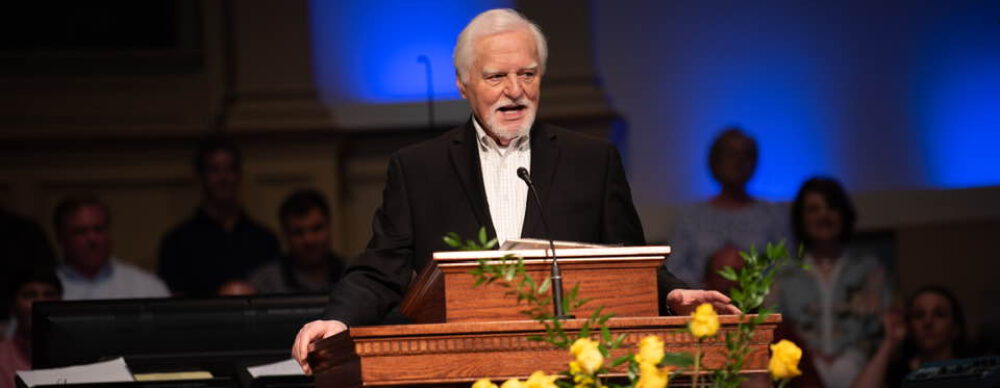
The pastor says he intends to write a book. Here’s why he probably won’t.

The pastor said to me, “When I retire, I’m going to write a book.  I have all these great stories and experiences I’m itching to tell.  That’s what I’m going to do.”

I said, “No, you won’t.”

He was taken aback.

“Why do you say that?”

“Because I’ve heard it too many times.  Preachers who have not written anything more than copy for the church sign think that when they hang it up, they’re suddenly going to transform themselves into authors. And it’s not going to happen.  It never happens.”

“Why do you think that is?” he asked.

“No one can go a lifetime without writing and suddenly flip a switch and write an entire book. Especially one worth reading.”

He agreed to give that some thought.

Let me say up front that I’m no authority on this subject.  I’ve written hundreds of articles but only a few books (seven actually).

For thirty years, I’ve written for Christian magazines.  A few of my articles have made it into seminary textbooks.  And I’ve published books of my cartoons, one series of which sold over 300,000 copies.  But only late in life have I written what Dad once called “an actual book,” meaning a volume of only words and no cartoons.

All my life, I have written. As a seminarian in my mid-20s, while pastoring a small church on Alligator Bayou some 25 miles west of New Orleans, I wrote a devotional column for our weekly newspaper.  That was exactly 50 years ago, and I’m still typing away. I write for this blog, have a page in each issue of Lifeway’s Deacon Magazine (“My Favorite Deacon”), and am always working on the next book.

To all the pastors who want to write that all-important book of memoirs when they retire, I have a few words of counsel:

1) Read constantly. The point is, this is how you learn what good writing looks like.  And just as importantly, you learn to recognize terrible writing.

The would-be writer who does not read much will turn out material amateurish to an embarrassing degree. Teachers of music and poetry speak of amateurs with no knowledge of the basics showing them compositions which “God gave me.”

A few years back, when someone sent me several cassette tapes of songs they had written direct from the throne of God, I passed them along to my favorite music professor (who happened also to be our minister of music).  Later, I asked, “What did you think of my friend’s music?”  He was quiet a moment, then said, “Joe, it’s junk.  Trash.  It’s the worst thing I’ve ever heard.”

Yikes.  My problem then was going back to my friend and giving him the bad news as tactfully as possible.

There is no substitute for learning the basics of writing. And nothing accomplishes this more than reading a great deal of excellent writing.

2) Write a great deal.

“I don’t have time now,” the pastor says. “But after I retire, I’ll have lots of time.”

“I beg to differ,” I say.  “You have plenty of time now.”

Pause. No response.

“You have the same amount of time everyone else does–168 hours a week.  It’s a matter of priorities, of deciding what to do with your time.”

I once asked Pastor Larry Kennedy how he found the time to write books. We were neighboring pastors, he at Amory and I in Columbus, Mississippi.  He said, “I get up early and write an hour every morning.”

That’s how it’s done. You find slivers of time wherever you can, and you write. And if you cannot “find” them, you create them.

If nothing else, Pastor, open your Word program and write for that, things you never intend anyone else to see. You’re practicing, trying to learn the craft, to “find your voice,” as they say.

Continue reading

Yes, pastors sometimes say dumb things. Here’s why.

“Remind them of these things, charging them before the Lord not to strive about words to no profit, to the ruin of the hearers” (II Timothy 2:14).

The desire to be clever has tainted many a good minister, sabotaged many a fine sermon, and probably messed up a few marriages along the way.

I was listening to a radio preacher while driving home from somewhere. The preacher sounded “live,” and was clearly a biblical conservative, meaning I liked most of what he had to say.  Then, he spoiled it all and said something that “got my goat.”

He mentioned a well-known Southern Baptist evangelist who once preached in his church. “I asked him, ‘Brother, how long does it take you Baptists to disciple a new believer?’”

“He answered, ‘I don’t know. We’ve never done it.’”

Then he, the radio preacher, said, “Shameful!”

From that launching pad, he proceeded to disparage churches for not discipling people while tellling how it ought to be done.

I found myself wondering two things.

Why would the evangelist say such a patently dumb thing–that Baptists have never discipled anyone!–and then, why would the radio pastor repeat it?  Both are foolish statements, and unworthy.  They reflect poorly on everyone involved–the speakers, the churches, and mostly the Lord Jesus Christ.

I suspect I know why the evangelist said it and the radio preacher quoted it.

Continue reading

How to write boring articles and preach dull sermons

My friends who read the title will think, “Well! Finally something Joe knows a little about!”

Every preacher, I imagine, knows about dull sermons. Anyone charged with turning out multiple sermons a week over decades will certainly produce his share of messages dead on arrival.

I’m thinking of a Christian leader/professor of past years who turned out book after book and built a reputation as a leader/writer/professor of note.  He was off the scene by the time I was thirty, so I never saw him when he was in his prime or I in mine. But, repeatedly, I came away from his writings thinking, “How dull. Why was he considered such a wonder?” My quick answer is that the standards were different in the mid-1900s. Denominational publishing houses turned out books not for their sharp content or even sales figures but for other reasons. In a word, he was “safe.”

Now! The challenge on penning something about dull writings and boring sermons is to keep from being dull myself. But, always one for a challenge, let’s see how this goes.

My recipe for articles and sermons that are DOA….

1. Spout platitudes.

Given a choice between a catchy turn of phrase and an old saying you’ve heard a thousand times, go for the latter. Faced with telling either something exciting you saw yesterday or an uninteresting rehashing of something Charles Spurgeon said 150 years ago, Spurgeon wins without a runoff.

Never meet a cliche you don’t like.  Pepper your sermons/writings with old bromides, common sayings, and everyday wisdom.  Likewise, shun (like the plague?) any expression that would challenge the reader/listener to question his presumptions, analyze his ways, reconsider his beliefs.

Continue reading

Some things, my friend, you just do not want to know

“He leadeth me in paths of righteousness, for His name’s sake” (Psalm 23:3).

Pastor, you do not want to know why that committee turned you down for that position you wanted so badly.

I’m rereading my daily journals for the decade of the 1990s.  Much of it I’d long since forgotten, so in many respects, it’s fun.  One thing struck me, however, about the year 1992.

I was looking for a way out of this church!

By “this church” I mean the one I served as pastor nearly 14 years (1990-2004) and remained as a member through 2016.  It had come through a crisis 18 months before I arrived that almost resulted in its self-destruction.  The Lord sent me to half a congregation, millions of dollars in debt, an odd-shaped sanctuary that had had major problems from the beginning and constantly needed work, and a dysfunctional leadership team of some of the greatest souls in the kingdom mixed with some of the strangest birds ever.

My wife and I were hurting financially and it appeared to be getting worse.  We were living in rented quarters and were cutting into the small savings we kept from selling our house in North Carolina.

Some of the leaders were unhappy with us from the first and looked for ways to undercut everything we tried.

Nothing about this was fun.

Continue reading

What the embattled pastor prays

Lord God of Abraham, Isaac, and Israel, let it be known this day that You are God in Israel and that I am your servant…. (I Kings 18:36)

Elijah was confronting the prophets of Baal when he prayed that brief but potent prayer. But his goal was not to win these renegades over. His target audience was the spectators, the Israelites who in their shallow affection were going with the deity who could produce the most dramatic fireworks that day.

I have prayed Elijah’s prayer.

Many a time as I entered the sanctuary for the Sunday morning service, I sent up this plea. “Lord, there are a few people in this church who are roadblocks to us doing anything. They fight me on every proposal. And they do it in Your Name. Father, please–let them know that You are God and that I am your servant.”

Now, you would think it was the second part of that prayer that occupied my attention, that what I wanted most of all was for this bunch of nay-sayers to get clear on the fact that God in Heaven had sent me as His ambassador. But you’d be wrong.

Before anything else, I wanted the same thing Elijah wanted for God’s people that day: for them to settle once and for all that the Living God is Lord and in charge and in this place. That He is “God in Israel.”

I am personally convinced that the trouble-makers in most churches do not really believe in God. Oh, they do, theoretically. If you press them, they can tell you when they professed faith in Jesus and were baptized. Call on them to pray in the service and they will render up an invocation or offertory prayer with the best of them. It’s just that they don’t really believe God is on the premises.

Continue reading

When the stiff, inflexibles are in control of the church

“You stiff-necked and uncircumcised in heart….”  (Acts 7:51). 

“No one puts a patch of unshrunk cloth on an old garment, for the patch pulls away from the garment and a worse tear results.  Nor do men put new wine in old wineskins….” (Matthew 9:16-17).

Let’s start with an intriguing quote from a great churchman….

“The church recruited people who had been starched and ironed before they were washed.”  –John Wesley

Not sure of the context of Wesley’s quote, but I like it because it so accurately sums up the situation of a small contingent within every church.  Now, I have to say this conjures up memories of my childhood.  Mom did her own washing and ironing, and often, to starch a shirt or blouse, she would soak it in a bucket into which she had mixed up the dry starch with water. These days, anyone starching at home uses a spray, I expect.

There’s nothing like a great starched shirt.  I love them. Trace Cleaners does mine. My wife loves me but not enough to do that!

Now then, some church members have been starched and ironed before they were washed.  A great metaphor!  But what does it mean?

“Starched and ironed” means they are now–

–prim and proper

–firmly set and fixed in their ways

–but they are missing something essential: An experience with the living God by the blood of Jesus Christ.  Scripture promises “the blood of Jesus His Son cleanses us from all sin” (I John 1:7).  But these people have bypassed that experience for one reason or the other.

As a result, they are–

Continue reading

How to say ‘no’ to a wonderful opportunity

“They said to Him, ‘Lord! Everyone is looking for you.’ He said to them, ‘Let us go into the next towns, that I may preach there also, because for this purpose I have come forth’” (Mark 1:35-38).

Turning down a lousy request is no problem.

–“Hey Joe! Wanna go bungee jumping?” Ha. Not in this lifetime.

–“Hey preacher! How about a night of bar-hopping on Bourbon Street!” You talking to me, Leroy?

–“Pastor, would you write a book on the superiority of your theological system over all others?”  Uh, no.  But have a nice day.

Saying ‘no’ to something you hate to do, do not want to do, cannot do, and would not be caught dead doing–piece of cake.

No one has to counsel you on how to do that.

It’s all those other requests that you find difficult to turn down.

“Would you judge our city’s beauty contest?” Okay, no one has actually asked me to do that, but I live in hope. A preacher, if asked to do this, which I find inconceivable, should turn it down for a hundred rather obvious reasons.

Anyway, back to the subject with more plausible invitations…

Continue reading

59 things not to say to a preacher

1. “I enjoyed your little talk.”

2. “Is what you said true, or was that just preacher talk?”

3. “I heard (famous preacher) preach that same sermon on television.  He did it so much better.”

4. “Could you come to my home and preach that sermon to my husband?”

5. “You ought to hear the pastor at our church.  He’s been to seminary.”

6. “Our church is so much bigger (better, friendlier, whatever) than yours.”

7. “The restroom is out of paper.”

8. “My cousin said I would like your preaching. It’s all right, I guess.”

9. “Someone–I’m not saying who–told me to tell you….”

10. “Can I come by your office in the morning?  I might need a couple of hours of your time.”

Continue reading

A natural disposition toward shallowness: The preacher’s occupational hazard

“I was born with a natural disposition toward shallowness.  I now work as a pundit and columnist.  I’m paid to be a narcissistic blowhard, to volley my opinions, to appear more confident about them than I really am, to appear smarter than I really am, to appear better and more authoritative than I really am. I have to work harder than most people to avoid a life of smug superficiality.  –David Brooks, “The Road to Character”

We preachers have a great deal in common with “pundits and columnists.”

We are constantly driving ourselves to produce the next sermon, develop the next church program, write the next article, and find the perfect staff member–no matter whether we feel up to it or not.  We work to appear confident.

Never let ’em see you sweat.  That’s how the commercials phrase it.

As a result, we tend to gravitate toward superficiality and shallowness.

It goes with the job, I suppose.  An occupational hazard?

Once in a while there comes along a great quote with wonderful insights into the Scripture, better understanding of Christian principles, and a clearer handle on the facts of life. We gladly queue up to drink at the fountain of such deep thinkers. My personal favorite is Clive Staples Lewis.

Elizabeth Elliot called C. S. Lewis, “That wonderful man who seems to have thought through everything.”  I have found myself quoting both Lewis and Mrs. Elliot, not only because of the great sound bytes, but because they are often clear on a matter I’ve not thought through. So, it’s easier just to quote someone else.

Shallowness: A way of life for many of us in the ministry.

There is a reason for this sad condition:  When you are under the gun to turn out several sermons a week in addition to all the other tasks pastors must attend to, you simply do not have the time to pursue most subjects to the depth you should and would like. (That’s one reason I have treasured retirement. Finally, I have the time!)

I criticize pastors who plagiarize, but I understand how it happens.

Continue reading

The games some preachers play with God’s Word

“I did not send these prophets, yet they ran with a message; I did not speak to them, but they prophesied” (Jeremiah 23:21).

What if we sliced off a bit of scripture here, pasted it in there, omitted a reference over yonder, and pretended the result is what Jesus actually said?

That happens.  (Fortunately, it happens rarely.  But it is done often enough to make it a concern to those who value God’s word and our integrity.)

Here’s my story from a few years back, one that still smarts….

At a preachers conference, we heard a stem-winding brother drive the several hundred of us to our feet in a shouting, hand-clapping final eruption of praise and joy.  He was good, I’ll give him that.

His text was Hebrews 13:8, “Jesus Christ the same yesterday, today, and forever.”  His theme was that God’s people today have no trouble with Jesus Christ being “the same yesterday”–His birth in Bethlehem, His miracle-working ministry across Galilee and Judea, followed by His sacrificial death and His divine resurrection–and no trouble with Jesus Christ being “the same forever”–as we proclaim His return to earth, the judgment, and His forever reign.

The problem present-day Christians have, said the preacher, is with “Jesus Christ today.”

We have no difficulty believing He did all those great things in the past and that He will do all He has promised for the future.  We just refuse to believe He can help us at this moment, said the speaker.

In order to illustrate this scripturally, he directed us to Bethany where Lazarus lay dead four days while everyone waited for the Lord to come.  (That’s John 11.)  When our Lord arrived, Lazarus’ sister Martha rushed to meet Him.

“Lord, if you had only been here!” she exclaimed.  “He would not have died.  You could have done something.”  She believed in Jesus Christ yesterday.

A moment later, she said, “I know that he will rise again in the resurrection at the last day.”  She believed in Jesus Christ forever.

The problem she had was Jesus Christ today, said the minister. Just like many of us.

Continue reading