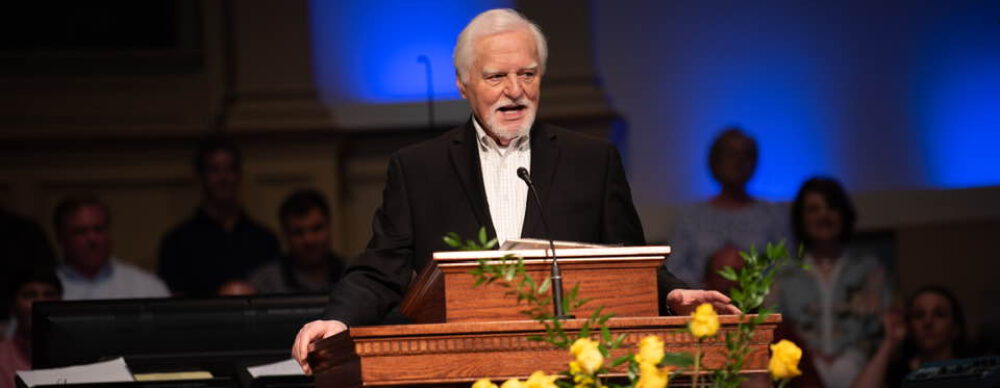
12 things pastors should do promptly–and 5 they shouldn’t!

Do these things promptly…

    1. Confess sins.  “Keep short accounts with God,” it’s called.
    2. Write thank you notes.
    3. Write notes of appreciation.  “Great song Sunday.”  “I hear great things about your class.”
    4. When inspiration for a sermon or an article  comes in the middle of the night, it must be recorded then or, count on it, you’ll never remember it.  Keep a pad by the bedside.
    5. When you agree to do a friend  a favor–write a letter of recommendation, call on a patient in a hospital, whatever–do it immediately or you will never do it.
    6. Jot down a story, illustration, or thought for a sermon that occurs to you.  If you’re in the car alone, look for an exit and get off the highway so you can write this down.  I’ve sometimes asked my wife to make a note for me as we drove.
    7. Pray for someone when prompted by the Spirit.  When I spot someone who reminds me of a person I knew years ago, I take that as an impulse to pray for them.

And these things, too–

Continue reading

Ministers, get all the education you can. Then, never mention your degrees!

“Beware of Pharisees.  They love the place of honor at banquets and the chief seats in the synagogues, and respectful greetings in the market places, and being called by men, Rabbi.  But do not be called Rabbi; for One is your Teacher, and you are all brothers; and do not call anyone on earth your father; for One is your Father, He who is in heaven.  And do not be called leaders, for One is your Leader, that is, Christ.  But the greatest among you shall be your servant.” Matthew 23

Pastor, when given a choice–and you always have a choice–try not to look and act like a Pharisee.  For my money, the best way–the very best way in the universe to come across as a big-shot–is to use this phrase: “When I got my doctorate…”

I’m not sure why that sets me off, but it does.  And I haven’t the slightest idea whether it’s only me or the rest of the universe.

Ninety-nine times out of a hundred, that phrase is completely unnecessary and is inserted only to call attention to oneself, to make sure the hearers fall to their knees in abject horror.  “Oh my, you have a doctorate?! You must be of superior intelligence, far beyond most mortals.”  “Forgive me for thinking you put your pants on one leg at a time!”

The plain truth is doctorates are over-rated. There are people with earned doctorates who scarcely know how to sign their name or use the telephone.

The chairman of a search committee said to me, “Should we be concerned that this preacher does not have a doctorate?”  I said, “My friend, I know people with doctorates who have a hard time putting two sentences together. Those degrees are easy to come by these days and are vastly over-rated.  Pay attention to the pastor’s preaching, listen to his conversation, and get to know the man.  But ignore the absence of a doctorate.”

I assured him his candidate was a godly minister of the gospel whom he would come to appreciate in the years ahead.

Two years later, that chairman went out of his way to thank me. The pastor, whom they had called to their church, was doing splendid work far beyond anything they had a right to expect.  And they call him by the finest title I’ve ever known: “Pastor.”

If you are the preacher, get all the education you can, by all means.  And then, never mention it again.  Never. Mention. It. Again.

Continue reading

“Oh! How long it’s been since I’ve seen you!”

Wherefore God is not ashamed to be called their God” (Hebrews 11:16). 

What do you do when you know you should recognize a person, but you can’t find their name in your head?  My answer: Admit it, and save yourself some stress.

Not everyone agrees, however.

Songwriter Robert Sherman was attending the birthday party for Will Durant, the 85-year-old who with his wife Ariel had recently produced the enormous set of volumes on The History of Civilization.  It was a feat of incredible magnitude for which they had won all kinds of awards.

One month earlier, Sherman had spent several hours with Dr. Durant during which they discussed literature and film.  But now, in the crowded reception, as they greet one another, Durant just cannot place Sherman.  He knows he’s supposed to know him but cannot get beyond that.

Bob Sherman said Dr. Durant would stare, smile, and try to make the connection. You could almost see the wheels turning in his head.

Finally, Durant said, “It’s good of you to come.  It’s been a long time since I have seen you.  Too long.”

Sherman, relating this story in Moose: Chapters from my Life, called Durant’s words  “an all purpose statement.”

And, he says, Sherman understands the problem.  The older we get, the more prone we are to forgetfulness.

In his retirement years, news anchor Walter Cronkite loved to visit with friends in his boat off Martha’s Vineyard.  Now, he was hard of hearing but rarely admitted it.  When Cronkite, his wife, and friends stopped at a lakeside store, they went inside.  Some stranger greeted him and asked him a question.  He figured it was “do you know this person or that?”  So, Cronkite answered, “We get together once in a while, but I’ve not seen him lately.”  Later, in the boat, his wife said, “Do you know what that man asked you?”  “No, not really.”  She: “He asked if you know the Lord Jesus as your Savior?”

Do you have a similar story?  Here is one of mine.

Continue reading

What a good sermon intro looks like. And what it does.

I said to a pastor friend, “I wonder if you’d allow me to offer a tiny word of criticism on last Sunday’s sermon.”  He sat up straight and beamed. “I’d welcome a criticism!”

This good man is even excited to have someone do this.  Wow.  (He said later that everyone compliments his preaching, but sometimes he’d appreciate a helpful suggestion.  I had two thoughts: Any right-thinking pastor would do that, but at the same time, we don’t want a constant barrage of suggestions or criticisms.  Just one or two along the way at helpful intervals would be quite sufficient, thanks.)

I said, “You jumped off into the deep end of the pool with us.  Within two minutes after you began the sermon we were in over our heads.  That makes it hard on a congregation to keep up and follow you.”

He kept listening.

“How much better to wade out in the shallow end at first. Let us adjust to the water temperature and see where you are going with this message.  Gradually take us into the deep.”

He welcomed the thought and proved once again what I already knew–what a terrific fellow he is.  One doesn’t abruptly offer criticism or suggestions without confidence that the recipient will welcome it.

Story One. 

The U.S. Attorney for the southern district of our state was addressing a weekly men’s luncheon at our church this week.  He began with this story…

Continue reading

How to frighten a preacher

“Pastor, some of our members are concerned.”

You now have his attention, believe me.

Say all you want about how the minister is God-called and God-protected and that sort of thing, but he would be less than human if he did not want the people he’s serving to be supportive and responsive. Since he’s sent to help them, he will always be looking for some kind of evidence he’s accomplishing that purpose.  Otherwise, he feels that he has either failed them or God. Or both.

Every pastor is vulnerable as a result.

What makes him more vulnerable to negative influences from the congregation is that he has a family to feed and look after the same way you do if you work at the post office, drive a delivery truck, teach school, or extract teeth. The fact that he needs this job means he opens himself up to pressure from his constituents.

As a result, he reacts–at least emotionally–when he hears some of these lines that have been used on preachers since the beginning of the church.

–“I know we ought to be reaching all these people and it’s good they’re being saved, but I miss our church the way it used to be.”

Continue reading

Seven things the pastor cannot do from the pulpit

so that you may know how you ought to conduct yourself in the house of God, which is the church of the living God…. (I Timothy 3:15).

You can’t chew gum in the pulpit, smoke a cigarette, or bring your coffee in with you. You can’t preach in your pajamas or lead a worship service in your swimsuit.

But you knew that.

However, some pastors do things every bit as silly as this, and as counter-productive, we must say.

Now, in one sense, a pastor can do anything from the pulpit.  One time.

But we’re talking about things no right-thinking godly pastor should attempt to do from the Lord’s sacred place of leadership in His church.

1. He cannot recommend a book with questionable material nor condemn a book he has not read.

Okay. He can, but he shouldn’t.

2. Ditto a movie.  Some movies have much to be commended, but by their horrible language and their using Christ’s name as profanity they destroy all the good.  The pastor will not want to endorse such a movie even though it has some positive aspects.

3. He cannot bring someone into the pulpit, even for an interview, whose life is a contradiction to the way of Jesus Christ.

Continue reading

The worst part of pastoring

“What’s the worst thing about being a pastor?” she asked. “What is your worst nightmare?”

She and I were texting about the ministry when she threw this one in my direction.

She gave me her own ideas. “People writing nasty letters complaining? giving you advice? criticizing what you wear?”

I laughed and thought, “Oh, if it were that simple. No one enjoys getting anonymous mail trying to undermine your confidence in whatever you’re doing, but sooner or later most of us find ways of dealing with that.”

“It’s worse than that,” I typed. Then I paused to reflect.

Hers was such a simple question, one would think I had a stock answer which had been delivered again and again. But I don’t remember ever being asked it before.

Now, I have been asked plenty of times variations of “What’s the best thing about pastoring?” My answer to that is not far different from the response most other pastors would give: the sense of serving God, the joy of making a difference in people’s lives for Jesus’ sake, that sort of thing.

You knock yourself out during the week counseling the troubled, ministering in hospitals, visiting in their homes, conducting funerals and weddings, all while you are working on the sermons for Sunday, meeting with staff members planning upcoming events, and handling a thousand administrative details. Then, you stand at the pulpit twice on the Lord’s Day and give your best. And you see doubters begin believing, the fearful becoming courageous, the lost getting up and coming home to the Father, people saying God has led them to join with your flock, and broken homes restored –it doesn’t get any better than that.

You are in your glory.

Continue reading

I prayed for my preaching–and got answers I did not expect

(This is a reprint of an article I wrote for Leadership magazine several years ago, maybe 2001. It was later picked up and included in “The Art and Craft of Biblical Preaching,” a textbook edited by Haddon Robinson and Craig Larson, published by Zondervan, 2005.)

I had been preaching for more than two decades, and I should have been at the top of my game. The church I served ran up to 1,500 on Sunday mornings, and the live telecast of our services covered a fair portion of several states. Most of my colleagues thought I had it made, and if invitations to speak in other churches were any sign, they thought I could preach.

But I didn’t think that.

My confidence was taking a beating as some of the leaders let me know repeatedly that my pulpit work was not up to their standards. Previous pastors carried the reputation of pulpit masters, something I never claimed for myself. To make matters worse, we had numerous vacancies on staff and my sermon preparation was suffering because of a heavy load of pastoral ministry. But you do what you have to do. Most days, my goal was to keep my head above water. Every day without drowning became a good day.

That’s when I got serious about praying for my preaching. Each night I walked a four-mile route through my neighborhood and talked to the Father. My petitions dealt with the usual stuff–family needs, people I was concerned about, and the church. Gradually, one prayer began to recur in my nightly pleadings.

“Lord,” I prayed, “make me a preacher.” Asking this felt so right I never paused to analyze it. I prayed it again and again, over and over, for weeks.

I was in my fifth pastorate. I owned a couple of seminary degrees. I had read the classics on preaching and attended my share of sermon workshops. I was a veteran. But here I was in my mid-forties, crying out to heaven for help: “Lord, make me a preacher.”

I knew if my preaching improved, if the congregation felt better about the sermons, everything else would benefit. I knew that the sermon is a pastor’s most effective contribution to the spiritual lives of his members. To do well there would ease the pressure in other areas. So I prayed.

Then one night, God answered. Continue reading

Why change is hard for some of God’s people

I sometimes tease our young pastors that “in all the world, there are only three people who enjoy change, and none are members of your church.”

It’s a common perception in our churches that the Lord’s people seem to be resistant to change. And there is certainly plenty of anecdotal evidence, as flockless shepherds step up to tell how they lost their pulpits when they tried to change a schedule or a program.

But, look around at the people attending our churches. They seem to handle change fairly well in other areas of their lives. They’re on computers, own X-boxes, play farm games on Facebook, send emails, and stay in touch with the world by their smart phones. No one at church drives a 1948 Packard because he doesn’t like change. No woman still wears the hair styles of the 1930s (as they did when I was a kid in the 1940s and ’50s). Their clothing is fairly up-to-date.

And yet, I can take you to an even dozen pastors right now who carry the scars of battles they fought trying to get the Lord’s people to make even the simplest of changes.

What’s going on?

Here is my take on why change is hard for God’s people. And the news, I have to say, is not good. The Lord who said, “Behold, I make all things new” (Revelation 21:5) is probably not very pleased with those who hold onto what He did in the past and refuse to accept the new thing He is doing today.

The Lord who repeatedly commanded that we “sing unto the Lord a new song” (Psalm 33:3; 96:1; etc.) is probably not impressed when we refuse to sing anything but the songs we grew up under.

Why Change is So Hard for the Lord’s Frozen Chosen.

By the way, these are in no particular order, other than as they occur to me.

1. Change feels like loss.

–“If we add choruses to our worship service, we will have to cut out some of the hymns. But I love the hymns. Why should I give up my wonderful hymns for some cutesy little tunes someone wrote in his garage?”

–“If we add an additional worship service, we will divide the congregation. I’ll not see my friends unless we attend the same service. I am ag’in it.”

–“When I go on a diet, I lose weight and get healthier, which are all good. But I also have to quit wearing some things in the closet I love. And give up chocolate ice cream. So, no diet for me, thanks.”

2. Change challenges our belief system.

–“It was good for Paul and Silas; it’s good enough for me.” Yes, sir–give me that old time religion.

Continue reading

Preaching courageously in a climate of fear

God has not given us the spirit of fear, but of power and love and a sound mind.  –2 Timothy 1:7

You therefore, my son, be strong in the grace that is in Christ Jesus.  –2 Timothy 2:1

I solemnly charge you in the presence of God and of Christ Jesus…preach the word! Be ready in season and out of season; reprove, rebuke, exhort, with great patience and instruction. –2 Timothy 4:1-2

“They’re almost to the point of giving me my walking papers.  The animosity from some of our leaders is so thick you could cut it with a butter knife.  What do I do now?  How do I stand in the pulpit and preach? And what should I preach?”

If you’ve never preached the gospel while sitting throughout the congregation were people who hated you, arms folded and brows furrowed, you’ve missed out on one of the great experiences of the Christian life.

If you’ve never feared for your job for nothing more than preaching the whole counsel of God, you’re in a minority, pastor.

Sometimes the ill-will is for nothing you have done or failed to do.  The plotters and schemers have their own reason and their own private agenda.  Sometimes, the problem is you have stepped across an invisible line and intruded into forbidden territory.

You preached against guns when every man and half the women in the congregation were bonafide members of the NRA.  They were aghast.  “How dare you!”

You preached God’s love for all races when the KKK (or their modern successors) were looking around for their next victim. “You crazy, boy?”

You preached tithing to people who had made idols of their money, preached sexual purity to a gang of partyers, preached God’s definition of marriage to a liberal crowd. “Do you know where you are?”

Continue reading