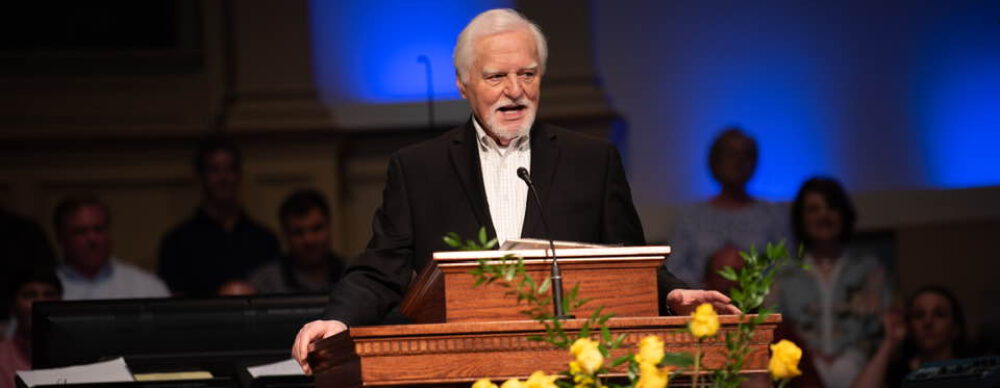
“Who does Jesus think He is?” (First of several articles on Revelation 1-2-3, the “Seven Churches of Asia Minor.”)

(The Seven Churches of Asia Minor, based on Revelation 1-3, is the subject of the Winter Bible Study in SBC churches. )

“The Revelation of Jesus Christ…. the faithful witness, the firstborn from the dead, and the ruler over the kings of the earth” (Revelation 1:1-5).

An  Episcopal church or a United Methodist church receives a letter from the bishop which is read to the congregation the following Sunday.  The letter scalds the church for its failure to live up to its obligations, keep its pledges, or honor certain commitments.  Following the reading, a discussion breaks out within the membership.  Several people, who may have joined the fellowship only recently, are concerned and want to know, “Who does the bishop think he is? What gives him the right to rebuke us?”

The minister is glad to answer the question.  “We are not on our own out here. We are a member of this denomination. The denomination owns this church.  The bishop is the local ruling authority for the denomination. We may or may not like his assessments and rulings, but there they are.”

Those of us whose churches observe congregational forms of government never receive letters from the bishop for the simple reason that we don’t have them.  Our churches are autonomous (self-governing, independent) and cooperate to whatever extent we can, feel led, or choose to.

So, here are the seven churches of Asia Minor (present-day Turkey):  Ephesus, Smyrna, Pergamos, Thyatira, Sardis, Philadelphia, and Laodicea.  They receive this circular letter which is to be read, no doubt copied, and then sent on its way to the next church.

Five of the seven churches are told to “shape up or ship out.”  That is, they’re told to “Repent or else.”  Only two of the churches, Smyrna and Philadelphia, get off without a rebuke.

Continue reading

What counts most when rivals suit up for the big game

As I write–early Tuesday morning after staying up to watch the Monday Night Football game between our beloved New Orleans Saints and their division rival the Carolina Panthers–I’m still thinking about the lessons of last night’s football game.  As always in a close fought duel, and this was that, there are many lessons.  But for me personally, there is one big lesson.

How badly you want this game has little to do with anything.

The air waves were filled yesterday with reports of Carolina players carrying grudges over how they felt the Saints players treated and mistreated them following last year’s battles.  Since the teams are in the NFC South division–along with the Atlanta Falcons and Tampa Bay Buccaneers–they have to play each other twice each season.  (This year, the Saints lost the opener to Tampa and won the second game from them last week.  The Saints swept Atlanta both games.  And last night was the first of two games with Carolina.  They’ll play in New Orleans in two weeks, the final game of the year for both.)

Last year, a couple of Saints players sent little mementos, we’re told, to key Carolina players.  One was a broom.  No message, just a broom.  But it communicated very well:  “We swept you.”  That is, our team won both games against you.

The Carolina players did not take that very well.  They interpreted it correctly as the winners rubbing salt in their wounds.

Coaches urge their players not to do that, not to give opponents any reason to hate them any more, to motivate them highly to win next time.

But apparently it had worked.  Cam Newton, quarterback of the Panthers, carried an image of a broken broom on his shoes.  “Not this time,” it seemed to communicate.

One of the announcers for the game said, “I played in this division.  These teams all hate each other.”

Not what we would call “biblical hate,” I would hasten to say.  In fact, at the conclusion of a game you’ll often see them chatting with each other on the field.  When a Saints guy was knocked down last night, more than once I saw a Panther player lend him a hand to get back up.

Okay.  As the game was about to begin, I told some of this to my wife.  She asked, “Does a grudge help them play better?”  I said, “We’ll see.”

But I knew it doesn’t.  Sometimes a deep animosity can interfere with a player’s concentration and force him to make mistakes some of which will get his team penalized.

Continue reading

What pastors worry about most

“Be anxious for nothing…” (Philippians 4:6).

“Why did you fear? Where is your faith?”  (Mark 4:40)

Worry, they say, is spending energy and resources on needless situations.  Crossing bridges we may never come to.  Paying bills that never come due.

Worry is a waste of the imagination, someone said.  And almost everyone agrees that, for a believer, worry is sin.

But that doesn’t help, does it?  Telling someone not to worry is the equivalent of instructing passengers not to be afraid when the plane is in a nosedive.   A lot of good that would do.

Now, what one person calls “worry” another may call “being concerned” or “caring deeply.”  When a husband tells his wife he does not worry about some upcoming crisis, almost always she interprets that as his not caring.  When the church treasurer said he lies awake at night worrying about our finances, I replied, “Not me.  The Lord is going to be up all night anyway; I let him worry about it.  I sleep like a baby.”  He was thereafter convinced I didn’t love the church as much as he did.

That said, my experience is that some issues do indeed occupy space front and center in the minds and hearts of God’s ministers.

Continue reading

Does God allow His people “tremendous latitude” in where we serve?

Recently, in one of our on-line magazines for ministers, a preacher friend gave twenty-five questions which pastors should ask of search committees before accepting their call.  At the conclusion, he said, “I believe the Lord allows us tremendous latitude in where we serve.”

Tremendous latitude.  Interesting expression.  I assume that to mean “great flexibility.”  Which implies, to me at any rate, that the Lord lays out all these choices and says, “It’s up to you.”

It’s your call.  You can decide.

Take your pick.

I replied with a cartoon.  A preacher sits at a table with his open Bible before him.  He prays, “Lord, I’ve heard you give us extreme latitude in deciding where to serve.  But Lord–please don’t do that.  I don’t want latitude.  I can’t trust myself to do this.  You choose, Father.  You choose!”

That’s how I feel.  If the Lord were to say to me, “Choose from these three churches, all of them wanting you as pastor,” I’m afraid I would have to punt.

I can hear myself saying, “Lord, You know.  I don’t.  You know my little strengths and my glaring weaknesses.  You know who is in each of those churches and how they make decisions.  You know their secrets and I don’t.  Please don’t ask me to do this.”

As a friend once preached on something similar, I do not have mentality enough, morality enough, or maturity enough for making such a call.

Continue reading

Ten things to pray for your pastor…and one big thing to do next

“Pray for me, that the message may be given to me when I open my mouth to make known with boldness the mystery of the Gospel” (Ephesians 6:19). 

Whether requested or not, you and I would do well to pray for our pastors.

Then, continuing to pray for your pastor in good times and ill is a sign of great faith in Christ.

So much depends on whether our spiritual leaders are functioning well, close to the Lord, thinking clearly, and in good health.

Here are ten requests we should be asking of the Father for our pastors….

One.  A strong sense of God’s calling on the pastor’s life.

“It is the Lord Christ whom ye serve.”  (Colossians 3:24)

He is not his own, nor is he “ours.”  He has been bought with a price.  So, we pray that He may always have a clear sense of where his allegiance begins and ends.  This will produce a far greater intensity in his faith and drive to his work ethic than anything the deacons or finance committee can impose.

Continue reading

What the unemployed pastor can pray when most churches want nothing to do with him

“Lord,” I said, “Most churches are afraid of me.  If I’m such a good candidate for their church, they wonder why I am still unemployed?”

I had survived an attempt to oust me from leadership of the church I’d pastored the last three years.  It had been the most difficult, up-hill period in my ministry.  Then, when it appeared the coup had failed and the know-it-alls knew a lot less than they had figured, I was not given time to take a breath before the ringleader said in private, “It’s not over, Joe.  It’ll never be over until you’re gone.”

He was determined to get me out of that church.

A few days later, the Father said to me, “You may leave now.”

Six months earlier, a church leader with ties to the little power group had taken me to lunch with an offer.  “If you will leave, they’ll give you $100,000. And you can walk away.”

I said, “I would love to leave.  The stress is killing me.  But the Lord will not let me.”

A Midwest church twice our size had shown interest in me as a possible pastor.  I’d sent them recorded sermons–this was before the internet–and we’d had extensive long distance conversations.  They were about to send their search committee across the country to visit us when I stopped it.

Continue reading

When planning, reading the instructions is a good place to start.

“Our company asks prospective employees to fill out a written application,” a man wrote in the Readers Digest.  “One question said: In one word, describe your greatest strength. This woman applicant wrote: I’m always faithful to read the directions first.”

Recently, Bertha and I voted at the church a few blocks from our house.  As you sign in, the poll workers give you a paper ballot.  Since only two races were left for the runoff, the page was mostly empty.  At the top were these instructions:  “Using black ink, fill in the oval circle beside the name of the candidate for whom you are voting.”  You were given a closed space to mark your ballot, which you then handed to a clerk who fed the paper into the voting tabulator.  Mine went through fine.  Bertha’s was spit back out.  The clerk looked at it, smiled at her, and said, “Ma’am, you put a checkmark by the candidate’s name.  You’re supposed to fill in the oval.”  She laughed, was slightly embarrassed, they gave her another ballot, and she got it right this time.

On the way to the car, I said to my schoolteacher/wife: “Honey, do you tell the students to read the directions before they take their test?”  She gave me that look.

On the drive home I said to her, “I’ve not changed the clock in this car since we went on Daylight Savings Time.  The truth is I’ve forgotten how to do it.  I’ve had the car a whole year now, so I know I’ve done it before. But I don’t recall how.”

Continue reading

Pastor: What to pray when your ministry is on the line

“Lord God of Abraham, Isaac and Israel, let it be known this day that you are God in Israel, and that I am your servant, and that I have done all these things at your word” (I Kings 18:36). 

I was pastoring a church that had survived–just barely–a massive split a couple of years before I arrived.  Many were still carrying guilt over how they had behaved or anger over the misbehavior of others.  Or both.

And since these people had ousted the pastor who had provided the spark for all this turmoil, it soon occurred to a strong handful that they could do the same to me.

So, for the first years of my ministry in that church–which actually lasted nearly fourteen years–I had to put up with the detractors, people who were determined to find fault with everything I did and turning it against me.

And then one day I noticed how Elijah had prayed on Mount Carmel.

Continue reading

Why you need a little resistance in your life

“Where there’s no friction, there’s no traction!”  –Overheard from an elderly Baptist preacher in North Carolina 30 years ago

Tim Patterson, executive of Michigan Baptists, had a great insight about catfish and codfish–natural enemies–on Baptist Press the other day..

In the northeastern part of our country, codfish is a big deal. However, shippers discovered that freezing the fish to ship destroyed the flavor.  So, they tried shipping them alive in tanks of seawater.  In addition to that being too expensive, for some reason the cod still lost their flavor and arrived soft and mushy.  Something had to be done.

Eventually, someone hit on a solution. After the codfish were placed in the seawater tanks, one more thing was added:  catfish.  Their natural enemies.

“From the time the cod left the East Coast until they arrived at their destinations, those ornery catfish chased the cod all over the tank…. When they arrived at the market, the cod were as fresh as the day they were caught.  There was no loss of flavor and the texture was possibly better than before.”

There’s a lesson there.

Continue reading

Pastor, leave sports out of the pulpit. Here’s why.

“Not everyone in the pews cares who won that game.  They could care less who Mickey Mantle or Hank Aaron, Joe Namath or Drew Brees are (is?).  Tell them a Yogi Berra story and while you stand there waiting on the laugh, they will say, ‘Who is that?’  An evening at a college football game with you is not a delight but punishment.”  –The voice of sanity

Keep that in mind as you enter the pulpit area.

Dr. Cecil Randall pastored Tuscaloosa’s First Baptist Church during the era of the famous Paul “Bear” Bryant when winning national championships became a matter of routine.  Later, as a professor in New Orleans Baptist Theological Seminary, he told his students not a single time did he mention football from the pulpit.

“Not everyone in your congregation is local,” Dr. Randall said.  “Some are from those other states and they cheer for those other teams.  Besides, you have bigger things to do today than talk about a football game.”

Any pastor who questions that should go back and examine his calling.

There is an exception.

Continue reading