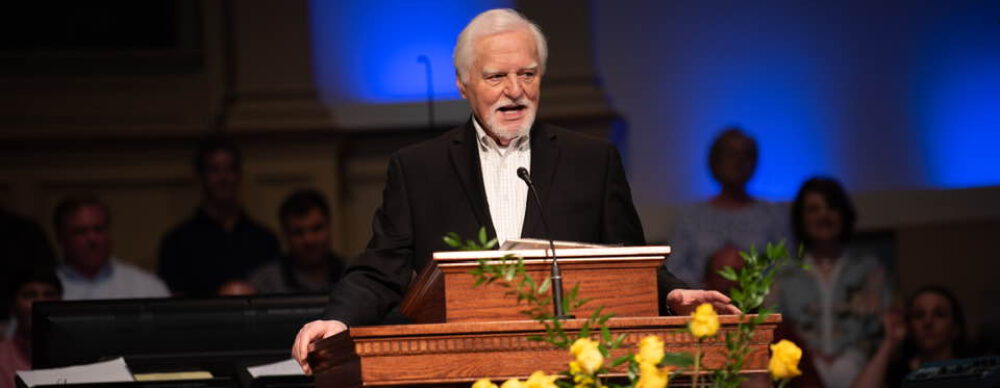
The delicate art of giving to the Lord

This is a work in the making.  For some reason–don’t ask me to explain; I cannot–it occurred to me recently that the matter of giving to the Lord’s work could be labeled “the delicate art of giving to the Lord.”  Here are some reasons for thinking of it in this way; you may think of others….

When we give to the Lord, so many things can go wrong.  The world looks askance at it, even friends wonder about all the money we’re giving, and so many questions arise.

I call it a delicate art, this business of giving to the Lord.  Here are some reasons for that.

One. It doesn’t look like what it is.

It may appear you are giving to poor people, to the needy, or to the gospel worker, or the church itself.  Someone may even say you’re “paying the preacher.”  One of my uncles said on one occasion, “I don’t figure I owe the preacher anything; I’ve not been to hear him preach in ages.”

In truth, I am laying up treasure in Heaven (Matthew 6:20), I am ministering to the saints (2 Corinthians 9:1), I am honoring my Lord by my faithfulness (see Mark 12:41-44), and I am honoring His name (see Hebrews 6:10).

Two.  Outsiders will accuse you of wasting your money.

Judas said, “What a waste!”(see Mark 14:4).  He was a thief, say the gospel writers, and cared little for the honor of the Lord.

Continue reading

When a friend grieves, we all hurt.

This was written some years back after the drowning death of little Haylee Mazzella, the granddaughter of my dear friends Dr. Buford and Bonnie Easley.  I came across it this week, handwritten hastily, in an old file.  I have no idea whether I ever shared it with the family or not. The grandfather is now in Heaven, alongside our wonderful Lord Jesus and Buford’s precious granddaughter.  My heart still hurts from the memory.

If our grief could ease just a sliver of your grief, you would have none left because so many friends are sorrowing for you today.

If our tears could dry your tears, you would weep no more, because so many are heartbroken for you today.

If our pain could erase yours, you would never against experience a moment’s discomfort the rest of your life, because so many are hurting for you today.

If our prayers could bring your child back, she would be with us this very moment because so many are interceding for you today.

If our grief could ease your grief, our tears dry your tears, our pain erase your pain, and our prayers undo this tragedy, it would be done in a heartbeat.

Continue reading

Letting others do our thinking

“My wife handles the religion in our family.  Talk to her.”  –A man in Luling, LA giving his young pastor the brushoff when I tried to introduce the matter of his relationship to Christ

Who handles the big things in your family?

The old joke goes: “When my wife and I got married, we decided I would handle the big things in life and she would take care of the little things, like where we lived, the house we would buy, the car we drive, and such.  It’s worked well. And, so far, over these 40 years, there have not been any big things.”

I told a group of Facebook friends I was reading James Comey’s book “A Higher Loyalty,” about his years in government, first as a U.S.Attorney and then Director of the F.B.I.  It’s a fascinating book and contains much worth retaining. (Although, admittedly, it can be boring in places.)

Because the man is controversial, the book has been attacked and disputed from the Trump team and his supporters.

The reaction of Facebookers was along party lines.

Continue reading

“Now, the Greek word used here means….”

The pastor says “Now, in the original Greek, this word means….” and church members roll their eyes.  Oh brother, some are thinking.

Or, he might say,  “In the original Hebrew, that word is…..and it means…..”

To the pastors among us, I ask: Is this necessary?

I find a great many church members are completely turned off by this little one-upsmanship of the preacher.  It feels to many like he’s showing off, bragging that he knows some Greek.

I’m not one to say the preacher is showing off.  After all, if he studied the language for a few years, clearly learning the Bible in its original forms is important to him, he is now capable of bringing in some of the finer insights from the Word.

But he must not overdo it by trying too hard or expecting too much.

I fear I’ve done this so many times in the past. Forgive me, members of the six churches I’ve served.

Continue reading

Where joy goes to die

“Joy is the business of Heaven.”  –C. S. Lewis 

What started me thinking of this was a line from James Comey’s book “A Higher Loyalty.”

“Although I have had a different idea of ‘fun’ than most, there were some parts of the Justice Department that had become black holes, where joy went to die.” 

James Comey explains further about his days at the Justice Department: “Places where morale had gotten so low and the battle scars from bureaucratic wrangling with other departments and the White House so deep, I worried that we were on the verge of losing some of our best, most capable lawyers.”

Sound familiar, pastor?

Continue reading

What makes prayer so difficult. And why we keep at it.

In the same way the Spirit also helps us in our weakness.  For we do not know how to pray as we should.  But the Spirit Himself intercedes for us with groanings too deep for words.  (Romans 8:26)

Tomorrow is the National Day of Prayer.  That’s a good thing.  It keeps us focused on the importance of prayer, and probably dumps a load of guilt on all of us for not praying more or better.

Three aspects of prayer make it difficult, and probably even unreasonable.  And then, one overwhelming reality keeps us at it with the strong confidence that praying is the best thing we can ever do.

Continue reading

Someone’s been praying for me. Thank you!

Meanwhile, also prepare a guest room for me, for I trust that through your prayers, I shall be granted to you.  (Philemon 22)

Paul wanted prayer that he would arrive safely and on time at his appointed destination.

I ask for that all the time.

More things are wrought by prayer, said Alfred Lord Tennyson, than this world dreams of. Surely, he was right.

We never know when someone is praying, never know when something good resulted from the prayers of our intercessor, and never know when their prayers protected us.

As a preacher supposedly retired, I log some 30 to 35,000 miles a year up and down the highways, primarily to preach and serve the Lord.  Last week, ministering in west Texas and in two churches here in Mississippi, I added another couple of thousand miles to the odometer.

Twice in recent history, I have come within a hair’s breadth of buying the farm (cashing in my chips, calling it a day, giving up the ghost; choose your metaphor.).  Both times, I was at fault, which is a sobering thought.

Continue reading

A reservoir of trust–and a hole in the dam

This is one somewhat lengthy paragraph from James Comey, taken from his book “A Higher Loyalty,” concerning his years as a U.S. Attorney, in the Attorney General’s office, and as director of the F.B.I.

It was now my responsibility to build my own culture within the U.S.Attorney’s office, one that would get the best out of our team and drawing, in different ways, on the lessons of Giuliana and Fahey.  I tried to attend to this task from the very first day. I hired about fifty new prosecutors during my time as U.S. Attorney and sat with each of them as they took the oath of office.  I invited them to bring their families.  I told them that something remarkable was going to happen when they stood up (in court) and said they represented the United States of America–total strangers were going to believe what they said next.  I explained to them that although I didn’t want to burst their bubbles, this would not happen because of them.  It would happen because of those who had gone before them and, through hundreds of promises made and kept, and hundreds of truths told and errors instantly corrected, built something for them.  I called it a reservoir.  I told them it was a reservoir of trust and credibility built for you and filled for you by people you never knew, by those who are long gone.  A reservoir that makes possible so much of the good that is done by the institution you serve.  A remarkable gift.  I would explain to these bright young lawyers that, like all great gifts, this one comes with a responsibility, a solemn obligation to guard and protect that reservoir and pass it on to those who follow as full as you received it, or maybe even fuller.  I would explain that the problem with reservoirs is that they take a very long time to fill but they can be drained by one hole in the dam.  The actions of one person can destroy what ti took hundreds of people years to build.

The credibility of an institution.  Like a government, a college, a school, a church.  Even the credibility of one person–a leader, a president, a senator, a law enforcer, a pastor.

Plenty of people are saying that Mr. Comey himself blew a hole in the dam of the FBI during his time as its leader.  Which, if so, makes his words above even more poignant.

Continue reading

Top 10 reasons to give–along with appropriate scriptures

Someone once told his pastor, “Give, give, give! That’s all I ever hear from you!”  The preacher smiled and said, “Thank you for the best three-word description of the Christian life ever!”

Scripture does not simply command us to give.  It does that, of course, but over and over God’s Word gives us great reasons for being generous to everyone around us, contributing to the needy and poor, and generously supporting the work of the Lord.

I imagine there are 500 reasons for giving.  But here are ten of the best!

Continue reading

What did you do in the war, Daddy?

“As his share who goes down to the battle, so shall his share be who stays by the baggage: they shall share alike” (I Samuel 30:24).

When Roland Q. Leavell returned home to the States from the “Great War” in Europe–what would come to be called the First World War–he had a problem.  People wanted to hear stories of the war, of battles, of heroism. The problem was he didn’t have any.

Roland Q. Leavell was in his 20s, single, and with a bachelor’s degree from seminary.  He had pastored small churches and had been sent to “the front” as a representative of the YMCA.  In those days, there was no USO to take care of American troops overseas, and fledgling organizations and ministries were still trying to figure these things out.

According to Dottie L. Hudson’s book “He Still Stands Tall: The Life of Roland Q. Leavell,” based on her father’s diaries, Roland did a hundred small things in his efforts for the Y:  He led Bible studies, he counseled soldiers, he ran a canteen, he taught French to a few soldiers, and he drove an ambulance.  At one point, he inhaled poisonous gas the Boches sprayed into the air. The one time he shot a gun was as a joke, pointed into the air across no-man’s-land.  “I guess I didn’t kill over 50,” he remarked in his diary.

And when he got home, people wanted to hear his stories.

Continue reading