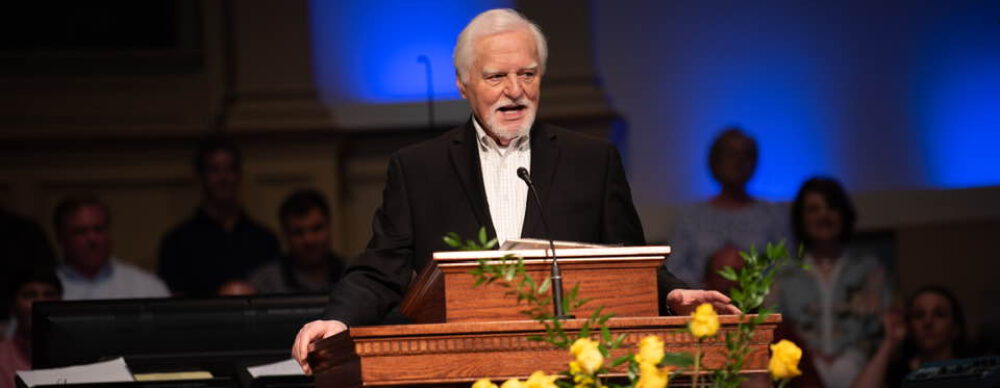
Most of us started preaching when we were young.
We automatically made a ton of mistakes. it just goes with the territory, and no young minister should beat himself up over it.
Young preachers can be shallow, silly, arrogant, sloppy, and most of all ignorant. I’ve been a young preacher and at one time or the other, was all of those.
When I began preaching, as a college student, I filled my messages with slang and preached a lot of things I’d heard and thought about (but not thought through!), but very little from the Word.
I didn’t know enough of the Word to be able to preach it.
When I began preaching, I searched the Scripture for texts which would lend themselves to my shallow, superficial type of preaching. I wanted catchy phrases, clear and picturesque sentences which would encourage me to venture out with creative ideas of my own, which I would then attempt to adapt to scripture (!).
I didn’t know any better. I had never made an attempt to learn the Scriptures, but had heard messages from all over the place, many of them the very kind of preaching I was now attempting. To say I’d not had exemplary role models is an understatement.
My college preparation had been for the classroom, not for the pulpit. I had not been to seminary. And even after I got to seminary, I did not suddenly become mature and wise and smart.
I’m still working on that.
In the early days my preparation during the week consisted of trying to find a snappy text, worrying over a passage, fretting over it, trying to find two or three good points my mind would grasp and from which I might branch out with some haranguing and harassing of the congregation. It’s what I’d been shown by example to do.
I feel like going back to my first two churches and apologizing.
Let no man despise thy youth.
I know what that means. It takes very little imagination to conjure up images of seasoned adults entering churches where I would be preaching and leaving shaking their heads. It wasn’t that I was preaching heresy or offending people by my pulpit mannerisms or style of dress. And my language wasn’t terrible.
I just wasn’t doing much of anything. Because I didn’t know any better.
So, we can share Paul’s concern about this young pastor sent to shepherd the Lord’s people in the city of Ephesus.
Here is how The Message rephrases Paul’s admonition to young Pastor Timothy—
Don’t let anyone put you down because you’re young. Teach believers with your life: by word, by demeanor, by love, by faith, by integrity. Stay at your post reading Scripture, giving counsel, teaching. And that special gift of ministry you were given when the leaders of the church laid hands on you and prayed–keep that dusted off and in use. Cultivate these things. Immerse yourself in them. The people will all see you mature right before their eyes! Keep a firm grasp on both your character and your teaching. Don’t be diverted. Just keep at it….
Young ministers need lots of reminders and many friends along the way who believe in them strongly enough to speak encouragement, truth, and discipline to them.
Let no man despise thy youth.
John MacArthur says Timothy was in his thirties, “still young by the standards of that culture.” Both Hebrew and Greek culture placed a premium on age and experience.
It’s interesting watching the various ways churches relate to young preachers. One of my pastor friends went to the biggest church in his state when he was 31. I became pastor of the First Baptist Church of Columbus MS at 33. And yet, I have known churches not running a hundred to reject a preacher in his thirties as “too young.”
Then, at the same time, we see churches rejecting prospective pastors in their 50s and 60s as too old. It’s ridiculous, of course. I’m 84 years old and loving preaching the Word as much as I ever have in all these years.
Dr. Mac Brunson made the news a few years back when he moved from the mega-FBC of Jacksonville Florida to Birmingham’s Valleydale Baptist Church. I think he was 60 years old. Good for him and good for them. I hope he stays 20 years. And I hope some churches looking for preachers take a lesson from Valleydale and quit demanding a shepherd who is 35 years old with 40 years of experience.
I know pastors who are wise and mature at 30 and some who are immature and shallow at 60. Age is irrelevant. When will God’s churches ever learn that?
Be thou an example…
–Be an example of believers in word. In speech. Every generation of young people seems to develop its own speech to define it and differentiate itself from the oldsters. Young pastors, try not to sound like a kid. Be mature.
—Be an example of believers in conduct. Righteous living. Young pastor, show the congregation what righteous behavior looks like.
—Be an example of believers in love. Caring for others, valuing them highly. Young pastor, show the congregation what it means to love one another. Embody the verses of John 13:34-35.
—Be an example of believers in faith. In faithfulness and steadfastness. Immature people can be flighty and quick to discouragement. Young pastor, show the congregation–and other young people–how to remain steady even when things aren’t going to suit them.
—Be an example of believers in purity. Purity in thought, righteousness in speech, godliness in action. Youth is a time of great adjustments, development, and raging hormones. Young pastor, demonstrate settled maturity and godliness in spirit and personal life.
Practice these things. Be committed to them. Be conscientious about yourself and your teaching. Persevere in these things…. (2 Timothy 4:15-16).
Stay with the plan, young pastor. Do not try to be an overnight sensation. Work at becoming what God has intended you to be. Steady as she goes, as they say.
Work at it.
Sometimes when I’m sketching, almost invariably someone standing nearby will ask, “Are you self-taught or have you had training?” Actually, there is no simple answer to that.
—Yes, I’m self-taught. And yes, I’ve had training. And yes, I’m still working at learning to draw, even though I’ve been doing this in one way or the other for nearly eight decades.
–In a sense, anyone who learns a skill is self-taught. You can sit in a classroom or workshop under the instruction of a gifted teacher, but you’re still going to have to do it yourself. You are the one who decides whether you will learn.
Let the young minister determine to apply himself, to focus, to learn his Bible, to learn how to craft a sermon and how to deliver it. Let him learn how to deal with difficult church members because no pastor gets a pass on that. They’re in every church, and they predominate in several.
How does a young minister learn to pastor a church? Here are some answers…
- Observe those who are doing it well. In my younger years, the Lord called me to the staff of one of the largest churches in our state where I was able to watch seasoned ministers visit the hospitals, work with a huge body of deacons, preach before congregations of many hundreds with television cameras broadcasting their every word to the corners of the state. I saw the pastor tackle huge problems and deal with strong laymen, saw it up close, but without having to make any of the decisions myself. Then, when the Father sent me to pastor a medium sized church three hours away, I was ready.
- Just do it. We learn by our successes and by our failures. Especially our failures. There is something about the human animal that wants to think if a program went well we must be good at what we are doing. But if it was a disaster, we need to go back and study what we did and improve on it. Therefore, we learn more from our losses than our gains.
- Read, read, read.
- Ask questions of those who are doing it well. You can learn from other ministers, no matter the size of their congregations. I urge pastors to join the local ministerial association and befriend each person. Each one has something to teach you, if you pay attention.
- Study the Word and stay on your knees in prayer.
- Keep a journal. At the end of each day, record what happened, who visited you, what was said, the challenges you dealt with. In time, this will be one of the most valuable treasuries of leadership-lessons you possess.
- When you bring an outstanding minister or professor to your congregation, ask him to remain an additional day so you can sit in your office with him, picking his brain, tossing out your questions. You’re taking notes all the time, and after the session ends, you write down everything you learned and want to remember. (And of course, you will pay the guest well for doing this.)
- When you are secluded with an outstanding lay leader/businessman-type in your church for an hour or more, interview him. I was in my 40s and pastoring in North Carolina. One of my deacons had been appointed by President Reagan to a high office in the federal government. Once, when his wife had surgery in Winston Salem, three hours away, I sat in the waiting room with him all morning while he told me his story, how he had gone from being an unknown banker in Charlotte to president of the American Bankers Association. I never forgot those stories and insights and have benefited immensely.
- Never stop learning. No one knows it all. You never reach a point of saturation.
- Find ways of teaching what you have learned to other young ministers. There is something about the teaching process that forces you to get clear on what had been fuzzy and then fixes forever in your mind the lessons you are sharing.