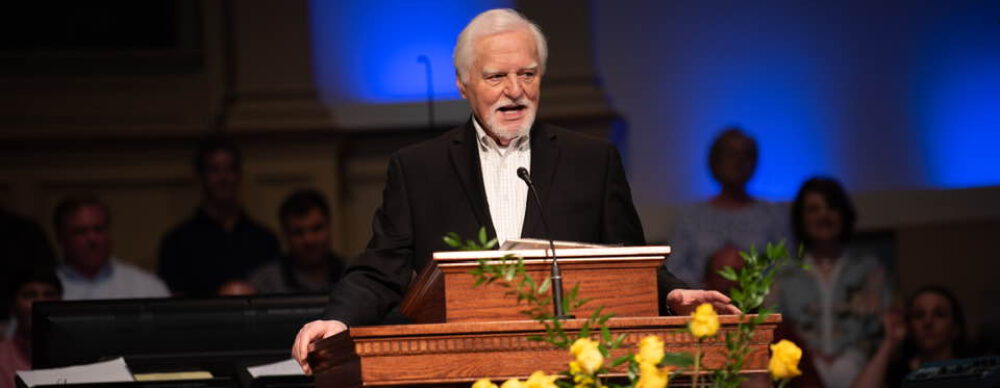
What I Owe to This Lady

My mother went to Heaven yesterday.

Lois Jane Kilgore started life on this earth just on the next ridge from where she ended it. She came and went in the very same bed (when Granny Kilgore died in 1963, mom got the ancient high-poster bed, dresser, etc). This was Route 3, Nauvoo, Alabama. (There are no more “routes,” due to the 911 emergency system needing every street and road to have a name.)

Mom was born July 14, 1916. She died June 2, 2012. Almost 96 years. Of her siblings, she was the last to go.

For most of her life, Mom mistakenly celebrated July 21 as her birthday. I’m not sure why, but no doubt it had to do with their being very rural, her being the sixth child in a family of nine children, and the way doctors kept records back then (meaning: haphazardly).

When she received a copy of her birthday certificate from Montgomery and discovered her birthday to be July 14, my dad feigned shock. “That’s grounds for divorce,” Pop teased. “She was an older woman than I knew.” Her being only 17 and he 21 when they wed–March 3, 1934–she could actually have used a little aging before taking on all she did.

She was the farmer’s daughter. She married a coal miner. Theirs was a hard life together for many years, due to a number of factors: he was no church-goer, he was a hard-worker but also undisciplined in his personal habits, and poverty was a constant companion. But Mom made the most of the life she had chosen.

She was a champion.

Continue reading

Reforming the Deacons (13b): Old Testament Pictures 7-12

(The second part of article 13.)

7. God’s Old Testament deacons may speak to the congregation on behalf of the shepherd.

As Joshua was readying himself to lead God’s people across the Jordan into the Promised Land, he instructed “the officers of the people” to visit everyone.

Pass through the midst of the camp and command the people, saying, ‘Prepare provisions for yourselves, for within three days you are to cross this Jordan, to go in to possess the land which the Lord your God is giving you, to possess it.’

The men identified as “officers” fan out to meet with smaller groups of the Lord’s people. They personalize Joshua’s word. They deal with questions that may arise. They adapt it, as necessary, for each tribe.

A church is doing a financial campaign or a building campaign. Every church member needs information, involvement, understanding, and opportunities to participate. Often, the deacons will be enlisted to visit in the homes of the members for this purpose.

On one occasion when I had been at a church for five years, I asked the deacons to help with a pastoral evaluation survey. At my request–this is crucial–they worked up a questionnaire of several pages, and then on their own, they took the membership rolls in hand and selected every seventh family and paid them a personal visit. In a membership of 2,000 people, this was a sizeable undertaking but they did it well. At the conclusion, they took the hundreds of questionnaires and collated the information, turning the results into a graph. Then, they presented me with a composite picture of how the congregation felt about their pastor and his ministry. All in all, it was a wonderful report and performed as thoroughly as anything I’ve ever seen before or since.

8. God’s Old Testament deacons may serve as the eyes and ears of the shepherd.

Continue reading

Reforming the Deacons (13): 12 Old Testament Pictures of Deacons

(The first six pictures)

Our problem in deciding what deacons are to be doing in the local church results from a paucity of references in the Bible.

We have the account of the seven men chosen by the Jerusalem church to serve groceries to the widows (Acts 6:1-7) and little else.

In the absence of Scriptural instructions on what deacons should do, unwise counselors have stepped into the void and done their dead-level best to make them church managers, business administrators, and preacher bosses. The results have almost always been disastrous.

I suggest that scripture has not been as silent on this subject as we have thought. In fact, throughout the Old Testament we find examples of men–godly, mature, adult men–who have stood by the Lord’s shepherd as his right hand, his strong arm, his defenders, his helpers and his extension.

Think of what follows as photographs of deacons at work among God’s Old Testament people. Think of these as metaphors for what deacons should do today. Think of them as plants set in place by the Holy Spirit for our instruction and edification.

Continue reading

Reforming the Deacons (12): “We Now Know Whom to Blame”

As a student of American history, I’ve long been intrigued by the massive carnage of the American Civil War, and have wondered whom to blame for this most devastating event. The answer, as I’m finding now in a new book called “America’s Great Debate”(by Fergus M. Bordewich; Simon and Schuster, 2012), lies with a number of rabid politicians from both the South and the North, who for decades tried to shout each other down and fought against anyone proposing anything remotely looking like a compromise.

I’m not sure why I needed to fix the blame for this, to have someone identifiable before whose doorstep we could lay this. One would like to think that modern political leaders would learn important lessons in the failures of their predecessors–that failing to deal with the tough issues and handing them off to the next generation is abject dereliction of duty.

On these pages, as I have railed against the practice of deacons ruling the church and bossing the pastors–a practice not even remotely suggested by anything in Scripture–I’ve wondered where it all started.

Now we know.

It has not been a secret, although it has been pretty much unknown. Howard B. Foshee covered this in his 1968 book, “The Ministry of the Deacon,” published by Convention Press. For a generation, his book was the standard for Southern Baptists wanting to know how to organize and train their church’s deacon groups.

In a chapter chronicling “Evolving Concepts of Deacon Service,” Dr. Foshee identifies the smoking gun.

Continue reading

Reforming the Deacons (11): “Ten No-No’s for Deacons”

Recently, when the directors of missions for our state met in their annual retreat, they asked me to lead an evening session on “Do’s and Do Not’s for DOMs.” On the ride up to our gathering place, a friend asked if I had trouble selecting 10 of each. I said, “Right now, I have the list down to 730.” He laughed, understanding fully what I was saying. There are so many good choices and an equal number of bad.

In this series on “Reforming the Deacons,” that is, remaking your church’s body of deacons into a powerful team of servants, we need to pause and mention some serious practices faithful deacons will avoid.

1. A deacon should never politic to be elected.

Let the church membership choose whom it will. Remembering that diakonos means “the lowliest servant,” one who goes “through the dust” to get a job done, to campaign for election undermines the very idea.

Why would a man (or just as likely, his family and friends) campaign for election as a deacon? In most cases, it’s because that church’s deacons have become the power center of the church and that’s where the authority lies. There is a certain class of humanity that loves to rule, takes pride in exerting influence over others, and enjoys the prestige of being chosen above others. We who find ourselves in that class should take warning, for what it says about our spiritual condition is not good.

Take the deacons’ authority away–which is what we are urging–and ask them to restrict their activities to serving church members in need and working in the background, and you will see an end to the politicking. Few want to be servants; far more want to be the one giving orders to the servants.

2. A deacon should cut no corners of truth in order to be chosen.

Continue reading

I’ve Been Forgiven? Wow. I’d Forgotten.

If you had nearly died from a strange illness and the doctors had given up hope, then suddenly you recovered and were able to get on with your life, could you ever ever forget that?

If you had suffered on death’s row at Angola Prison, and the prison chaplain was preparing a final prayer and the chef had laid out your last meal, when suddenly the governor pardoned you and you walked outside a free man, and then got on with your life, could you ever forget it?

Apparently some people can forget the most momentuous events in their lives.

Consider this line: For he who lacks these qualities is blind or short-sighted, having forgotten that he was forgiven from his past sins. (II Peter 1:9)

It appears that some calling themselves Christians no longer remember that they have been forgiven of their sins. How strange is that? And how does it happen?

I think we know.

Continue reading

Reforming the Deacons (10): “How to Tell a Servant When You See One”

If to be a deacon means to serve, and if it really matters the quality of the person chosen to serve the congregation, then someone in church leadership must be able to recognize a servant when they see one.

Otherwise, you may end up with a lot of men in your deacon body who want to do anything in the world except serve.

Which, as you think of it, is a perfect description of a thousand deacon groups: a lot of men who want to do many things, none of them being to serve.

Now, before the Feast of the Passover, Jesus knowing that His hour had come that He should depart out of this world to the Father, having loved His own who were in the world, He loved them to the end…. (John 13:1)

You will recognize that as the opening of the Upper Room passage where the Lord washes the feet of His disciples, the ultimate act of servitude. In this one verse, we find a number of insights as to the traits of a great servant.

Continue reading

Reforming the Deacons (9): “Dealing With the Bully”

If the deacon body is to be healthy, it must get rid of toxic members in its fellowship.

Toxic member number one: The bully. He’s the guy who throws his weight around, demands that everyone follow his agenda, issues orders to the pastor and staff, and instills fear in half the people around him.

You thought the problem with bullies ended after elementary school? Think again.

Bullies can be found in the classroom (as professors), on football fields (as coaches or players), in the workplace (more likely, it’s the boss), and, most surprising of all to most people, in church.

All bullies are dangerous to the success of whatever mission they are engaged in. They can wreck the program by demanding their own way, by undermining the work of leaders, and by driving away good people who refuse to cave in to them.

Since the work of the church is the Kingdom of God on earth, a bully in the sacred place can cause damage having eternal consequences.

Now, the church bully can be a pastor, a Sunday School teacher, a somebody or a nobody. But when the bully is a deacon, particularly in a wonderful church doing significant work for the Lord, he is especially dangerous and must be dealt with.

Just one such monster left unchecked and unchallenged can stop a good ministry in its tracks, destroy the work of a faithful pastor, ruin a church’s reputation, hold the Lord’s people up as a laughingstock before the world, and splinter a united congregation.

Bullies cannot be left unguarded, their tactics unchallenged, and their demands unaddressed. Someone must do something.

Has anyone ever written on what deacons should do concerning the bullies within their fellowship?

Diotrephes was a bully. The Apostle John said, “I wrote something to the church, but Diotrephes, who loves to be first among them, does not accept what we say. For this reason, if I come, I will call attention to his deeds which he does, unjustly accusing us with wicked words, and not satisfied with this, neither does he himself receive the brethren, and he forbids those who desire to do so, and puts them out of the church” (III John 9-10).

The Pharisees were bullies. Jesus said they “shut up the kingdom of heaven from men,” they “devour widows’ houses,” and they are in danger of “the sentence of hell” (Matthew 23).

What should a deacon do about a bully within his own group?

Continue reading

Reforming the Deacons (8): “How to Begin a Major Overhaul”

The old joke–it’s probably more of a parable–has the mice plotting what to do about the cat. Finally, they decided to tie a bell around the cat’s neck so they could hear it coming.

The only thing they could not agree on was who would bell the cat.

It’s one thing to talk about reforming the deacons, and another thing to do it.

How would one go about it? Where would you start?

Let the deacons take the initiative.

Why them? Because the alternative might create an uproar unnecessarily.

Imagine someone standing in your church business conference to propose a complete reorganization of the deacons, including qualifications, membership, assignments, accountability, and limitations.

Now, imagine this coming as a complete surprise to the deacons.

Imagine further that the deacons are being run–and I do mean “run”–by a few strong-willed individuals who see this as their way of controlling the church and its ministers. And in their mind, that’s a good thing.

You may as well have called them crooks and challenged them to a duel. They are shocked, stunned, enraged, and ready to tear the church up to salvage their honor and prevent this from happening.

That’s why you’re not going to do it. (There is a good reason no mouse volunteered to bell that cat. It’s a suicide mission.)

NOTE: We assume here that the deacon body is in need of wholesale changes, a “drastic overhaul.” If something less than that is needed, you may choose to skip what follows.

Let the deacons take the initiative.

Ideally, if the church’s deacon system is not working or is causing more trouble than it is solving, all the deacons will see and acknowledge it, and will agree to bring the matter to the church.

If that’s the case, the church will do it in a heartbeat.

The second approach is not as clear-cut but better than the alternatives of putting up with the defective status quo or springing it on the deacons in a business meeting.

Continue reading

Reforming the Deacons (Part 7): “5 Pillars for Deacon Ministry”

On Facebook this week, a woman asked, “Why are you on this kick about deacons?”

I replied that in the last few days, two pastors have emailed me about rogue deacon groups that are making their lives miserable, presenting silly lists of requirements which they have to meet, and threatening them with termination. By what sick interpretation of Scripture does anyone find that kind of activity in God’s Holy Word, someone tell me?

And now, this morning as I sit at the breakfast table typing, one of the pastors emails to say he and his entire staff are being forced out. The church business session he moderated last night, he said, felt like “The Jerry Springer Show.” After the meeting ended, several fist-fights almost broke out. He added that most of the godly leadership of the church is resigning also. (I referenced this pastor in an earlier piece as saying the previous pastor had been forced out after 30 months. “And I am in my 30th month,” he added.)

That’s why. Someone needs to protect the church, not molest it.

The Bride of Christ is being molested. Gang-attacked, if you will.

Safeguarding the Lord’s Church begins with the ministers, those assigned to oversee and shepherd the flock. It continues with a group of people who should be the healthiest, most normal, kindest and most Christlike people in the church: The Deacons.

But if the deacons themselves are not healthy, if they are trouble-makers and preacher-bosses, if they are constantly at war among themselves and often at odds with the rest of the church leadership, the church is at great risk.

What is a healthy deacon ministry? Short answer: it will be right Scripturally.

Longer answer: A healthy deacon ministry will be based on these five pillars:

Continue reading