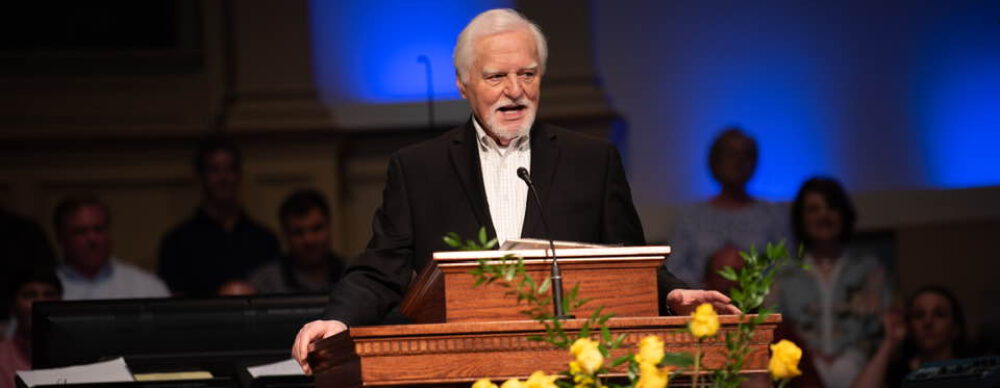
When and How to Fire a Pastor

A followup to yesterday’s article on a church taking a vote on firing the pastor.

Among the responses that began to flow in from yesterday’s article “What the Pastor Said Before the Vote” was a private note from a woman I know from the internet. “All right then, Brother Joe, tell me: under what circumstances can a pastor be terminated?”

I was on my way out the door–friends were being appointed to the mission field in a service in Hattiesburg, Mississippi, and I was headed that way–so my reply to her was: “Unethical, unbiblical, immoral, illegal.”

All of that is true.

But it’s not all that should be said on the subject. Those four areas are often complex, and deserve thoughtful consideration from mature and godly church leadership teams.

Anyone who regularly reads this website knows two things about me: 1) I am pro-pastor, 2) but not blind. I know there are people occupying the pastor’s office who need to be put out of the ministry, and I am in favor of that. We do the Lord no favor when we keep employing (or recommending) poor excuses for ministers of the gospel.

What I am not in favor of is impatient, worldly, or controlling church members making the decision whether a good and faithful brother continues at a church, regardless of what the Living God has to say about the matter.

Okay. With that having been said, let’s fire a pastor, shall we? Here is how it’s done.

Continue reading

What the Pastor Said Before the Vote

They’re voting on the preacher at the end of today’s worship service. He may be looking for a job before noon. Or, it could work out well. Either way, the pastor and his wife have turned it all over to the Lord, and while it would be catastrophic in some ways to have their lives turned upside down this way, their focus is on the Lord and not man. Here is some of what he told the church before the vote.

I’m glad to see so many in Weak Sister Church today. A friend of mine says there are two ways to get a big crowd in church: welcome a new preacher or run the old one off.

Some of you haven’t been to Weak Sister in a while. I am sincerely glad to see you here. I do have a special word for you, but not yet. Please bear with me a few moments while I address the believers.

I need to say one big thing to the congregation this morning, no matter how you plan to vote: My friends, what we are doing today is not about me.

I know you’ve been told it was all about me, whether I’m to continue as your pastor. And that much is true. It’s very possible I could be fired this morning.

You need to know that either way this vote goes, my family and I are fine. We have never looked to the church–or any group in the church–as our resource, but to the Lord. He alone is our strength. He called us into this ministry and He sent us to this church. And even if you decide the Lord made a mistake and vote to terminate our employment, the Lord is faithful and we are held in the palm of His hand.

That said, there are much larger issues at stake here.

If this vote today is not about me, then what is it about?

I’m glad you asked.

Continue reading

Five of the Last Gifts You Should Ever Give a Pastor

Not being into psychoanalysis–or for that matter, not being into picking up on subliminal vibes from people even a little–I do not know all the reasons why good people do some of the dumb things they do.

Take church people and how they relate to their preachers, for instance.

Sometimes members of the flock do nice things for their shepherd in cruel ways. They offer good gifts but on looking closely, you can see the hooks attached. They offer sweet praise with barbs on the end.

Do they know what they are doing? Are they aware that in doing these things they only add to the burdens of their spiritual leaders? Do they know they’re being cruel?

I expect most of us would disagree with our answers on that. I tend to give them the benefit of the doubt.

Here are several “gifts” no pastor wants or needs or should ever receive from those who value his ministry and wish to encourage him.

Continue reading

The Day the Church Begins to Die

My preacher friend lives in a brand-spanking new home provided by the ministry he heads. “They had to tear down the old one,” he told me. “Mildew was everywhere and after years of trying to cure it, they gave up.”

A friend in that city told me the previous tenants–my friend’s predecessor and his family–were constantly sick for no reason anyone could find. Workers repainted the interior of the house every year.

“When they tore the house down, they found the culprit. There was a pipe underneath the house–not in any of the architect’s original drawings–that was constantly leaking water into the foundation.”

The minister said, “At one point, in an attempt to cure the problem, the ministry head had storm windows installed throughout the house. He was sealing the house, but it had the opposite effect of what he intended.”

“An architect told me, ‘That day the house began to die. With the windows sealed, it could no longer breathe.”

The day the house began to die.

An intriguing line.

Churches also begin to die when they can no longer breathe.

Continue reading

Sitting on the Information

Coach Joe Paterno was fired this week because of information that he had and sat on.

The president of Penn State University was fired for the same reason.

Other members of the leadership team of that school will be receiving pink slips for the same reason.

In one sense, they did nothing wrong. It was that they did not do right. Their sin was of omission, not commission.

When they knew an assistant coach was molesting little boys in their athletic buildings and simply told him not to do that there anymore, they became enablers for his unspeakable crimes.

A coaching assistant told his father, the two of them told Coach Paterno, he told the athletic director, who told the president. But no one told the cops. What they said to the molester was, “Do not bring young boys into these buildings.” As has been pointed out in numerous sports talk programs this week, that is tantamount to saying, “It’s all right to molest them; just do it somewhere else.”

When the trustees of the university met Wednesday night of this week, they wielded a sharp axe. To them–as to any right-thinking individual–it’s not enough to warn the evildoer off. He has to be arrested and taken off the streets and dealt with in a court of justice. Even if a citizen cannot arrest him, he can report the crime.

PSU’s lawyers are scurrying around right now, it’s safe to say, wondering how much liability the college bears for all the children abused by that coach since Paterno and others found out what he was doing and did not do everything in their power to stop it. I’m thinking they have plenty of responsibility. The trustees did right in canning the coach and the president. One hopes the message goes out to other schools that “If you see someone abusing a child and do not report it to the police, you are guilty of aiding and abetting the crime.”

Sitting on the information. If it’s not a crime in itself, it’s nevertheless abandoning one’s responsibilities as a human being. And whatever happens as a result of your cowardly silence, you have to bear some responsibility.

–If I have information that could save your life and I keep it to myself, your death is on my hands.

–If I know the bridge is out ahead and do not try to warn off motorists, I am responsible for all that takes place.

–If you are deathly ill and I have the antidote which could save your life and keep it to myself, your death is on my hands.

“What did you know and when did you know it?” The answers–often asked in a court of law–help to establish culpability.

The spiritual implications of this are enormous.

Continue reading

My Three Years on a Church Staff

It recently dawned on me that all my church experiences have come in threes: I pastored six churches, three rather small and three rather large, and in between served on the staff of a large church for three years.

As you know, we preachers love our threes. Sermons seem to always have three points.

In doing these church staff articles, it occurred to me that the time I spent on the staff of First Baptist Church of Jackson, Mississippi, was critical to everything that came afterwards. In some ways, I received more from those 3 years than from a similar period in seminary working for a master’s. Of course, the lessons learned and skills received from each were different and invaluable, and are not to be compared.

When Ken Westbrook left FBC Greenville, MS sometime in 1970 (he had been assistant pastor; it was a fairly large church) for a pastorate in Florida, I said, “I wish I’d had the experience you’ve had, to serve on the staff of a large church. There are lessons and experiences not available in smaller churches.”

Little did I know.

A few weeks later, Pastor Joe Walker suggested that FBC of Jackson was looking for a minister of evangelism. He wondered if I’d like my name in the pot. “Not me,” I said all too quickly. “I’m a pastor. I couldn’t be a staff member.”

One week later, Joe Walker and James Richardson–two of my best friends in the ministry–mentioned my name to Larry Rohrman, pastor of FBC Jackson. He called late that night, asking if I could drive down the next day to talk about the position.

I knew before the interview had ended this was of God.

For the three calendar years of 1971, 1972, and 1973–exactly 36 months–I served that wonderful church as their Minister of Evangelism. (Although, student minister Derrell Murphree could never get the title right. Murph kept calling it “minister of vandalism.”) When I departed, it was to become pastor of the equally wonderful FBC of Columbus, Mississippi, where we stayed an even dozen years.

Now, let’s get to the question: What difference did serving on the staff of a large church make in my life and subsequent ministry? Originally, I’d planned to limit the list to five things, but the more I’ve thought it, it could easily be fifty!

And–lest readers get lost in what follows–may I emphasize that the whole point of this is to encourage someone who is thinking of joining the staff of a big church to go for it!

Continue reading

10 Questions About Church Staffs

(This should be the final entry in this little series of postings regarding church staff teams. For a pastor to bring in associate ministers for his church can be a wonderful boost to his work, a blessing to the congregation, and a lift to the associate’s career. But it’s also scary, a real faith venture which can and sometimes does go badly. Here are a few considerations on the subject.)

1. The pastor and congregation of a small church agree it’s time to add a staff member, their first. How should they go about it?

Very deliberately. Cautiously, prayerfully, intelligently.

The most common error I’ve seen pastors in this situation make is to bring in a buddy whom they have known through the years, who is presently without a church. On the surface, it looks like a gift from Heaven, a situation handed them from on high.

Maybe so. More likely not.

Pastor, it’s one thing to be friends with that colleague through the years. But when you become his supervisor, the relationship changes. Be careful here.

I suggest to the pastor of a small congregation about to bring in a new staff member that he do the following:

a) Put together a small team of mature church members to assist him. They are not “the” search committee, although they and you work as a team. You will need their counsel, their wisdom, their judgment, and the new minister will need their support. (It’s best if they do not select a chairman; you are their leader.)

b) Be very clear as to what you want the new staffer to do. If it’s to work with the youth or administer an educational program or develop a senior adult ministry, spell it out.

c) Have an understanding with your committee that all must be on board with a recommendation before it goes to the church. Prepare them for the possibility of everyone except you agreeing on someone, or you wanting a candidate whom they do not accept. Make sure they are able and prepared to deal with that. Immature members will quickly lose patience with a pastor who seems hard to please or who does not accept their choice.

d) Call other pastors and get their help. They know people you don’t.

e) Once you find a likely candidate, do not fall in love with him/her too quickly. (Caution your committee about this, too.) Take your time to get to know him, to run plenty of references, to check thoroughly into his past.

After all, this being the church’s first venture into staff members, you want the experience to be a good one.

2. Where do we find great staff members?

Continue reading

Shy? Sorry, No Place for That Around Here.

We all have our pet peeves. This is one of mine: People who excuse themselves from obeying the Lord or doing difficult tasks that would require them to stretch because, “I’m shy” or “I’m just not able to do that.”

Get over your shyness, friend. There is no place for shyness in the Kingdom of God, not if you’re planning on being obedient to the Master.

The Lord is going to be asking from you things you cannot easily do, and you will be forced to decide whether to give in to your reserve or to obey Him. You will not be able to do both.

The Lord will ask you to step out of the crowd and confess Him. “Who touched me?” Jesus asked, and called a woman to step forth and admit that it was she who had stretched out the hand of faith to the Savior (Mark 5:31).

For some of us, that means responding to the invitation at church next Sunday morning and stepping forward, into the aisle, to publicly affirm that Christ is our Savior and Lord.

The Lord will ask you to go into your world and confess Him. He said, “You shall be witnesses unto me both in Jerusalem and in Judea….” (Acts 1:8).

He said, “Whoever confesses me before men, him the Son of Man will also confess before the angels of God” (Luke 12:9).

He may ask you to suffer for Him. “Beware of men,” Jesus said, “for they will deliver you up to councils and scourge you in their synagogues” (Matthew 10:17).

Clearly, if one’s natural shyness is dominant, if it keeps us from letting others around us know of our commitment to Christ, if it silences us when to speak out would be costly or hard, our discipleship is going to suffer.

I’m only a Baptist preacher, let me admit here, and not a psychiatrist with insights into human personalities and psyches. So, what follows is not the last word on this subject, but if it moves the discussion along and helps someone to leave their cubicle of withdrawal for Jesus’ sake, it will be worth the effort.

Continue reading

The Bi-Vocational Pastor Assembles His Staff

A friend in Georgia who had read these articles on church staffs raised a good question: “How do do you begin to build a staff when the pastor is the only employee of the church, or even when you are bi-vocational?”

I sent the note to a friend in Alabama who knows all about the bi-vo business. While working full-time for a government agency, Bo has another full time job: pastoring a Southern Baptist church. And, a growing one at that. In fact, Bo’s church is sufficiently large to have two or more ministers on board full time. And yet, he and every member of his staff are bi-vocational.

A word about definitions. Bo called my hand on saying he is part-time at the church. “Hey, no minister is part time! No matter where you are, and no matter what you are doing, you are a minister of the gospel. There is no such thing as a part-time minister.” Good point.

So, how does Bo go about assembling a staff? Before telling you what he said, let me point out that he seems to have a great concept of whom to hire. The times I’ve preached for him, I’ve been impressed by the quality of the leadership of his team.

All right. Here are the eight principles that guide this bi-vocational pastor in seeking staff members….

Continue reading

The Happiest People in Town

Do you ever read a newspaper article that ticks you off?

In this morning’s USA Today, a full page is devoted to what they call “the Well-Being Index.” A beautiful 50-year-old skinny lady named Mary Claire Orenic is shown stretching yoga-like in front of a lush garden area. The caption across the top of the article asks, “Is this America’s happiest woman?”

She might be. I hope she is. However, not enough information is given for the reader to make that determination.

What information is given? What is the “Well-Being Index?”

I’m glad you asked.

It’s divided into three sections: Work, Health, Relationships.

Under “Work,” some of the ideals are: a college degree with some grad school; professional or executive class, and a family income of $120,000.

You didn’t finish high school? and you make considerably less than that? Sorry. You can’t be as happy..

Under “Health,” ideals are–and this is good–excellent physical and emotional health, BMI (body mass index) under 30 (30 and above is obese), and you exercise for 30-45 minutes at least 6 days a week.

Too bad if you are overweight or skinny and don’t belong to a gym. Can’t be happy.

Under “Relationships,” ideals are “married and never divorced,” 2 children (“Gives birth between ages 27-36); no caregiving for young children or sickly parents, in-laws or spouse; has 4-12 intimate friends.)

You have to take care of elderly parents or a handicapped child? Sorry, Charlie. Your happiness potential just tanked.

You can see why I did not care at all–not at all!–for this little exercise.

Now, to be fair, I imagine the author–well-known writer Gail Sheehy–would say she did this to spark the very kind of discussion we’re having here. That she didn’t mean it to be the final word on the subject.

Good thing. Because it ain’t nearly the final word.

Continue reading