Remember the story in Luke 12 that Jesus told about the man who owned a magnificent farm that overproduced? He congratulated himself, tore down his barns and built bigger ones, and set himself up for a life of ease and luxury. God called him a fool and added, “This night your soul will be required of you. Then whose will these things be which you have provided?” The fellow died that night and his farm was left to his heirs.
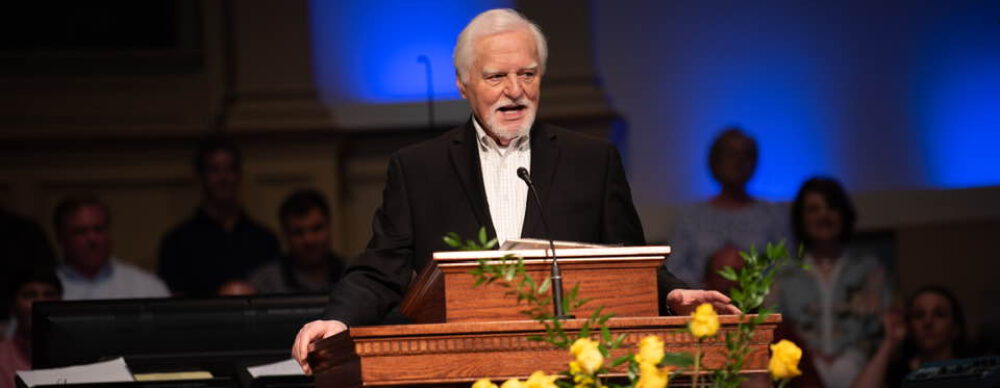
Frank Pollard calls that story “The farm that owned a fool.”
A month ago, this wonderful preacher of the gospel went to Heaven, and many of us have been having Frank-Pollard-withdrawal ever since. A friend sent me a CD of some of his banquet talks which consist mostly of humorous poems and stories he told over the year. This morning, I ran across the small book Frank produced on the Gospel of Luke for the Southern Baptist annual Bible study a half-dozen years ago.
There are so many Pollardisms in it, I thought you would enjoy some of them. Then, if and when you decide to study this gospel more or if you plan to teach it or preach through it, I suggest you go to any of the on-line used-book-providers (my favorite is www.alibris.com) and order it.
Frank Pollard, I might ought to insert here for the few who are unfamiliar with him, was the longtime pastor of Jackson, Mississippi’s First Baptist Church. Time Magazine called him one of the 10 best preachers in America a generation ago. That was no fluke. Anyone who heard him preach regularly agrees. For fresh content, excellent application, and fascinating exegesis of Scripture, he had few peers.
Regarding the story of the prodigal son in Luke 15, when the boy comes home to a grand reception by the father, Frank writes, “Hollywood certainly would let the credits roll here. The boy is back; there is a joyous homecoming; the best calf has been butchered. The smell of barbecued beef and the sound of happy music are everywhere. A huge party is in process. Turn the house lights on.” Then he adds, “Our Lord did not end His parable there. The plot was just heating up. Jesus was getting to His main point.” He moves on to considering the older brother, who Frank says, “left his father without ever stepping off the front porch.” (pp. 15-16)