Pastor For a Day

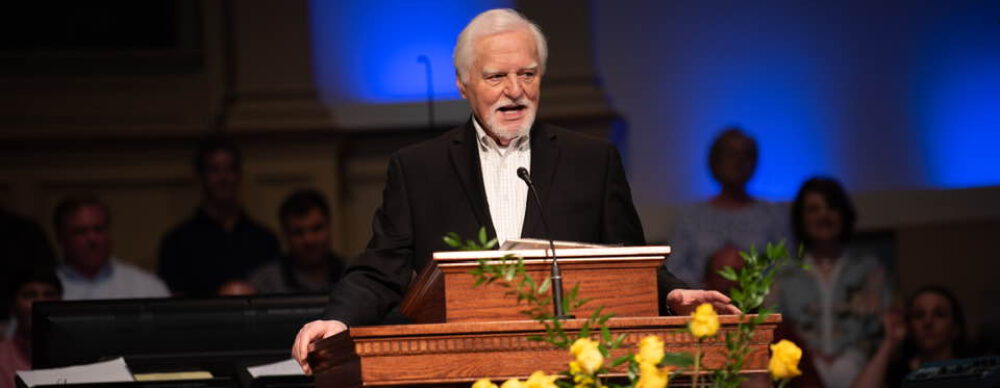
Thursday of this week was unlike any 12 hour period of the last four-and-a-half years for me. I was a pastor again, doing the things pastors typically do.

Here’s how it went.

For two hours–from 7 to 9 am–I sat in the waiting room of my local tire store. After finding out the previous afternoon that the wait to have my tires rotated would be up to two hours, I decided to be there when they opened the next morning. Thursday morning at 7 o’clock, I was there. A woman and I walked in together, and ended up the sole occupants of the waiting room as the employees worked on our car and kept finding additional services we needed. In my case, it was a front end alignment, wind-shield wiper replacement, new air filter, and one of my tires was questionable. (It was the spare that had come with the car when it was new. After a blowout a few months back, we took it out of the trunk and put it on the ground. Small numbers on the tire indicate it was manufactured in the 25th week of 2004. Who knew tires get old so quickly and become hazardous? We put it back in the trunk for the emergency spare and placed the spare, a new tire, in its place. We’re leaving on a 2-3 week vacation on July 27 and want the tires to be in good shape.)

I had prayed for the Lord to use the time in the store. He did.

The woman and I gradually began to chat, first about her job, then her church (her pastor is a close friend), and finally about her broken marriage and the challenges she faces dealing with a non-responsive ex-husband, bad finances, two young children, and such. I made suggestions on getting help, shared two scriptures that seem ready-made for her situation, and we prayed together.

Since she drives almost 10 miles to church on Sunday, and lives only a few blocks from the First Baptist Church of Kenner, when she found out that I will be preaching there this Sunday night at 6 o’clock, she said, “I’m coming.” I suggested it wouldn’t be a bad idea for her to have this as her back-up church family since she lives so close, but to remain a member of the fine church she already has.

I was 10 o’clock arriving at the associational office. In the meantime, the pastor’s secretary from our church called to tell me of two families in Ochsner Hospital. One family had asked if I might run by to visit, since death seems eminent.

I’m no longer a pastor but I know my calling. God did not give me a pastor’s heart for nothing. (Every retired pastor knows the feeling.) I told her I would go.

Continue reading

Do You Know What You Are Doing?

Tuesday evening, on my way home, I was driving up Metairie Road in heavy traffic. Suddenly as we drove past a small side street, I glimpsed a fellow on a bicycle coming out of that street, headed straight for our line of cars. In a split second, the bike whipped straight toward us, then at the last moment turned a sharp right and moved in the same direction we were going. I almost had a heart attack; I just knew I was hitting a cyclist and killing him.

And now, for perhaps 10 seconds he was pedaling alongside my car, just off the right window. I rolled it down and called.

“What are you doing? You scared the daylights out of me!”

He said, “Don’t worry about me. I know what I’m doing.” The light up ahead turned red, the traffic stopped, he crossed at the light, and was gone.

I thought of twelve things I wanted to say to that foolish man. “Maybe you know what you’re doing, but I don’t–and I’m the guy with the car!” “You’re trying to commit suicide, that’s what you’re doing.” I even thought of saying to him, “Friend, you’re going to get killed. I can’t say that bothers me a great deal, but it will devastate your loved ones. And, frankly, I don’t want to be the one who hits you!”

So, so foolish. “I know what I’m doing.” He was in a little world all his own, dead certain that if he followed his own rules, he would do just fine.

My strong hunch is that the impatient motorist on the interstate, the one weaving in and out of traffic, the fellow who tailgates you flashing his lights until you get out of his way, then pulls the same stunt on the next driver in front of him, that foolish speeder no doubt feels he knows what he is doing.

He may indeed. Until he meets up with another nitwit just like him, then all bets are off.

Earlier the same day, maybe at 1:30 or so, I drove a few blocks to a little eatery that has opened up on Elysian Fields Avenue close to the University of New Orleans. I’ve been there once, trying to patronize businesses that have reopened in our area. The food was nothing special, but I decided to give them another try.

Inside the door, a sign instructed me to seat myself. The one vacant table, however, had not been cleaned and the last diners had clearly been messy eaters. I pulled out a chair, sat a little back from the table, and looked for a waiter. A couple of minutes later, he arrived, towel in one hand and a stack of menus in the other. When I asked for a menu, he said, “In a minute,” and proceeded to–I couldn’t believe my eyes–rake the mess off the table onto the tiled floor.

I sat there frozen in place. Did I want to eat here?

I said, “You’re raking that food onto the floor?!” He didn’t say a word, just kept at it. I stood up and said, “Friend, this place is too dirty for me. I believe I’ll eat somewhere else.” And walked out. Nonplussed, the waiter called, “Thanks for coming in, have a nice day.”

Clueless, apparently. Or maybe he just didn’t care.

What are they thinking? I can understand the restaurants that serve you a bucket of roasted peanuts encouraging customers to drop the dry shells onto the floor. But wet, sloppy food onto a tiled floor? No thank you.

I drove down the street to Cafe Roma, a lovely and classy affair with great food, friendly staff, and better prices.

Do they know what they are doing, one wonders.

You visit a church where no one speaks to you, no one greets you at the front door, no one gives you a bulletin, and no one even acknowledges your presence. You’re uncertain where to sit, completely in the dark on where the nursery or rest rooms are, and feeling more alone by the minute. You can tell by the empty pews that this church is in trouble. You find yourself wondering, do they know what they are doing?

Or more specifically, what they are not doing.

Continue reading

Leadership Lesson No. 57–“Leadership Has Secrets?”

The cover of TIME for July 21, 2008, pictures Nelson Mandela at age 90 beaming that sweet smile out to the world. The accompanying article is titled “The Secrets of Leadership: Eight lessons from one of history’s icons.”

“Secrets?” I thought. “Leadership has secrets? Hasn’t John Maxwell unearthed them all and written a book on each?”

Inside, I turned to the cover article, eager to learn what secrets Mr. Mandela had discovered. It was a good interview, the writer made some excellent points, so much so that we want to repeat his eight principles here with an occasional comment or two of our own. While no deep-dark secrets were embedded in the article, readers will find Mandela’s insights helpful.

You know who Nelson Mandela is, I’m confident. A political activist against South Africa’s apartheid in the days when to speak out was to land in prison, Mandela was sentenced to life in prison in 1964. In 1990, the President of South Africa F. W. de Klerk released him, three years later the two men received the Nobel Peace Prize, and in 1994, Mandela was elected president of the country. His autobiography is “Long Walk to Freedom.” (Definition: ‘apartheid’ was extreme racial segregation based on white superiority.)

Over the decades, Mandela became a mature voice for reconciliation, reason, and unity. Today, he is a symbol of so much for everyone on the planet, but particularly for Africans no matter where in the world they or their descendants live.

1) Courage is not the absence of fear–it’s inspiring others to move beyond it.

Continue reading

Why We Don’t Have Revival

Ask any church leader why America–or the churches in general or a denomination in particular or all Christians–does not (do not) have revival and the answers will usually come out to something like: “We’re not praying,” or “We’re not praying hard enough,” or “This takes prayer and fasting.”

Today, I spent an hour on the internet reading some of the hundreds of websites on the subject of revival. Those that attempt to cover the subject of why we are not experiencing revival usually attribute it to sin, complacency, or prayerlessness.

Maybe they’re right, but it seems to me those answers are missing the point.

The reason we’re not having revival may indeed be that we’re not praying for one. After all, Scripture assures us that “you have not because you ask not.” (James 4:2)

But that just leads to the question of why we’re not praying for revival. The answer, I strongly suggest, is simple: we don’t want a revival. We like things the way they are.

I said it and will stand by it: we do not want revival. The churches don’t, the church members don’t, and very few of the pastors want a genuine Heaven-sent revival.

After all, revival means change, and we don’t want change. We’re too comfortable the way things are at the present.

I used to have an elderly man in my last church who showed up for services from time to time mainly because of his wife. Once when I was visiting in their home, I learned that five years earlier, he had had a heart bypass operation. His wife said, “And pastor, the doctor ordered him to walk several blocks a day, but he won’t do it.”

I tried to shame him a little. After all, the walking was for his own good and might prolong his life. He said, “Preacher, the reason I don’t walk is simple. Walking interferes with my routine.”

His wife scoffed, “What routine! Pastor, he goes to the casino!”

He lived two more years, still spending his days with the slot machines.

That, in a word, is why the great masses of Christians do not pray for nor desire revival: it would interfere with their routine.

By “revival,” we mean an across-the-board movement of the Holy Spirit as He touches hearts, changes minds, melts pride, and transforms sinners.

In a revival, the hearts of God’s people are broken in repentance and humility, the Lord’s people come together in love and service, and the Lord’s work of ministry and giving and witnessing and missions moves forward at warp speed.

Now, logically, most Christians would like these things to occur. In our heart of hearts, we know this is what is going to be required for God to transform the modern church and make it once again a missionary organization. We know the people of our community are not going to be reached in numbers big enough to have any kind of impact until the Lord’s people have a new touch of God in their lives. And we confess we want that, that we desire revival.

But we don’t. Not really.

Everything inside us resists change. Our ego resists Anyone else sitting on the throne over our lives. Our spirit rebels at Another calling the shots. Our bodies are afflicted with inertia, which we learned in the chemistry lab means a resting body prefers to remain at rest.

Now, I’ve seen revival and perhaps you have, too.

Continue reading

Causes and Effects

Cause for Reflection….

After the recent death of comedian George Carlin, one of the funniest men on the planet–also, one of the dirtiest–the Florida Baptist Witness ran a guest column from Don Walton, a vocational evangelist whose blog is www.timefortruth.org. Titled “Seven Words You Can’t Say in Heaven,” the article credits Carlin with “more than anyone else” being “responsible for turning the profane and irrevent into comedic material.”

Walton picks up on Carlin’s infamous “seven words you can never say on television,” a routine he was sometimes arrested for performing. Now that he has died, Walton says, he “stands before a much higher tribunal than our nation’s Supreme Court.” And, here are seven words he cannot say in Heaven: “I’m sorry, Lord. I was just joking.”

Cause for Rejoicing….

Last Sunday, Memorial Baptist Church in Metairie dedicated their newly restored sanctuary. This is one of the few churches in our association that suffered great loss due not to the floodwaters that followed Katrina but the winds and rain that comprised this hurricane. When winds tore off the roof of the sanctuary, water rushed in, ruining the upstairs offices and the interior of the worship center.

For nearly three years, Memorial has met in their fellowship hall. A number of churches across the Southern Baptist Convention, including Nashville’s Woodmont Baptist Church and Allen, Texas’ First Baptist Church, have been faithful encouragers to Memorial during this time. Prestonwood in Dallas has sponsored their Unlimited Partnership seminary student, if I’m not mistaken. That student, Jonathan Young, recently graduated from seminary and has become Minister of Education at Opelousas’ First Baptist Church.

Pastor Jackie Gestes came to us some two years ago–in the depth of the church’s need–and has become a faithful friend and shepherd.

Sunday, the congregation ringed the inside of the worship center, holding hands, and dedicated this building and themselves to Christ anew. I’ve known this good church since arriving in New Orleans in 1964 and can say the sanctuary has never been more beautiful.

We will appreciate prayers for Pastor Jackie, his wife Joani, and the church leadership as they tackle the impressive challenges before them.

Cause for Concern….

Continue reading

Leadership Lesson No. 56–“Moral Courage, True Leadership”

In his book on the Korean War, General Matthew Ridgway paid tribute to perhaps the 20th Century’s pre-eminent American military leader, General George C. Marshall. He called him the greatest our country had seen since Washington. He quotes Marshall as calling for “moral courage,” illustrated as “that time when an officer lays his commission on the line.”

Peggy Noonan, in her biography “Ronald Reagan,” wrote: “In a president, character is everything. A president doesn’t have to be brilliant; Harry Truman wasn’t brilliant, and he helped save Western Europe from Stalin. He doesn’t have to be clever; you can hire clever… But you can’t buy courage and decency; you can’t rent a strong moral sense. A president must bring these things with him… A vision is worth little if a president doesn’t have the character–the courage and heart–to see it through.”

Everyone knows what courage is–when a person risks his life or safety in some noble cause. John Wayne said, “Courage is being scared to death–and saddling up anyway.”

But what is moral courage?

My working definition is: “A firm spirit that does the right thing at great risk.” In this case, you risk not bodily harm or your life but perhaps your reputation, success in your chosen field, or the support of friends and family.

My friend Bob was teaching in a Christian college, mind you, when he was informed by the dean and then the president that he should not be giving his Christian testimony to his students. Someone of another faith might be offended or feel discriminated against. Bob responded that he felt it was important for students to know who their professor is and to learn his world-view if they are to make sense of his teaching. Besides, he insisted, I thought we were a Christian school. They made sure Bob did not get tenure and eventually, God led him on to another institution.

Moral courage is standing up for the hard right against the easy wrong. Moral courage means refusing to stand idly by while others engage in wrong or hurtful acts.

Moral courage speaks truth to power.

Its opposite is cowardice in the name of getting along, silence in the face of cruelty and persecution, acquiescence in the cause of unity or personal advancement.

Continue reading

Why Some Marriages Last Against All Expectations

My 92-year-old mother asks if when couples come to see me with marriage plans, do I try to talk them out of it. She is teasing, but that’s not entirely a joke. If the preacher can, he perhaps ought to.

The problem is by the time they get to the pastor’s office, their minds are made up and no one can talk them into changing their plans. Unfortunately, in many cases, neither can you talk them into changing their mindsets.

But, we keep trying.

We deliver sermonettes to them in the office, counsel them on what they’ve learned about themselves and each other, and hand them books to read, all in an attempt to get some new ideas into their minds and some growth into their relationship.

We give them Gary Chapman’s book, “Five Love Languages,” and say, “Don’t come back until you’ve read it. We’ll be talking about its insights at the next session.” Once, when the groom-to-be said he had not had the time to read it, I lowered the boom on him. “Remember I told you I’m not charging you anything for my services? Well, if I’m going to sacrifice a little, you ought to, also!” I looked at him and said sternly, “Read the book!”

My mom says, “Do you ever think about canceling your part in a wedding?” I said, “Every pastor thinks of it, but the reason we don’t is that we don’t know which marriages will make it and which won’t. Some I thought would last forever did not survive five years. And some I wouldn’t have given a plug nickel for have lasted forty years now.”

I didn’t say it, but I thought her own wedding to Dad is a case in point. These days, many pastors would not have married them. She was 17, he was 21, they hardly had a dime to their names, they had little actual preparation for marriage, and were more than likely being unequally yoked. If Dad was a Christian then, he wasn’t much of one. Mom, on the other hand, was raised in church. It was years before they came together on spiritual matters. And yet the marriage lasted. When Dad died, in November of 2007, they were looking toward their 74th anniversary and told each other–and anyone who would listen–how much they loved each other.

What makes a marriage work and actually last when from all appearances it doesn’t stand a chance? Here are some observations I’ve made over nearly half a century of joining couples in wedlock.

1. Someone is determined to make this marriage work.

Continue reading

Pillars of the Church

Sometime in the mid-1990s when I was teaching a class for pastors at New Orleans Baptist Theological Seminary, I made up a list of suggestions for the conduct of young pastors and distributed them to the students. One item was: “Wear a suit to the office during the week, with a white shirt and a nice tie. It conveys a sense of professionalism.”

If any pastor from that class is now reading this, I’d like to say: “You may ignore that. It’s no longer necessary.” As if you need me to tell you!

The dress code for ministers is one of the most drastic changes my generation has seen. When I began in the Lord’s work in the early 1960s, the minister dressed up for everything.

I recall one afternoon in the mid-1970s, I was on my way home from playing tennis and ran by a downtown restaurant for something. I hesitated, wondering if I should do this, since I was dressed in the traditional tennis uniform: white polo shirt, white short pants, white shoes, white socks. A pastor should not be seen in public dressed this way, I thought. But I decided it was safe, and walked inside.

Immediately, I ran into some of the matrons from our church, having their afternoon tea. I felt naked before them, and as I recall, they looked as shocked as though I were.

How times change.

These days, the only time many pastors take that traditional black suit out of the closet is for funerals or the occasional wedding. All other times, casual is the order of the day.

I understand that’s true for society across the board. Men are wearing fewer ties and suits, period.

Next time you watch an old film clip from the Depression years, notice the men. No matter how poor they were, whether they were striking a factory or standing in a bread line, they’re all wearing hats. Every single one of them. No more.

Fifteen years ago, some pastor somewhere decided one Sunday to wear jeans and sneakers, and because he was bold and confident and effective in his ministry, the church grew and the word got out and pastors all across the land decided the way to grow a great church was to wear blue jeans and old sneakers.

Continue reading

Reading on Leadership

Think of this as a confession.

Each year, when magazines like “Preaching” and “Christianity Today” come out with their books of the year–the ones their editors decide all successful and thoughtful ministers should be familiar with–invariably, I will have read only one or two of them. “That one looks interesting,” I will think. “I’ll have to get it.”

When friends like Don Davidson ask, “So, what are you reading at the moment,” I always feel that I’m not reading what a man in my position–veteran pastor, denominational servant, reasonably intelligent Christian–should be spending time on.

Sometimes it’s a novel on World War II, such as those by James R. Benn, James Dunning, or Philip Kerr. At times, it’s a biography, such as “A Rose for Mrs. Miniver” on Greer Garson or “Adlai Stevenson” by Porter McKeever (no relation). I’ll read a book on the making of “Casablanca,” and then hole up with any Lauran Paine western I can get my hands on. (He’s the author of what may be the best western of our generation, “Open Range.”)

My grandchildren look at the stack of books on the floor by the side of my bed and ask how I can read all of those at the same time. I feel I’m being a poor role model for these young readers who, thus far, know only to open a book and read it all the way through without laying it aside to begin one or two or ten more.

But this week, the book was “The Coldest Winter: America and the Korean War,” by David Halberstam. Plowing through any kind of book on that war is not something I had planned. I was 10 years old when that “conflict” began, 13 when it ended, and vividly recall the frustration and depression with which Americans dealt with that event. For good reason, it has been called “the forgotten war,” although anyone who was in it will never forget it.

The book was published last year and contains nearly 700 pages. I bought it on-line for $8 plus shipping and handling, and read it in three days this week while dealing with a strained muscle in my lower back which kept me home much of the time.

What drew me to read the book, though, was a half-hour I spent in the waiting room at Ochsner’s Hospital recently. I had gone by to visit two friends who were dying of cancer–one has since gone to Heaven and I did her funeral–and afterwards, got a cup of coffee from the lobby cafe and settled down in a comfortable chair to relax. On the table to my left, the Smithsonian magazine, always one of our favorites, carried an excerpt from Halberstam’s book which dealt with General Matthew Ridgway. I read a few paragraphs and was hooked.

I didn’t swipe the magazine, although I thought seriously about it.

Continue reading