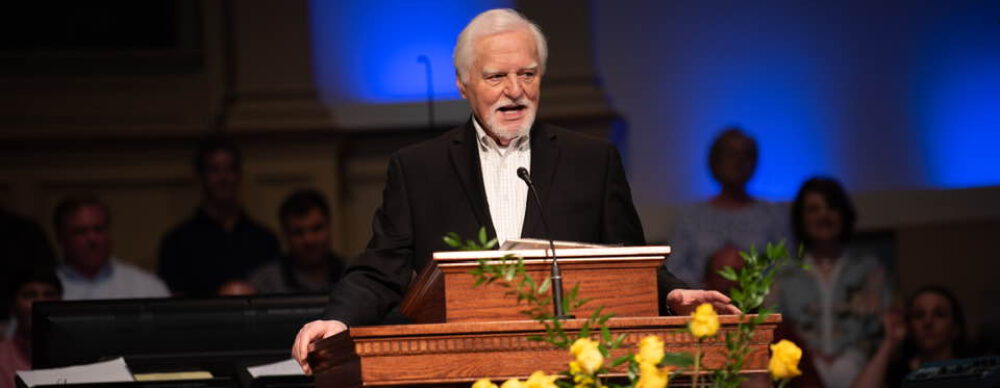
In the last couple of years, I have become a Pew-Spud. If people who occupy their time sprawled in front of the television are couch-potatoes, it figures that those who spend their Sundays soaking up sermons in church auditoriums are pew-spuds. And after over 40 years of pastoring, I have become one. It’s not all bad. In fact, I’m enjoying it, even though I still relish the opportunity to preach.
I keep reminding our pastors that when I drop in on their services, I come as a worshiper and not as a critic or advisor or their mentor. I come as a fellow believer. I consider myself a good audience for a preacher. I want him to do well, I pray for him and work at listening.
But, I’m about to violate that unspoken contract with our pastors. I need to tell you something that weighs heavily on my heart. Pastor, you need to give some thought to what you say from the pulpit. No, I’m not referring to the sermon. You seem to be doing well on that. I’m talking about what you say to the Lord, your prayers in the worship service.
In a typical service, there is the invocation and the benediction. In between will often come a pastoral prayer, an offertory prayer, and occasionally a prayer at the start and/or conclusion of the sermon. Some of those are spoken by staffers or deacons, but most belong to you, the pastor.
What follows is my impression of what the fellow in the pew would like to register with you the pastor. This is not to imply that he sits there thinking these things. In most cases, I fear he has long since abandoned hope that you might invigorate your prayers with fresh thoughts and uplifting praise and strong intercessions. But, if I were a wagering man, I’d betcha that the lay men and women who read this will connect with it in a heartbeat. As always, we invite them to leave their comments at the conclusion, in agreement or disagreement, contributing their own suggestions and anecdotes.
What Joe PewSpud wishes his pastor knew about his public prayers….
1) Remember that you are praying with me and for me.
This is not your private prayer time, pastor. You are voicing a prayer on behalf of the congregation. Therefore, say “We” and “our,” and not “I” and “my.”
At some point in recent history, some misguided influencer-of-preachers convinced them that no one can voice a prayer for someone else and that when you pray in public, you should use the first person singular pronoun. “I make my prayer in Jesus’ name, amen.”
My response is that this would be news to Jesus. He taught us to pray, “Our Father…give us…forgive us…lead us….”
So, make your prayers on behalf of the entire congregation. What are they feeling, where are they hurting, what do they need? What has God impressed you to request on behalf of your congregation? Then pray that.
2) We’re counting on you to lift us to the Lord’s throne in prayer.
Continue reading →