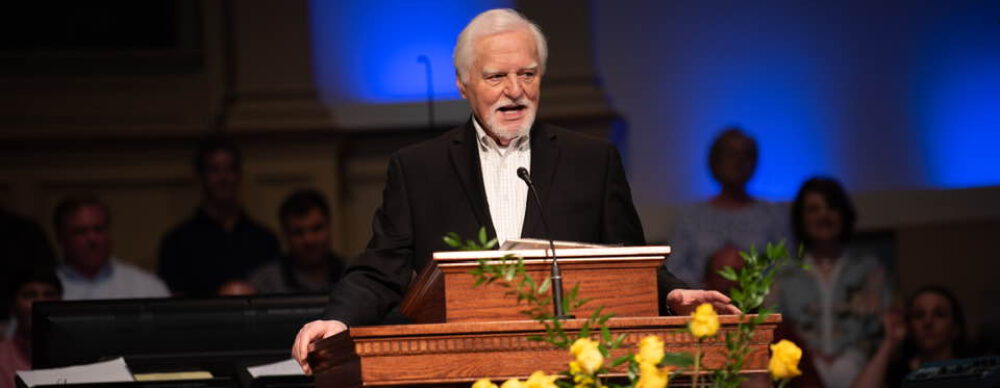
Leadership Principle No. 3–Earn the Right to Lead

I’m thinking about two deacons, both warm-hearted effective men of God. It wasn’t always that way.

“I don’t want him on the deacons,” I told the committee assigned to recommend the next group to be elected by the church. “Trust me on this. He has no business bearing this responsibility.”

I hoped they would drop the matter there. The man in question, I’ll call him Malachi, had been a deacon for several terms, was inactive at the moment and was being considered for re-election.

Pastors know things about church members few others do, as a rule, and yet we don’t want to talk about these things in open forums. Or anywhere else, for that matter. (I once asked in a personnel committee meeting, “Can we speak in confidence here?” The chairman said, “Pastor, I wouldn’t say anything in this room you don’t want repeated.” That was good advice.)

After the committee adjourned, one of the men followed me into my office. “I have to know,”he said. “What is this secret about Malachi that disqualifies him from serving as a deacon.” When I hesitated, he said, “He’s meant a lot to this church through the years. There may be something we can do for him.”

I said, “He’s being seen regularly at the casino, gambling. It appears he’s going there every day and staying for hours.”

The leader said, “You know this for a fact?” I told him of a certain church-member-in-name-only whom I bump into occasionally, who had told me this. “And you believe him?” I said, “Oh yes. He has his faults, but dishonesty is not one of them.”

“Then, let’s talk to him,” he said. Talk to Malachi.

Continue reading

They’re Talking About New Orleans

The Southern Baptist Convention voted in San Antonio today to meet in New Orleans in June of 2012. The last time they gathered here was the year 2000, and before that it was 1996. I have vivid memories of both times, since I chaired the Local Arrangements Committee, charged with hosting the event.

Jay Adkins, the young pastor of FBC Westwego went to the microphone in San Antonio and urged them to come earlier. “We need you now,” he said. A young pastor from Oxford, Mississippi, echoed his point and emphasized repeatedly, “Let’s take this city for Christ.”

Vice-President for Convention Affairs (or some such imposing title) Jack Wilkerson addressed the convention and made the following points. 1) Normally, we meet in the Super Dome, but since the Hyatt next door has not reopened, that’s out. 2) We want to meet in the Morial Convention Center and the Hilton next door is operating. 3) It takes a good 5 years to secure accommodations for this meeting in order to reserve the second week of June. (Jack said we always try to hold it prior to Father’s Day.) 4) We have financial commitments with the cities where we are now scheduled to go, and if we cancel one to move to New Orleans, we will a) lose a lot of money and b) lose faith with those cities.

So, the messengers voted to come here five years from now. I’ll be long off the scene, and a rusty age 72. I told Jack Wilkerson recently that he would, too. He said, “Maybe so.” Ha. I guarantee it. He and I will sit in the senior citizens section. If they have one.

Immediately after that vote, SBC President Frank Page told the thousands of messengers in the arena, “You don’t have to wait until 2012 to go to New Orleans. My church (FBC Taylors, SC) has been down there 9 times, working to rebuild the city and bear a witness for Christ. Hear the call of the Lord, friends. They need our help in New Orleans and all across the Gulf Coast, areas still coming back after the devastating effects of Hurricane Katrina. Hear the Lord’s call!”

Continue reading

Getting Serious About Your Bible

Bobby has been holding down his part of that pew for the last several years now, hearing nearly a hundred sermons and several times that many hymns and choruses, and he has come to a decision. He is tired of being lost when the minister asks everyone, “Turn in your Bibles to Luke 5,” or John 3, or Psalm 119.

Bobby patiently turns until he finds the passage in question, then follows along with the reading and sits back and listens to the minister open it up. And Bobby feels lost. Without a proper understanding of the Scripture–what it is, what it means, what God intends–he might as well be dropping in on a meeting of scientists and him the custodian. He’s in way over his head.

And that’s how Bobby came to his decision: he’s going to get serious about reading his Bible.

Two rows behind him sits Margie, and she’s made a similar decision. Margie has been a member of First Church for thirty years. She and Thomas joined back when the children were small and they were looking for a church with a good program for the little ones. The children are grown now, with families of their own, but First Church is home to Margie and Thomas and as familiar as their living room. But lately Margie has become dissatisfied with her spiritual life.

That’s why she has decided to get serious about studying her Bible. She figures rightly that it’s a shame she has been a believer all these many years and is still so ignorant about God’s Word. She has made a decision to remedy that situation.

Bobby and Margie have not actually done anything about their decisions to get to know God’s Word; they’ve just made the decision. And they’re at a vulnerable time.

This is the moment when the enemy presents his two greatest lies about God’s Word. Now, he has plenty of misrepresentations in his armory of weapons, slanders, and tricks and some are pretty dastardly, even outright evil. But the two lies he selects to use on Bobby and Margie are rather subtle.

To Bobby, the baby-believer who is ready to dip his toes into the ocean of God’s Word and get acquainted, the enemy uses this one: “It’s too deep. You will never be able to grasp it. No one does. Even the pastors and professors can’t agree on what the Bible says. It contradicts itself. This is beyond you, Bobby. Leave this to the scholars. Go back to sleep.”

He’s lying, Bobby. Seriously and big-time lying.

Continue reading

Potent Stuff

Sunday night, when I arrived at West St. Charles Baptist Church in the west bank community of Boutte, a huge bus was pulling into the parking lot. Some 30 or so teens and maybe 6 or 8 adults all wearing green t-shirts got off and headed into the church. This lively bunch of vivacious folks were from Second Baptist Church, Odessa, Texas, here to assist the church in its Vacation Bible School this week.

“Where are y’all staying?” I asked, thinking they could be boarding in the Volunteer Village downtown or in one of several churches set up to host volunteer teams. “The Ramada Inn in Luling,” they said.

Since it was their first time in New Orleans since the events of August/September 2005, I adapted my sermon to give them information on the city, its ordeal, and some of the blessings of the Lord we’ve enjoyed in these many intervening months.

Monday morning, David Rhymes stepped into my office to see if I could come have prayer with representatives of several church groups he was briefing about the work they would be doing this week. A dozen people, mostly teens, were in our conference room. “Where are you from?” Benton, Louisiana. Jasper, Alabama. (Since that is right up the road from my home in north Alabama, we had lots to talk about.)

I gave the visitors a brief rundown on our situation and we prayed for them, thanking God for the encouragement of their presence. I asked David how many volunteers are in town right now just from our Baptist churches. “Anywhere from 500 to 1,000,” he said, “and it’s that way every week right on through the summer.”

We feel so blessed.

Continue reading

Leadership Principle No. 1–Delegation

I was the minister of evangelism at the FBC of Jackson, Mississippi, in my early 30s. That would be the early 1970s. My pastor, Larry Rohrman, was frequently invited to speak out of town and sometimes he would invite me along. I think he wanted a driver more than company. On one of those occasions, he said something that has stayed with me ever since.

“See that little church,” he said as we traveled down a country highway. “In many cases the pastor of that little church can preach just as well as or better than the pastor of the big, growing church. But the difference is that he can’t turn loose of jobs. He has to do everything himself. The other guy, however, puts people to work. He matches the right person to the right job and everyone wins. They get satisfaction from doing their job in the church, the work gets done, the pastor is freed up for other things, the church grows, and the Lord is honored.”

Some pastors can delegate; some cannot. One pastor sees a task that needs doing and starts thinking of who has a gift or the aptitude or at least the willingness for this and he enlists them. The other pastor sees a job and does it. Both are godly, dedicated men of the Lord, but only the first is being fair to his people.

Along about the same time as that conversation with my pastor, I attended a national conference on church management in Atlanta. There were 700 of us packed into the auditorium of that downtown hotel. In the middle of the opening session, as our host was presenting the schedule of the week, a hotel employee approached the platform pushing a vacuum cleaner and proceeded to clean all around the speaker.

At first, the speaker ignored him. Then the employee said, “Sir, can you move over here and let me clean under your feet?”

Our leader was visibly perturbed. He said, “Buddy, could you do that some other time? We’re trying to have a meeting here.”

Continue reading

Leadership Principle No. 2–Followup.

(Note to pastors: Many years ago, a church member paid the fees for me to take a one-day Dale Carnegie Management Course. The one great lesson I’ve carried with me these 40 years is that “if you delegate a task, you may assume it will not get done unless you follow up on it.” It’s an invaluable lesson. I ran across the point being made this week in a book on the Battle of New Orleans, and feel it’s worth passing on.

Bear in mind that the no. 1 principle of management (or leadership) is delegating–matching people up with the right jobs–and the no. 2 principle is following up on that assignment.

Toward the end of this, I’ll drop in my own horror story on the matter of following up. Just because I learned it in a class in the late 1960s does not mean I would get smart and actually practice it. How does that line go–too late smart, too soon dead.

Let’s call this: “What Andrew Jackson wished he had done” or “How Jackson Came Close to Losing the Battle of New Orleans.”)

The best lessons we ever learn are the ones we got wrong and suffered from and thus determine not ever to let happen again. Which is to say, experience is the best teacher.

After General Andrew Jackson entered New Orleans late in 1814 and took charge of its defense, he toured the perimeters of the area, found the city to be exposed on all sides, and assigned officers to various tasks.

In his book on the Battle of New Orleans, “Patriotic Fire,” Winston Groom writes: “…there were any number of bayous, streams, and canals that, left unguarded and unobstructed, could have allowed the British through. Jackson ordered all of these blocked by felled trees, with guards from the state militia posted to watch them.” Then, Groom ominously adds, “Lack of diligent enforcement of this order proved to be his greatest mistake.”

Here’s what happened.

Continue reading

Standards for Leaders and Plans for Leaving

Everyone down here is depressed over having a congressman under indictment for fraud and racketeering. We’re still trying to keep Washington’s focus on helping us rebuild this city, and now our chief advocate representing Orleans and parts of Jefferson Parish will be using all his resources to stay out of jail.

William Jefferson has been charged by the FBI with a long list of corrupt activities, all of which he is denying. Half our people are calling for him to resign from Congress and the other half are trying to put the best face on this, saying things like: “You’re innocent until proven guilty.” Which is not true, of course.

In a court of law and only there, you are considered innocent until you are proven guilty. But it’s inane to say a person is innocent until he’s proven guilty.

Up in Mississippi, they’ve arrested some old KKK member for a 1964 murder of a couple of Black teenagers and he will be going to trial soon. Now, it’s been 43 years and he hasn’t been proven guilty. Is there anyone around who would say the guy is innocent because of that? No, the point is that the courts must treat him as innocent and the burden of proof is on the state. But whether they prove it or not has nothing to do with whether he’s innocent. If he did the crime, and even if he’s the only one who knows it other than God, he’s still plenty guilty.

Big, big difference. (You’ve just stumbled onto a pet peeve of mine. Sorry.)

The other pet peeve is congresspeople (is that a word?) and other leaders who try to subdivide their lives into categories–one part for my official functions, another part for my private business affairs, and so on. And so we have Mr. Jefferson on the front of Saturday’s Times-Picayune saying, “Did I sell my office or trade official acts for money? Absolutely not.”

Continue reading

Ready for the Next Hurricane?

Even people who live in this city like to turn to one another and pose what, before inflation, was called ‘the 64 dollar question:’ Do you think New Orleans is better prepared for a hurricane than we were 2 years ago?

I answer an emphatic ‘yes.’ For a lot of reasons. Here are some.

1. The levees are stronger in many places and no worse anywhere than before Katrina.

2. At the entrance to a number of crucial waterways, the Corps of Engineers has installed massive and expensive floodgates to regulate the amount of water inside the city. Every workday, I drive over the “Hammond Highway” bridge in Bucktown, which spans the 17th Street Canal where the levee broke after Katrina and devastated the neighborhood around our Pontchartrain Baptist Church, and gaze upon what perhaps 50 million dollars have bought in the way of intricate, huge, impressive floodgates. We had nothing there before.

3. We have fewer vulnerable properties now than pre-Katrina for the simple reason that the storm cleaned out thousands of flimsy buildings. Okay, we still have lots of FEMA house trailers throughout Orleans, St. Bernard, and Plaquemines parishes and I do not want to even imagine what a strong storm would do with those lightweight missiles. Turn them into kites?

4. Everyone knows a hurricane can actually hit the city now–previously, we had become blase’ about that ever actually happening–and everyone has a plan of some kind. When someone asked me my hurricane plan this week, I said, “Leave.”

Continue reading

Lots to Miss in New Orleans

One of our newspaper columnists was absent for a number of weeks. I didn’t know what had happened. One day this week the column reappeared and he admitted he’d taken his family away on an extended vacation. We wanted to go someplace normal, he said, somewhere you could go a whole day through and not once hear the word “Katrina.”

We all know the feeling. Consider the following and see if we make our point.

The front page of Friday’s Times-Picayune was made up of these lengthy articles:

1) “Road Home gap hits $5 billion.” This federal program of providing up to $150,000 to each homeowner whose residence suffered extensive damage from Katrina or her floodwaters has been known to be seriously underfunded, but the amount keeps escalating. Now they’re saying we will need an additional $5 billion, a staggering amount. And while the governor and state leaders have been crying for Washington to make up the difference, leaders in our nation’s capital have pointed the finger southward, suggesting that since Louisiana is projecting a budget surplus, we ought to come up with much of the money ourselves. The front page article suggests state legislators working on the 2008 budget are feeling the pressure to do just that.

2) “State rejects 5-year storm model.” A California company called Risk Management Solutions, Inc. comes up with projected costs of damages and insurance rates in hurricane-prone states for a five year period. In this case, the rate of increase in the dollar cost of damages and insurance is so alarming that the state of Florida has rejected the RMS projections and Louisiana is following suit. These were guidelines to have been used by the state insurance commissioners’ offices in making projections about rates, etc.

3) “June 1.” Yep, that’s the big bold headline. Underneath are these: “It’s hurricane season: Six months of bracing for the worst while hoping for the best.” “Corps chief promises 100-year protection.” I’ll spare you the details.

Continue reading

For the Chosen

“We’ve been chosen,” writes Ann Corbin. She and husband Steve are MSC volunteers assigned to the Global Maritime Ministries, working out of Reserve, LA, a few miles upriver from New Orleans. However, often they’re working the ports in this city also.

The Corbins have been selected to be among the recipients of the “Christmas in August” promotion for the year 2008. This is a joint missionary effort of our National Woman’s Missionary Union and the North American Mission Board in which the stories of these missionaries are “told” to church groups all over the country, and those groups are invited to send resources their way. Hence the name “Christmas in August.”

In many publications of the WMU and NAMB, the story of Steve and Ann’s missionary work will be featured and readers will learn what supplies they can use for their ministry. They might, for instance, ask for office supplies, building supplies, or other items which they can use. Or, they might simply request gift cards for Wal-Mart, Target, Home Depot, etc., which they can use with the seamen and port workers who come to their port ministry centers for hospitality and witness. Some missionaries have gotten so much response to this August emphasis they’ve had to rent storage space to hold it all.

Some 35 to 40 missionaries in all will be featured in the “Christmas in August” promotion. Most churches will choose one or two or three missionaries and focus on their work. There’s no way of knowing what level of response Steve and Ann may expect.

Anyone know of a good, cheap vacation place for Steve and Ann in the Pigeon Forge or Gatlinburg area of Tennessee? They’ll be headed to a conference in the Carolinas and want to have a few days vacation in mid-July. Their e-mail is steveandann@portministry.com.

Continue reading