Encouraging the encouragers

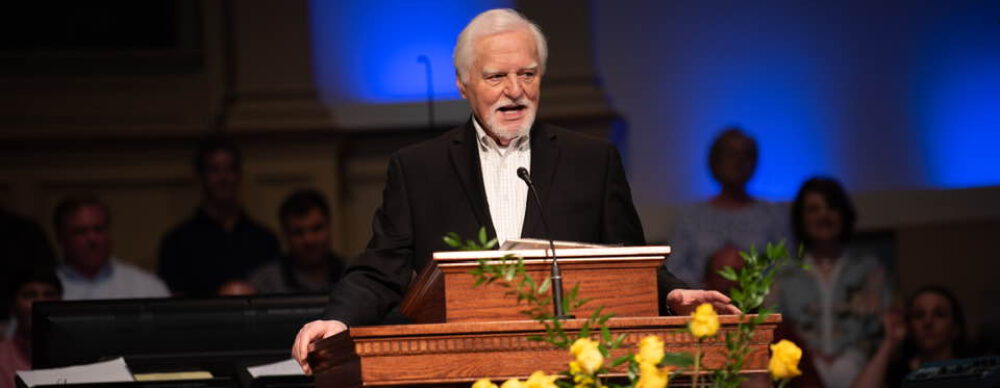
At Wednesday’s pastors meeting at the First Baptist Church of LaPlace, we crammed a great deal into two hours and a half. Our friends from the Baptist Convention of New York–Milton Kornegay and Richard Taylor–spoke to the group of fifty or so, offering the support of prayer, volunteer crews, and finances. Later, I overheard Milton extending invitations to a couple of pastors to bring their wives to New York for brief vacations. One of the pastors began, “I don’t know. There are so many more deserving than I.” I said, “Bob. Shut up. You’re going to talk him out of it.” We all laughed. It was a wonderful gesture of our NY friends.

Joe Williams (FBI chaplain with experience at the Murrah Federal Building and Ground Zero) reminded the pastors of plans for a day-long getaway for fellowship and discussion with other ministers and their wives. This event will be provided soon by our North American Mission Board, under Joe’s direction. The director of the State Mental Hospital at Mandeville visited our meeting today and addressed the pastors on the need to take care of themselves. “I’ve talked with two pastors who have been running day and night since Katrina,” he said, “and they’re in bad emotional trouble. I probed a little and found that neither one of them has been keeping up with his prayer time and Bible reading. They say the phone starts ringing when they get up in the morning and they don’t stop running until night and they’re tired all the time.” He explained that a number of suicides and suicide-attempts have been registered since the hurricane, not saying they were specifically among the clergy, only that people have to take care of themselves. He had an interesting philosophy in dealing with potential suicides. “I tell them, ‘Things will be better in fifteen minutes.'”

Ty Salter and Carl Deitz, from the financial department of NAMB, detailed the types of loans our mission board can make to churches, and asked to meet with pastors during lunch. Ty said they came as much to listen and find out what the churches’ needs are, as much as to share information.

“Who needs an electric organ?” I asked. A director of missions in North Mississippi had called me with information about one. “We’d love to have it.” Pastor David Arceneaux of Gentilly Church said, “I hope it’s not too large. We’ll have to store it upstairs since our ruined sanctuary is still wide open to the world.” DOM Frank Lay will drive the organ down here himself. Tangible encouragement to a devastated church.

“The latest word is that Billy Graham is coming to our Festival of Hope!” Pastor Dennis Watson of Celebration Church reminded everyone of the Franklin Graham crusade scheduled for March 11-12 in our New Orleans Arena, the basketball arena next door to the Superdome. “And that’s not all. Billy Graham told Franklin that he and Ruth both want to come. And we understand that George Beverly Shea and Cliff Barrows will be here! Franklin has said that his father will preach at the Sunday afternoon meeting!” Dennis added, “The only worry now is that the New Orleans Arena won’t hold the crowd.” Nice problem.

Continue reading

Chocolate or gumbo: which will New Orleans be?

Monday was Martin Luther King Day and the mayor of New Orleans took this opportunity to insult most of the residents of his “new” city and offend the president to whom he is appealing for big money to restore the city.

Mayor C. Ray Nagin was speaking to some sixty people on the steps of City Hall. After envisioning himself having a conversation with Dr. King in which the slain civil rights leader did not like a single thing going on around here, Nagin said: “It’s time for us to rebuild a New Orleans, the one that should be a chocolate New Orleans. And I don’t care what people are saying Uptown or wherever they are. The city will be chocolate at the end of the day. This city will be a majority African-American city. It’s the way God wants it to be.”

That was just the first of several strange statements he made in that brief speech.

The radio talk shows were flooded with callers decrying his speech. WWL radio replayed excerpts several times and the entire speech once or twice. I sent this letter to the editor Tuesday morning: “Had a white mayor stood on the steps of City Hall and called for the city to become majority White, he would have been branded a racist from one end of this country to the other.” Then, referring to the excellent coverage in Monday morning’s paper on Grace Baptist Church, I wrote: “On Monday, your front page featured a multi-racial church in the Bywater section that is ‘colorless,’ as Pastor Bill Rogers said. On Tuesday, the front page has the mayor of New Orleans calling for the city to be “chocolate.” The contrast could not be starker.”

City Councilman Oliver Thomas, an African-American being pushed by some to run for mayor, is quoted in the paper: “Everybody’s jaws are dropping right now. Even if you believe some of that crazy stuff, this is not the type of image we need to present to the nation.”

In that brief speech, Nagin also said, “…God is mad at America. He’s sending hurricane after hurricane…. Surely He is not approving us being in Iraq under false pretenses.”

A friend heard that and said, “This is the mayor who’s trying to get the president to help us?”

Continue reading

Honoring the people who make a difference

This is about a church changed by a teenager, Debbie, and one blessed by my “daughter”, Mary. You’re going to love both stories.

I’ve told you about Grace Baptist Church on Rampart Street in New Orleans. It’s just over a hundred years old, its pastor is 76-year-old Bill Rogers (who is, incredibly, about to get an earned doctorate from our seminary in Louisville), and it has maintained a great witness for the Lord through some extremely difficult times. Now, Monday, January 16, they made the front page of the Times-Picayune. And not just the front, the church took the upper half of the front page with the kind of great publicity you couldn’t purchase.

The headline reads “Together in Faith,” and the over-sized caption near the large color photo showing people hugging reads, “When 16-year-old Debbie Curtis-Barbarin stepped through the doors of Grace Baptist Church in 1973, she brought with her a new era of diversity.” The article covers a celebration Sunday in which the church remembered the day Debbie first attended and started it to becoming a color-blind, accepting congregation. When she walked into the church that day, as soon as she noticed it was a whites-only affair, she decided to leave and not return. That’s when people started coming up, welcoming her. An elderly couple who were so kind made the difference, she said, and she came back. In time, her entire family started attending. The church “now boasts one of the most diverse congregations in the Gulf South,” according to the paper.

The Bywater neighborhood surrounding Grace Baptist Church is still largely vacant. There’s so much rebuilding and renovating yet to do, with displaced residents driving in from outlying cities to work on their off-days. Grace has been running 25 or so since Katrina, but Sunday 70 were present. “This church is totally colorless,” said Pastor Rogers in the article. And for that, he said the church owes a brave teenager a great deal. Today, Grace counts among its congregation natives of Honduras, Costa Rica, Nicaragua, and Canada, as well as locals who are descendants of Irish, German, French, and African.

Incidentally, they led young Debbie to the Lord and baptized her not long after she started attending. She is now a clerk in the finance office of the federal government in New Orleans, lives in a FEMA trailer in Slidell, and commutes to the church where she teaches a Sunday School class.

You’ve heard the Ray Bolz song “Thank you for giving to the Lord,” which envisions people coming up to you in Heaven pointing out the little acts of faithfulness you did on earth which God used to influence them. I’m convinced that is precisely what will happen there. But suppose we got started early; suppose we began telling those special people how important they are to us now, today.

Continue reading

“Welcome Home” over four months later

Sunday morning, two of our churches in the devastated area of New Orleans held worship services for the first time since Katrina.

At 9 am, I worshiped with 25 members of Elysian Fields Avenue Baptist Church, meeting in the home of Bob and Linda Jackson, a block behind the church. The area still has no electricity and the Jackson’s home had been gutted down to the bare floor and wall studs. With the temperature outside in the high 40s, everyone bundled up and warmed one another. The Jacksons, now teaching at the seminary, are former missionaries to Africa. “We’re used to this,” Linda laughed. “No building, no heat. This is how we did it for years.” Pastor Ken Taylor welcomed everyone, and with tears in his eyes, brought everyone up to date on the church’s situation.

“It appears that our church buildings will be a total loss,” he told the members. “We had no flood insurance, and we do not know what kind of settlement we’ll get.” He continued, “We’re hoping to be able to build a smaller church, one more suitable to our needs.” With the large sanctuary and a small congregation, they had gone to worshiping in the fellowship hall in recent months.

Interspersed between the spirited worship choruses, members gave testimonies. Paula Stringer told of entering her devastated home and finding paper scattered everywhere. “One page that stood out from the rest,” she said, “contained Psalm 77.” She read some of the Psalm, particularly the final verses, as everyone marveled at their relevance to our situation. “The clouds poured out water, the skies gave forth a sound…the sound of thy thunder was in the whirlwind, the lightnings lit up the world, the earth trembled and shook.” “No one saw your footprints, but you were there,” Paula finished, “You led your people like a flock.”

Pastor Ken invited me to say a few words, after which I left to make the 10 am service at Suburban Baptist Church, some three or four miles further east. I jokingly said if Suburban church was this cold, I might think of a third church to go visit and use that as an excuse to leave early.

Village de l’Est Baptist Church and Pastor Thomas Walters were meeting with Pastor Jeff Box and the Suburban folks today, the first post-K service for either. There must have been a hundred or more in attendance. To my surprise, they had electricity. No gas, so the church’s heaters weren’t working, but one little space heater–and the crowd–warmed up the fellowship hall. The projector flashed an image of a dove in flight on the wall in front, with the words “Welcome Home.” People were hugging and laughing; it was a grand occasion.

Continue reading

Why can’t things be simple.

Late Thursday evening, I told Margaret if she didn’t mind, I was going to a movie. I knew enough about “Munich” to know it was a story I was interested in and that she would not enjoy it. Three hours later, I walked out of the cinema with mixed emotions. Following the killing of the Israeli athletes at the 1972 Olympics in Munich, Germany, a small band of commandos sought out the assassins and exterminated them one by one. This Steven Spielberg movie is quite different from anything he’s has done before, and I thought it might be the diversion I needed. What did I need? Probably a good western. A good old-fashioned clear-cut moral tale of good and evil, with good winning decisively. But it was not to be.

The protagonist (that’s the hero, remember?) was not a professional killer but a family man, deeply troubled by the revenge killings he had to do. The bomb-maker was tormented because he saw Judaism as all about righteousness–“It’s a beautiful thing, right?” he said–and ended up destroying himself with one of his creations. In short, there was wrong on both sides, perhaps a little right on each side, and me caught in the middle. This was not the movie I had wanted.

I’m in the middle of a novel about the Battle of Waterloo, Lord Wellington and Napoleon and all that; it’s my bedtime reading and I get about 5 pages done before turning off the light, so it’s taking forever. But I’m about to lay it aside. The sides get too complicated, too many good guys on the bad side and crazy people on the good side. I don’t need this at this point in my life. I have enough complication in the real world.

Wednesday morning, the Times-Picayune presented the report of the Bring New Orleans Back Commission that was released later that day. Some of the recommendations from this distinguished panel include halting all renovation and rebuilding in the flooded zone for 4 months, turning large areas of the city into parks and greenspace, building a regional transit system which would include light-rail to Baton Rouge, streamlining local government (consolidating many offices, cutting out excessive assessors and courts and judges), and preparing a flood control system based on the Dutch model. I’ve not read the actual report and at this point, don’t know how to get hold of one, but only the synopsis in the newspaper. Immediately, however, people started hollering throughout the city.

Continue reading

Assessing the situation in the Crescent City

This week, the mayor will receive the report and recommendations of his Bring New Orleans Back Commission (also known as the “Bring Back N.O. Commission”, which works a little better), the blue ribbon panel of community leaders who have been active since late September envisioning how the “new” city should look. The ULI (Urban Land Institute) has recommended that certain low-lying sections of the city be abandoned and turned into parks, with many political leaders crying foul, saying it’s a racist plan since minorities lived in those least desirable sections. The BNOB Commission is expected to come down somewhere in the middle.

Meanwhile, a community group known as ACORN is hard at work helping people in the Lower 9th Ward, worst hit portion of the city, clean out their houses and get ready to rebuild. They’re thinking that if residents can restore their homes quickly, the city won’t dare tell them to move out.

We’re eagerly awaiting other reports. The governor’s Recovery Commission (which pertains both to New Orleans and the entire Louisiana coastline) is due to report in soon. It’ll be interesting to see how their recommendations match up or conflict with the local report. FEMA is set to release a map of metro New Orleans showing the new flood zones with their recommendations where elevations of homes will have to be raised. Insurance companies will set their rates based on this piece of paper.

Speaking of insurance, Allstate said Tuesday that automobile insurance rates for our area are going out of sight. Even this far removed from the hurricane and flood, you can still find flooded-and-ruined cars abandoned all over New Orleans. I’ve heard the figure, something like 100,000 or more cars destroyed by Katrina. The insurance companies have taken a hard lick.

Many wonder what will happen if the governor and the mayor cannot agree rebuilding our city. It was reported tonight that the governor controls the purse strings on several billion dollars (that’s “billion”!) to be spent in this area. (It was also announced today that someone has started a petition to recall Governor Blanco. They’ll have to garner 900,000 signatures in 180 days.)

The front page of USA Today showed students returning to Dillard University, one of our historically Black colleges. It took a great deal of flood damage, so the school has leased large sections of the downtown Hilton Hotel for dorms. “Private baths and double beds! Valet service!” the students exclaimed. The article said several local colleges are amazed at the high percentage of students who are returning for this Spring semester. One president said these “kids” will forever be known as the Katrina class.

Continue reading

Nehemiah and New Orleans–they have so much in common.

I’ve been struck by the correlation of the Old Testament events surrounding the life of Nehemiah and our situation in New Orleans. The fact that Southern Baptists chose this volume as the Winter Bible Study Book for this season–and made that decision three or four years ago–makes it even more meaningful. Why, it’s almost like–dare we say it?–that…God knew? Oh, yeah. He knows. Does He ever.

Both stories have so much in common.

A dispersed people. A deserted, devastated city. Opponents who did not want to see the city rebuilt. The city’s devastation seen as the judgment of God. Earnest prayer going up for the city. First, the walls to be restored. (Our levees. Make the city secure first, then rebuild.) Government provision for all supplies. Continual prayer from beginning to end. Tough decisions, requiring courage.

I’m typing this on Friday night and leaving first thing Saturday morning for north Alabama. I’ve been invited to teach “Nehemiah” at four sessions on Sunday and one Monday night at the New Prospect Baptist Church in Jasper, Alabama. This is one of our family’s numerous “family churches,” as my relatives have been vital members of this church for several generations. Pastor Fred Karthaus, all around nice guy and possessor of a doctorate from our local N.O. seminary, was so gracious to invite me. I find myself looking forward to it more than anything similar in a long time.

The story of Nehemiah is a great story. It’s only 13 chapters long, and several can be skipped without doing damage to the narrative since they are lists of workers or citizens. So, what makes it a great story? What makes any story effective?

Continue reading

Issues still to be decided and things easily understood

The news each day–radio, television, newspaper–concerns the upcoming report of the Bring New Orleans Back Commission and what they will recommend. At this point, it’s still impossible to know which neighborhoods are going to be resettled and which, if any, turned into public parks. That prevents us from knowing which churches to “bring back.” So, we clean out the churches to the studs and lock them up. And wait.

Our Wednesday pastors’ meeting at First Baptist-LaPlace was a blessing as usual. We had made no phone calls to alert everyone to the resumption of these meetings after the holiday break, but an excellent number turned out. How many? Perhaps 35. The best part is that three pastors came for the first time, only recently returned from evacuation and having learned of the weekly gathering.

Our agenda Wednesday followed the usual pattern. We stood around greeting, visiting with each other, and fixing our coffee until 9:15, then began with a concert of prayer. I talked a little as usual, called on Freddie Arnold to bring us up to speed on all the recovery work taking place throughout the city, and heard from Cornelius Tilton (Irish Channel Church) and Anthony Pierce (Evangelistic) who told of their experiences during their absence from New Orleans. Cornelius said, “Our church took some damage but we are up and running. Two other congregations have come in with us, so we now have three churches and two pastors, all meeting together.” They’re running perhaps 35 or 40, a fraction of their former attendance. Anthony’s church is still out of business and his members scattered across America.

Continue reading

A new year, new challenges, new hope

1. USA Today for Tuesday lists 5 things to expect in 2006, and number two is: “New Orleans Returns.” We sure like the sound of that. Basically, it refers to the conventions set to meet in our city sometime later in the year. The first big one comes in June when the American Library Association brings 20,000 librarians. My kind of people. Article says most of the city’s 19,000 hotel rooms are now operational, although five major hotels downtown remain closed.

2. Personally, I was glad to see 2005 close up shop and go home. One year ago I was recovering from cancer surgery, which was followed by nearly 3 months of radiation, followed by a similar period of recovering from the radiation. In June, my wife’s sister, two years younger than Margaret, died. And you know what happened in late August. I’m sure a lot of great things happened in 2005; I just can’t recall any of them at the moment.

3. As though underscoring the darkness of the year, on the final day, my mentor left us. James Richardson had successfully battled cancer a few years back, but something–I think they called it dementia–managed to do what cancer could not. He was 82, 17 years my senior. The reason I note that is that when I would tell him he was my father in the ministry (actually, one of three), he would laugh, “I’m not old enough.” We first met in the late 1960s when I was newly called to Emmanuel Baptist Church in Greenville, Mississippi, and James was the long-time leader of the nearby First Baptist Church of Leland. We quickly became friends, especially when he counseled Margaret and me on our marriage. A few years later, he recommended me to the staff of the great First Baptist Church of Jackson, MS, where we stayed for three life-changing years.

Continue reading

Our Christmas Greeting to you

One of the most bizarre aspects of life after the hurricane was announced Friday. They’ve found watermelons growing wild all over St. Charles Parish, which is just west of the New Orleans airport. Apparently the Katrina winds carried the seeds aloft from somewhere and broadcast them all over our area. They are now producing fruit. The agriculture expert said on radio, “I wouldn’t dare eat them, but I’ve never heard of this happening anywhere.”

The winds of Katrina have blown many fascinating tidbits of life our way. We have new friends whom we will know and treasure from here on home. We have been repeatedly blessed in tangible and intangible ways that make us teary-eyed just to reflect on them. Through this invention called “the worldwide web” we have contacts with people all over the globe, all of them interested in our situation, many praying, several giving, and a few coming. I have even met another Joe McKeever. He lives in New Hampshire not far from my daughter’s home. We’re close in age and have the same color hair (is white a color?), the same stocky build, and a houseful of beloved grandchildren. Two extremely blessed Joes.

Last year on Christmas Day, Margaret and I drove to Cheaha State Park in east central Alabama, near Anniston. We rented rooms in the lodge and took our meals in the restaurant and enjoyed hiking the woods and sitting on the bluff where we could look out over 25 miles. Then we had an idea. We made immediate reservations for a chalet for this year. So, Sunday, Christmas Day, we will again drive to that wonderful mountaintop and get things set up. On Monday our sons–Marty from Charlotte NC and Neil from New Orleans–will arrive with their families. We’ve reserved two rooms in the lodge in case the parents want some peace and quiet at night, but the daytimes belong to the villa. We go for walks in the frigid air, then return to the blazing fire and hot chocolate and toasted marshmallows. Grandpa will spin a few yarns for the five grandchildren and we’ll build a lot of memories. We plan to laugh and play games and act silly and hug a lot. Meanwhile, no one will mention the words ‘hurricane’ or ‘Katrina’ and for a few days we will forget that that monster ever existed.

Thanks to our friends who love us and pray for us. Thanks to you who drop in on the website regularly, and particularly for forwarding some of these messages to others you think will appreciate them or benefit from them. Thank you so much to you who have given money to assist us in ministering to the pastors and churches of the New Orleans area. You’re the best.

Continue reading