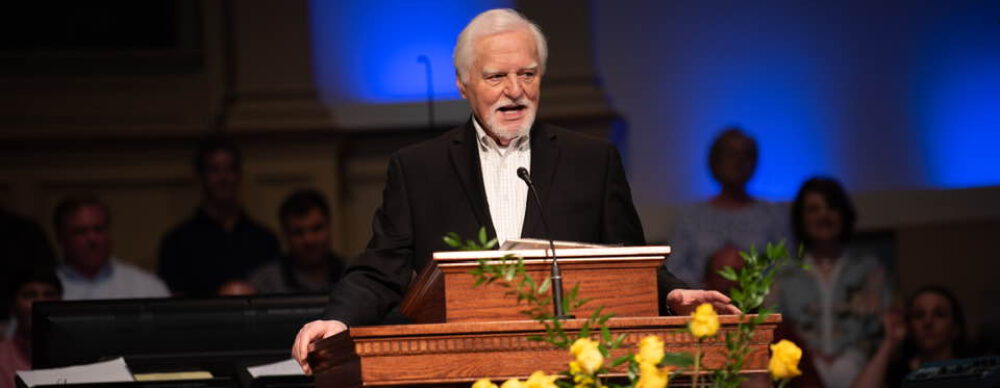
How pastors discourage their people from using the Bible

“The law of the Lord is perfect, restoring the soul… They are more desirable than gold, yes, than much fine gold; sweeter also than honey and the drippings of the honeycomb…. In keeping them there is great reward.” (Psalm 19:7-11)

The Bible loves the Bible.

From one end to the other, God’s word tells us how wonderful is God’s word. Better than gold and sweeter than honey it is. Job said, “I have esteemed the words of Thy mouth more than my necessary food” (Job 23:12).

We preachers believe this. And we say those words to our people. We like our people to bring their Bibles to church, open them as we read and preach, and use them when they return home.

There is nothing wrong with our aspirations in this regard.

When it comes to connecting our people with God’s word personally to the point that they will become ardent readers and diligent students of Scripture, we should give ourselves a C-minus, however. And sometimes, an F.

Without any study to back it up, I say categorically that the typical member of our churches–those who fill your pews each Sunday and are your best supporters, pastor–takes his Bible home and does not open it until the next time you rise to preach.

There is something bad wrong here. As a general rule, we pastors are doing a poor job of encouraging our flock to love the Word and live in the Word so that they might live “by” the Word.  That is the point after all. Jesus said, “If you know these things, blessed are you if you do them” (John 13:17).  It is the doing of the Word which is our goal (James 1:22).

Question: In what ways are we dropping the ball? How are we failing to encourage our people to love God’s Word and to live in it?

We’ve pinpointed seven ways.  You may think of more.

1) A pastor discourages his people from opening their Bible, reading it, and loving it when he overdoes the Greek and Hebrew bit.

You know the routine. The pastor reads a verse, then says something like, “Now, the Greek does not say that. This verb in the Greek is a past pluperfect intransitive and when coupled with an indirect object of the active preposition means ‘sometimes but not always.’ So, the translators got it wrong here.”

You want to run out the door screaming.

Continue reading

What I learned in choir rehearsal

“Come before Him with joyful singing” (Psalm 100:2).

During the time I sang with the choir at our church, I loved singing for the worship service, but had to make myself go to rehearsal.

Rehearsing songs–whether for church or school assembly or for the juke joint down the street–is hard work.

Gradually, I began to see some patterns forming. Eventually, those shapes merged to form life-lessons that have remained with me all these years.

1) I do not like new songs.

The minister of music would say, “Joyce, pass out the new music,” and I would cringe. I did not read music and did not do well trying to negotiate my way around these clothes-lines of blackbirds.  The piano is picking out the melody of the song and I’m working to get it.  This is no fun.  It’s work.

But a funny thing happened. The following week, when the director passed out that music for the second time, I was interested in that piece.  It had possibilities. And the third week, I kind of liked it. By the fourth week, the preparation for actually singing it in church, I was in love with it and had been humming it all week.

But you know what happened, I expect. At rehearsal, the minister handed out some new music once again. And again, I cringed. “I hate learning new music.”

2) We sound better together than we do separately.

Even the good singers, when called on to do a little solo in rehearsal to help the others, even they were not all that great.  And of course, I was the very definition of mediocre. But a funny thing happened. When we all joined our voices together, the result was something magical.

I wonder if that’s the reason for church.  If perhaps we work better and worship better and pray better in concert with brothers and sisters than we do alone.

Continue reading

The creative process: What little I have learned

“In the beginning, God created….” (Genesis 1:1)

Real creativity is a God thing.

When you sit down to write or draw or whatever, remember that your Muse (the Spirit of God, the Original Muse!) has read it all and seen it all and inspired much of it, so He is your greatest Resource.

Those who want to learn to write should surround themselves with good writing (i.e., excellent reading material) and get to know inspired writers.

Those who want to think creatively should occasionally plant themselves among off-the-wall thinkers, people whose minds push the boundaries in every direction. They will loosen you up.

And then, pull back and spend a lot of time alone, thinking.

Go to bed thinking about whatever is bugging you, inspiring you, burdening you, pestering you, charming you, or puzzling you.  Your subconscious will keep at it while you recuperate.

If something occurs to you in the middle of the night, you absolutely must get up then and write it down.  If you plead that you are sleep deprived and insist that “this is such a great insight, I’ll surely remember it in the morning,” the single thing I can guarantee is that you will not remember it when the night is over.  Iron-clad promise.

You must get up when the idea occurs.  Write it down.

I am not suggesting you should live with the people whose minds are all over the place, whose thinking knows no limits, who challenge everything. Do this and you will soon lose touch with reality.

Just once in a while, associate with free-thinkers.

Continue reading

The best encouragement to pray

“O Thou who dost hear prayer, to Thee all men come” (Psalm 65:2).

God hears prayers.  It’s what He does.

God delights in answering the prayers of His children. Scripture is consistent on this.

The disciples said, “Lord, teach us to pray.”  And Jesus said, “When you pray, say ‘Our Father….’” (Luke 11:1ff).

Slow down. Do not rush through the “Our Father” (what we call “The Lord’s Prayer”).  Look how it begins.

You are praying to the Father.  He is not just yours, of course, but “our” Father.  He has quite the large family.

He is the Father.  He birthed us.  Created us.  Knows us.

God is on your side.  He is not impartial and definitely not antagonistic.  He wants to do well for you, to bless you in every way.  Jesus said, “Fear not, little children. It is your Father’s good pleasure to give you the kingdom” (Luke 12:32).

The concept of God as your Heavenly Father is the personal gift to you and me from the Lord Jesus Christ Himself.  He knew the Father as no one else, and revealed Him to us that way.  He frequently spoke of the oneness, the relationship, He had with the Father before time began.  (See John 17:5ff.)

A couple of times the Old Testament refers to God as the father of Israel, but nowhere in the Hebrew scriptures does anyone look toward the skies and address God as Father.  We learned that from Jesus.

Continue reading

10 signs the church worker has been there too long

The pastor or church staff member or the chairman of a committee or a church officer has overstayed his/her welcome.

Let’s talk about how to tell.

One church I pastored had a vivid illustration of what happens when a member holds a position so long they begin to “own” it.  Behind the church–same block–sat the synagogue.  Across the street from the synagogue sat the funeral home, owned by one of our deacons. One day this good man told me, “Preacher, we could have bought the land the synagogue is sitting on for a pittance years ago.”

Our growing church needed additional land, which is why we were having this conversation.

He said, “When the house that used to sit on that property came up for sale, the people wanted $30,000 for it. I was willing to raise the money and buy it. I felt we’d be needing that property in the future.”

“The trouble was that Mr. McClanahan, the church treasurer who had held that job for decades, vetoed it. He said that was just too much money for that piece of land and we would not pay it.”

“No one, including the preacher, wanted to stand up to McClanahan, so we let it go.”

“And now,” the deacon said, “We can’t touch that piece of ground for a million dollars.”

He was right in that. I’d asked around discreetly and found that out.

Continue reading

The humble pastor brags on himself

I’m a pastor. I know the trade secrets.

I hope none of the brethren get upset by my letting the rest of the world in on our little quirks here.

When we want the audience to know of our (ahem) advanced degrees and superior education, we tell stories.  They sound a lot like this…

….When I was working on my doctor’s degree–I mean the first one, not the second one–I was having a hard time with my dissertation…. (The fact is, he got that degree from a mail-order institution for reading three books and writing two short papers.)

–The other day I met a man at the grocery store.  He said to me, “Aren’t you DOCTOR Rogers?”  I said, “Yes, I am.”  And he said, “Well, Doctor Rogers….” (and the story goes on from there.  Throughout the story, that fellow calls him Doctor no fewer than a dozen times.  This is to alert the audience to the way he wishes to be addressed.)

When we want the audience to know what celebrated circles we run in, we drop names into the sermons….

–“As I was saying to Billy Graham recently, ‘I hate name-droppers, don’t you?”

–“The last time I attended the presidential prayer breakfast in Washington, this time I was seated beside a lowly congressman.  A far cry from the time they seated me beside the Secretary of State.  Anyway, he said to me….”

Continue reading

The single reason we will not fear. Not now, not ever!

A program on a science channel dealt with “Venus: Earth’s Evil Twin.”  The two planets are similar in size, and according to the experts, have the same origin. But Venus is hellish, with acidic atmosphere and temperatures in the monstrous range.

Early in the program, the scientists began telling how Earth’s future is to become as Venus is now.  Not next week. But in the distant future.

Now, personally, I have no trouble with anything that occurs on this planet a billion years down the road, which is the time period the experts dealt with.  For one thing, I won’t be here, and neither will you.  For another, scripture says “the heavens will be destroyed by burning, and the elements will melt with intense heat” (2 Peter 3:12).

Wonder why they feel the need to say such?

Watch enough such science shows, and you come away feeling that their purpose was to unnerve the viewer, to frighten the audience with the awful fate awaiting the planet and possibly to eradicate any primitive thoughts of a God who could be expected to rescue us from such a future.

I suspect their ploy works.  If one watches enough of this stuff, it would.

But there is one thing–one word actually–which keeps people of faith grounded, one word which is our answer to those who would frighten us about the future of this universe.

Jesus.

Not religion, not faith, not hope, not perseverance or a thousand other important words.  Just this one: Jesus.

Continue reading

Playing games with God’s Word

“John to the seven churches which are in Asia….” (Revelation 1:4).

Did you know if you take the seventh letter from the 7th chapter of each book of the Bible, it forms a secret message?  I didn’t either.  But it’s no weirder than some of the schemes people come up with to make Scripture say more than it was intended.

The cults are notorious for finding secret messages in Scripture.

God’s faithful children must be careful not to fall for such schemes and not to try to read hidden messages into God’s Word.

His Word is sufficient.

I’m deep into studying the first three chapters of Revelation, for the umpteenth time in my life.  There is so much here.

This introduction to the entire book of Revelation opens with seven letters from the ascended reigning Lord Jesus to the seven churches of Asia Minor.  The cities were real, the churches were genuine, and the messages are on target.  And yet, over the years, that was not good enough for some of the Lord’s expositors.

Surely there is more there, they said.  And proceeded to insert things never found in Scripture and I believe, never intended by the Author.

Continue reading

My first Bible

The year was 1948, I was eight years old, and we lived on a mountaintop in
West Virginia.  My coal miner father, Carl J. McKeever, was thirty-six, a hard worker, and dedicated to his family of six children to the extent that he would occasionally double back and work a second eight-hour shift down inside the mines.  This was the year, incidentally, that a photographer for the Saturday Evening Post took dad’s photo and gave it half a page in an issue the next year on “The Bloody Price of Coal” (which dealt with mine safety, or lack thereof).

I was the fourth child and third son.  Now, I need to say that Dad did not go to church, even though my wonderful Mom had all six of her brood in the local Methodist church every Sunday.  Dad’s language would have made a sailor blush, and the whippings he administered to his children were legendary (and would probably get him arrested these days).  Dad would often spend Sundays in front of the radio listening to preachers, something I could not understand for someone who was not living for God and made no pretense of it.

So, imagine my puzzlement when one Saturday Dad said to me, “Come on and go with me.”  Nothing more than that.  So, I accompanied him as we walked the path off the mountain down to the railroad tracks at the bottom.  We walked past the tipple and bathhouse, past the company store, and on up the tracks toward the nearby town of Sophia, WV, perhaps a mile away.  Not one word was spoken as I recall, and I had no idea what this was about.

In Sophia, we walked into the “dime store,” probably a Woolworth’s.  Inside, Dad asked a clerk, “Where are your Bibles?”  She showed him and we walked over.  He said to me, “Pick you one out.”  I was so stunned I said, “Sir?”  He said, “Pick you out a Bible.”

Continue reading

Laying aside the earthly; get ready.

“For we know that if the earthly tent which is our house is torn down, we have a building from God, a house not made with hands, eternal in the heavens.”  (2 Corinthians 5:1)

“We do not want to be unclothed, but to be clothed, in order that what is mortal may be swallowed up by life.” ( 2 Corinthians 5:4)

My wife gets attached to cars. I do not.  When I get through with a car, I pass it on to someone in the family.  I gave the 2015 Camry to my oldest granddaughter.  It started with the ’96 Camry many years back; that one went to my son.  Then the ’05 Camry to a granddaughter, the ’09 to our twin granddaughters, the ’13 Honda C-RV to my son, and the 2018 to the other son.  I’m happy to pass them along, and as one might expect, they enjoy getting them. (This last one, the 2021 is going to last for a while longer!)

I take good care of these cars and have them serviced by the dealer on the recommended schedule, and thus have almost no trouble from the car.  But when it’s time to replace it, I’m happy to let it go.

Think of that as a parable.  We let things go so they can be replaced by something better.

We let things go. It’s natural. 

When I was five years old, my cousin passed on to me the army uniform he had outgrown. (The year was 1945 and the Second World War was winding down.)  I have a school picture of me wearing that coat with the little wings on the lapel.  It was my favorite piece of clothing ever.  But I can still recall the pain on seeing that I too was outgrowing it.  “What is happening?” I wondered.  “This wasn’t supposed to happen.  I love this coat.”

It’s life.  We lay aside the old when it’s no longer of use to us, and we go forward.

Continue reading