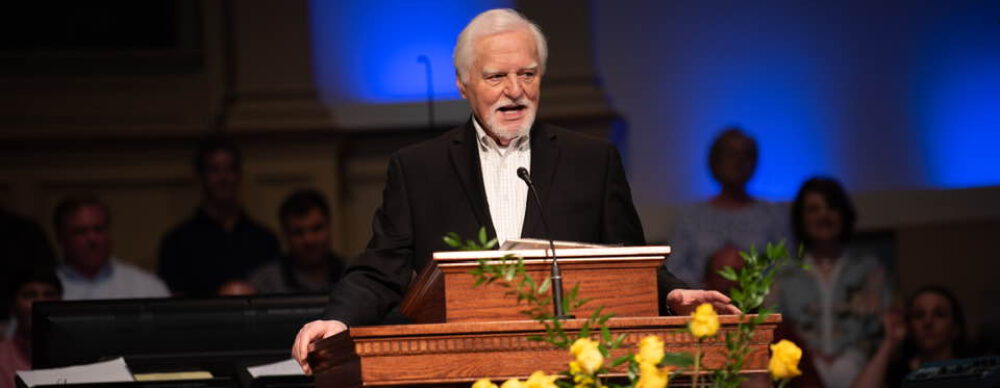
My friend Jill Furr Noll reminded me on Facebook this week about her wonderful grandfather, a Baptist preacher from years back whose funeral I held in the mid-1970s. Rev. A. C. Furr was in his mid-90s when I became his pastor. He was sharper than I was (I was 60 years his junior), still drove his car everywhere, and was extremely active. Sometimes when he was heading to the nursing home to call on patients, he would tease, “I’m going to see the old people.” They were almost all younger than he.
I thought of this today while reading through two newspaper articles that mysteriously appeared on my desk at home. They are dated in and around my birthday (March 28) of 2004. Where they have been until now, I couldn’t begin to say. But I certainly can tell you why I kept them. They are both such keepers.
The first came from USA Today for March 30, 2004. Robert Lipsyte, who is identified as a journalist and author of a young-adult novel, “Warrior Angel,” is writing about the way we only realize the value of the elderly in times of crisis.
The other article comes from the Northeast Mississippi Daily Journal of Tupelo and is dated two days earlier. A medical doctor, Joe Bailey, is paying tribute to the M.D. who influenced his life. It’s an incredible story.
Robert Lipsyte writes, Whenever disaster strikes–from illness in the family to carnage on the evening news–I call my dad. In 1963, when President John F. Kennedy was murdered, I called Dad to make sure he was OK. After all, the old man was pushing 60. I called him after 9/11 to make sure I was OK. After all, I was in my 60s. Being a frequent subway rider in New York, I even called him after the recent train bombings in Madrid, which killed 190 people. I knew he would calm me down. After all, he’s pushing 100.
Pushing 100. Lipsyte’s article, now over 6 years old, says the Census Bureau tells us this country can point to more than 50,000 citizens of that age or better. “The so-called oldest old (over 85) are the fastest growing segment of the population. If we’re lucky, the rest of us will become them.”
And then Joe Bailey’s tribute to his mentor, Dr. H. O. Leonard.