1) What’s a Pastor to Do When Those Anonymous Letters Start Arriving
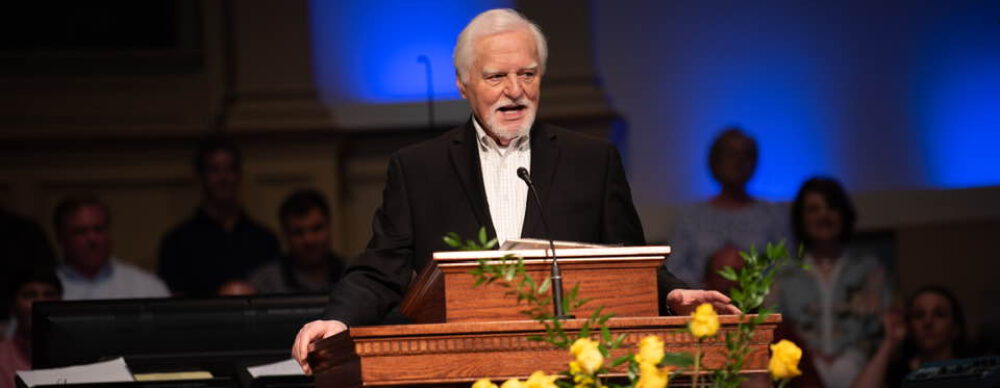
Don Wilton, pastor of Spartanburg’s First Baptist Church, tells how he handled the anonymous letters in his book, “See You at the Finish Line”(Thomas Nelson, 2006).
From Wilton’s description, these hostile, anonymous letters were not like any I’ve ever received. The writer went to a great deal of trouble to make them, cutting out every letter from magazines and pasting them into words and sentences on a page torn from a religious publication. At first, the letters came to the church, then they started showing up in the mailbox at the Wilton home. As time went on, their tone became more and more critical, more and more hostile.
Early on, the Wiltons decided to tell no one and to do nothing but pray for the writer of the letters. One day, as Karyn returned from the mailbox, she was laughing. They had received another hate letter, but this one was different. “You will not believe what our friend has done,” she said to Don. “He forgot to take the mailing label off the magazine before he sent it!” There it was–the writer’s name and address on the back page.
The Wiltons knew this man. He was a veteran member of the church, a family man, and a deacon. From that moment, they began to pray for him by name, asking the Lord to show them how to handle this.
One day, Don called the deacon and asked him to come by his office for a few minutes. When he arrived, the pastor told him that someone had been sending critical letters to his home, making ridiculous and untruthful accusations. The man’s face reddened, and his fists clenched as though for a fight. He said, “Pastor, are you accusing me of sending those letters?”
“Oh no,” Don said, gently. “I’m not accusing you at all. But I do think you need to know that the writer sent the letters on a page torn from a religious publication. The last one he sent still had the mailing label on the back. And it had your name on it.”
As that soaked in, Don continued. “This person must have taken your magazine. Maybe someone is trying to set you up.”
“I asked you to come here today,” he said, “so we can pray for this person. We need the Lord’s direction on how to handle this.”
The man was shaken. He stood up and said, “I’ll find out who’s doing this, pastor. I’ll not have someone using my name like that!”
The letters stopped. For several months, that deacon was absent from church. The Wiltons continued to pray for him and his wife. Then one day he showed up at the church office.
“Pastor,” he said, “I wanted to let you know I found out who was sending those letters to you. I’ve dealt with him and he has left the church. I’d rather not tell you who it is. He wants you to know he’s deeply sorry that he caused you pain.”
With that, the man turned and walked out of the office. The matter was never mentioned again and the letters ceased. Don writes, “That man was a faithful and loving member in my church for many years to come. I love him, and to this day I know he loves me.”
The enemy would have the pastor retaliate in anger and vindictiveness. God is glorified when we seek His guidance through prayer, then wait for His leadership.
Nothing tells the story on us better than how we handle criticism. Nothing says maturity like praying and waiting on the Lord.
2) When You Feel No One Understands, Pastor…
I was reading Eric Lomax’ account of his World War II experiences in “The Railway Man: A POW’s searing account of war, brutality and forgiveness.” Born and raised in Scotland, Lomax joined the British Army’s “Royal Corps of Signals” just ahead of the draft in 1939. Before long, he was in Singapore, helping to protect this anchor of the British Empire in the Far East. A few weeks after the Japanese bombed Pearl Harbor, they took Singapore. On February 16, 1942, Eric Lomax became one of the thousands and thousands of British soldiers imprisoned by the Japanese for the duration of the Second World War.
From that day in 1942 until the POWs were liberated in August of 1945, Lomax was tortured and beaten, subjected to every kind of imprisonment and psychological torment, starved, isolated, grilled for days on end while deprived of sleep, and nearly killed on several occasions. He weighed just over 100 pounds when the Allies entered the prison.
Now, here’s what I wanted to tell you….
As they were being returned to their homeland, the transports stopped off in Calcutta at a huge residence that had been converted into a reception center for returning POWs. The center (Lomax calls it a “centre”) was run by a group of women volunteers whom he describes as “brisk self-confident women used to servants and to getting their own way.” One afternoon, as Lomax and a friend were resting on the veranda with their tea, one of these take-charge dowagers approached. “Well, gentlemen,” she said, “I am certain that since you were prisoners-of-war during most of the fighting, you surely will be eager to get back into it and do your bit for the country now.”
Lomax says, “There wasn’t a trace of irony in her voice.” No doubt she was picturing these men as laying up in camps bored and restless with nothing to do. The ignorance of the woman was overwhelming. Lomax writes, “We held the sides of our chairs tightly and said nothing.”
There was nothing to say. Such ignorance defies an appropriate rejoinder. The woman just didn’t understand.
Now, the Apostle Paul. The text is Second Corinthians chapter 11. The almost inconceivable is happening. This church in Corinth, Greece, which he personally began and whose leaders he selected and trained, this congregation that has been so dear to his heart, is rejecting him in favor of a group of flashy, shallow, smooth-talking pretty-boys who have arrived on the scene in Greece ready to “put this church on the map.”
Continue reading →