Smoke and Mirrors and a Little Honey

First.

A federal judge has refused to stop the demolition of four public housing developments in New Orleans that have been the focus of pickets, prayers, lawsuits, and sit-ins in the two years since Katrina damaged them so heavily and expelled all their residents. Ever since, they have been boarded up, wired off and locked down.

These four projects–C. J. Peete, St. Bernard, Lafitte, and B. W. Cooper–are, to my mind, symptomatic of what was wrong in New Orleans for the last half-century. They were poverty centers, hot-beds of discontent, high-crime areas, and a paradise for drug pushers.

In their place, the city will be erecting mixed income developments to include subsidized housing for the poor at the market rate. The cost of renting living space in New Orleans is through the roof these days.

To be sure, the new developments will accommodate far fewer residents that the crowded tenements they replace. That fact is drawing criticism as well as promises from plaintiffs to appeal the decision of the judge. The next level for this matter would be the U. S. 5th Circuit Court of Appeals which meets in our Hale Boggs Building downtown.

Friday’s Times-Picayune reports that demolition could begin as early as December.

Second.

The Corps of Engineers has announced plans to close MR-GO. This is the waterway that cooperated with Katrina to flood the Ninth Ward and take so many lives. Residents of that area and St. Bernard Parish have called for its closing ever since, and are celebrating the announcement.

Continue reading

Honor Thy Parents; You Will Soon Wish You Could

Sometime in the early 1970s–before the technology revolution put a camera on everyone’s phone and a phone in everyone’s pocket–I had some extra money and called my sister Carolyn in Jasper, Alabama.

“I want you to find a photographer and send him up to see Mom and Dad. Tell him to follow them around and take lots of pictures. I’ll buy a lot of black and white 8 by 10s from him.”

The result is an album of photographs of Mom and Dad, with him on the tractor and her taking him water, her working in the kitchen, and so on. It was not the album I had envisioned, because they knew the guy was coming and dressed up too much for it. I wanted them in everyday clothes, acting normal, looking like they always do. Most of the photos seemed posed, but even so, I’m glad to have it.

That day the photographer said something to my sister I will never forget. “Your brother is so smart to do this. My father died recently and I don’t have one picture of him.”

And him a professional photographer. I confess to being shocked by that.

In 1979, I had some more extra money. (I get some about once every decade.) On an airplane with a lot of missionary-types–we’d been at some meeting of the International Mission Board–I approached a photographer on the staff and said, “I have $400 to buy a camera. I don’t know the first thing about them. What should I buy?”

He and a colleague conferred briefly, then said, “An Olympus OM-1.” And that’s what I bought.

Over the next 10 years, I took pictures at every family gathering, and every time I went home to see the folks. I shot pictures of our kids and grandchildren, and some of them really turned out well. I learned quickly something that serious photogs know: if you get one really great shot from a roll of film, you have beat the odds.

Anyway, that’s how I happen to have a lot of unposed, great photos of my parents and siblings and children and grands today. That camera disappeared in 1990 when someone stole my car from in front of First Baptist Church-Kenner. We recovered the car, but the camera was gone. State Farm more than compensated me for its loss, but by then Olympus was no longer manufacturing that camera. I went to a Canon EOS Rebel–the type with a little Japanese scientist inside. Problem is, I don’t speak Japanese. The point of that is I never got my rhythm back for shooting family pictures with this high-tech camera.

And don’t get me started on digital cameras. The battery runs down every day or two. I store the pictures, then don’t get them printed out and end up losing them.

Okay, enough of that. Then there is one more thing I wanted to mention to you about honoring your loved ones.

Continue reading

Things That Remain

1. “Why do I keep coming to these conventions?” someone said in my hearing. The person next to him started enumerating the reasons. Business of the denomination, information from our agencies, that sort of thing. But I kept the question in my mind. After all, the first such meeting I attended was 40 years ago, and that was in Mississippi. Later, it was North Carolina, then Louisiana. There is indeed a sameness to them, and tons of good reasons for attending. However….

Monday evening as I was leaving the convention center, I bumped into a good friend who had just flown into Alexandria from Texas where he had been in an important meeting. He was bringing me up to speed when a second friend walked up. “I started not to interrupt,” he laughed, “until I saw who you were with!” We stood there for 5 minutes chatting, then decided to seek some coffee. The Holiday Inn had just closed their restaurant, someone said there was a cafe down the street and we took off walking. Six or ten blocks later–after doubling back on another street–we found it. The Diamond Grill was just the place.

We sat there for an hour, having dessert and coffee and catching up on each other’s lives. And I thought, “This is it for me. This is the reason I come to these things. The fellowship. I need this like a dying man needs his next breath.”

2. Here’s an idea for a sermon.

Continue reading

Family Pictures

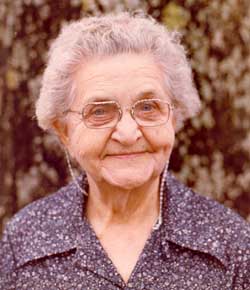
Bessie Lowry McKeever

This is Bessie Lowry McKeever, the mother of Carl J. McKeever.

Born 1895 and died 1982. Joe took this around 1980.

She was an incredible and godly woman.

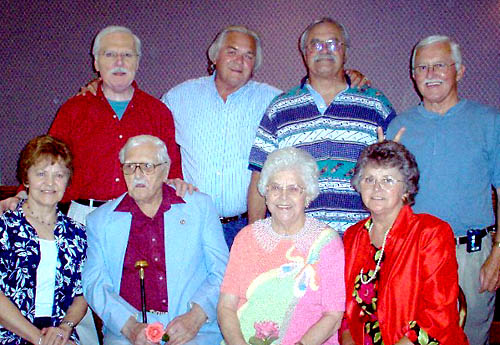
Carl J. and Lois McKeever with their six children

This photo of Carl J. and Lois McKeever with their six children

was taken perhaps in 2005. Front row: Carolyn, Pop, Mom, and Patricia.

Back row: Joe, Charlie, Glenn, and Ronald. (You can see why Carl could
never deny any of these sons! They are all his clones, and

each one a character, as are the girls!)

Continue reading

A Street Car Named Inspire

Yesterday, they kicked off the return of the famous street cars to St. Charles Avenue, doing it as New Orleans always does: with a parade. The cars have been running on Canal Street (from the river to the cemeteries) for perhaps a year now, but this is the first time we’ve had them back on St. Charles. The run is shorter than before, only to Napoleon, but that still gets Tulane and Loyola students to class, and gives tourists the best ride in town through the incredible mansions of Uptown.

We’re told the line will be extended on to Carrollton by next Spring. The ride is $1.25 and a trip down memory lane. To my knowledge–which is limited, of course–New Orleans and San Francisco are the only American cities that have retained these street cars.

I was born in 1940 and can still hear the street cars from Birmingham downtown streets in my mind, going back to the late forties. The sound was so distinctive–the creaking, metal-on-metal shrieking, it was beautiful. Later, Birmingham modernized and went to trolleys, those fore-runners of city buses that ran on electricity by means of overhead poles and hot wires. They were quieter, the rails were pulled up from the streets which made automobile travel easier, but something was lost. Whatever it was that was lost, we still have it, at least on Canal Street and St. Charles Avenue.

When you come to this city, you absolutely have to ride the street car. Admittedly, it’s not very comfortable–the seats are wooden planks–but you’re doing it for the experience.

I will confess to having sat at a sidewalk cafe’ having a late lunch and reading my newspaper while the tourists went by on street cars, taking in the sights of which I was a part. I felt so European.

Continue reading

Leaving Yesterday’s Pain Buried

My friend Raymond McHenry tells of Paul McCartney’s inspiration for his latest album, “Memory Almost Full.” The former Beatle said he saw that phrase on his cell phone and found it a metaphor for our lives today. He said, “I think we all need to delete stuff every so often.”

In the last few years of my father’s life, his mind began to turn on him and become his enemy. Old hurts and slights which he had either dealt with or had buried decades earlier began to reappear and reassert themselves into his consciousness. On several occasions as we sat and chatted, he brought up the time when he was 18 years old, the eldest of what would become 12 children, and his mother ordered him out of the house. He and the brother just younger than him, Marion, whom everyone called ‘Gip,’ were constantly fighting and Grandma told Carl to get his things and get out.

“That wasn’t right,” he would say. “I was doing right, and all Gip wanted to do was have fun and get out of work any way he could, and yet she threw me out of the house.”

Not being there, all I knew of that incident was what he related, and I had no inclination to find out any more of the situation. Both Dad and Gip were now elderly, and Gip was a fine loving Christian man living in the mountains of Virginia, and we naturally felt that whatever conflicts they had known in their youth should be left there. On a logical level, Dad knew it too. But there was nothing logical about this bad memory that hounded him and robbed him of his peace.

I tried the logical approach. I pointed out that by age 18 he had been earning his keep for nearly 6 years, and that Grandma knew he could take care of himself. I reminded him that with a houseful of children, she must have been stressed out, and with her two oldest sons fighting, she just wanted some peace and took the quickest route to get it. “If anything,” I said, “she was showing her trust in you, that you were responsible enough to leave home and take care of yourself.”

Nothing worked.

I made a mental note to keep in mind as I move into the older years that the brain can pull this kind of cruel stunt and unearth old slights long buried and presumably forgotten, and to be on the lookout.

Eventually, as Dad’s condition deteriorated in the year before his death, the memory of that old hurt faded and he did not mention it again.

One technique I tried in order to gain some peace for him is worth remarking on here.

Continue reading

For Pastors Only (Like that’s going to stop anyone from reading this!)

“Joe, where do you find those great sermon illustrations?”

“I love to preach and teach, but the hardest part for me is the sermon illustration, finding just the right story or quote to reinforce what I’m teaching.”

Okey dokey. You’ve come to the right place, friend. I’ve got a deal for you, and it’s not the Joe McKeever Sermon Illustration Service (which doesn’t exist, thankfully) for only a couple of hundred bucks a year. Nope. It’s far better than that.

But you have to stay with me to the end. Okay?

1) Martin Van Buren, our eighth president, wrote an autobiography in which he laboriously laid out the details of his life. Unfortunately, the commander-in-chief wrote all those pages without once mentioning his wife.

Now, that’s a great sermon starter for Mother’s Day or a message on the home. After all, no one is more important in the home than the wife and mother, and yet, let’s face it–we take her for granted.

2) Paul McCartney’s latest album is titled “Memory Almost Full.” The former Beatle says the inspiration came from a phrase he saw on his cell phone. In a recent interview from Paris, the 65-year-old musician said, “It seemed symbolic of our lives today. Your messages are always full. And your mind is full. And it doesn’t matter if you’re my age or 20. I think that we all need to delete stuff every so often.”

You can tell that story in the sermon introduction and then light out in a hundred directions. Think of Paul in Philippians 3 as he forgets those things that are behind. Gordon MacDonald once wrote that he could look at the clutter on your desk and tell the shape you were in spiritually. Uh oh.

I’m two years older than Sir Paul, but in recent years have noticed I have a harder time remembering people’s names. I used to have a reputation for being great with names, but it seems that my memory bank is filled. Now, the only way I can retain a new name is to drop an old one!

A pastor friend sent me a note the other day about cleaning out the clutter in his office. He made that into a sermon illustration, making the same point as McCartney’s. This very day, my Mom said she and sister Carolyn are plowing through the clutter on the dining room table that accumulated over the last week following Dad’s death with the coming and going of so many friends and loved ones. We all have to clean out and throw away sometimes.

Continue reading

Playing with a Full Deck?

Growing up in rural Alabama, I learned early on to listen to preachers with discernment. Mainly, I would hear some of them wax eloquent (or as the kid said, ‘wax an elephant’) on major sins of our time. Among the mortal sins capable of sending one to hell was card playing.

That’s when I wanted to stand up and say, “Oh, come on! Card playing? Give me a break.”

We played Old Maid. And Go Fish. And in my teen years, rummy.

Rummy became our family game. Not ‘gin rummy.’ Just ‘rummy.’ With our own rules, I suppose. Deuces wild. No betting of course. Nothing, absolutely nothing, going on at this dining room table except great fellowship between family members. For a large family–mom and dad and six children–made up of people who could not in a hundred years manage to utter those syllables ‘I love you,’ the fellowship and camaraderie of playing rummy accomplished the same thing. We loved each other dearly.

Dad put us up to it. In our young childhood, Pinochle was his game, and he and his buddies would sometimes play it all night long in our living room. If they gambled, I couldn’t tell it.

But somewhere along the way, he taught the older children how to play rummy. Once he found out we could play as well as he could–almost–the war was on. This was not the old man humoring the little children by condescending to play with them; we were a match for him in every way.

I told you this family is populated by characters and only characters. The nature of the foursome would change every time someone swapped seats with a sibling. Ronnie is quiet and intense; Glenn is funny and laughs loud. Patricia is intense, Carolyn funny, and Charlie–well, Charlie was all of the above. “I couldn’t rummy with a rummy machine!” I recall him saying, and have smiled at that ever since. Me, I don’t care who wins. I love the fellowship of the give and take, the foolishness, the competition, between these whom I love with all my heart.

Oh, for the record, Mom did not play. Not once. She hovered nearby, however, making sure everyone had popcorn or ice cream or a glass of iced tea.

My sons grew up playing rummy and have taught their children the game. The 10-year-old twins can hold their own with anyone in the family.

So, why do preachers no longer call card-playing sinful? If I had to guess, it’s because they finally looked around and discovered that sinfulness is a matter of the human heart, of rebellion against God, of selfishly using, abusing, and misusing another human being, of neglecting the things of God. But to play a harmless child’s game with those you love, nope. Not in a hundred years is that a sin. In fact, it blesses us so much, it ought to be taught in Sunday school!!

Not long ago I ran across a sermon from a friend which he preached a quarter century ago, in which he was declaring dancing to be of the devil. That’s another one that usually got lumped in with card-playing in those days.

Now, I doubt not that playing cards while gambling or any kind of lewd dancing is wrong and leads the participants into all kinds of trouble. So, this is not to deny that. Anything that leads people into sin is a form of sin.

Stay with me here a moment.

Continue reading

Overwhelmed

We just returned from Alabama. The family all knows about the nearly 70 “comments” you have left on this blog and several have urged me to thank you here. My sister Carolyn is printing them out so Mom can read them.

I started out trying to respond to each of them, and I may yet. Add to those another large number that bypassed the “comments” section and came straight to my internet mailbox. Then, tonight when we checked the mailbox in the front yard, a dozen or so cards were in the three-days’ mail.

Some of our dear friends called us, and others sent flowers. And several even attended the service. That was most overwhelming of all.

Thank you. So very much.

Monday, I borrowed Carolyn’s computer and typed the program for the service. On one side, we just photocopied the obituary, on the right we listed the order of the speakers (Pastor Mickey Crane, my nephew Steve McKeever, our sister Patricia Phelps filling in for our brother Glenn who decided he could not do this, me, and then our brother Ronnie; interspersed with two songs each from our three Kilgore cousins–Johnny, Mike, and Rebecca–and our cousin Dr. Bill Chadwick), and on the back side a poem I wrote for Dad several years ago called “The Last Mantrip,” comparing the coalminers’ ride out of the darkness to the top of the mine and daylight to the last trip we make in Christ, leaving behind the darkness of this world and arriving in His glory. It’s not great poetry, but Dad liked it and even had it printed in the National Journal for the United Mine Workers Union. That was very special.

Anyway, I typed it and then found a printer who could print it out at that moment so we would have it for that evening, to give out at the wake and next morning at the service.

Monday noon, while waiting on Mom and Patricia to return from getting their hair done in Double Springs, I sketched out a drawing of Pop’s empty chair and colored it, and decided to run off copies to give to special friends. The printer said, “No, I don’t have a color printer.” He told me who did, but promised it would cost an arm and a leg. That’s when I decided to run by the First Baptist Church (of Jasper; which is where Carolyn lives and the wake would be held).

Continue reading

I Am Well Aware…

I am well aware that when our parent dies, it feels like no parent has ever died anywhere in the world, not like this. So, thank you for indulging me in this.

I know that when people plan their own funeral services, they make such elaborate plans you would think it was the ruler of a sovereign nation with unlimited resources. Death has such a finality about it, it feels as if we should do something really significant. In our case, Dad left no instructions about his funeral. The obituary, prepared by my siblings, says Tuesday’s service will be held by–get this now–Pastor Mickey Crane, mom and dad’s longtime preacher, but also by Rev. Ron McKeever (my big brother), Glenn McKeever (one year younger than Ron, and not a preacher, but eloquent about life and death and those he loves), me, and Rev. Steve McKeever (Ron’s eldest child). Bring your lunch.

When you read the blog about “My Father,” notice the large number of comments from friends old and new, near and far, some dearer than brothers and some whom we’ve never met. I am overwhelmed. In addition, almost that many friends who read the blog skipped the “leave a comment” section and sent e-mails directly to my address. I’m trying to answer each one.

This Sunday morning, my 13-year-old grandson Grant will accompany me on the 7 hour drive to north Alabama. The rest of the family comes in Monday for the Tuesday funeral.

I plan to take notes on some of the Carl McKeever stories that are told and retold over the next 2 days, and post some of the more interesting ones here. Just to make you aware.

Saturday night, my Mom said, “It feels so lonely.” My niece was on her way down to spend the night with her. I said, “After nearly 74 years of marriage, I’m certain it does.”

We will appreciate prayers for Mom.

Continue reading