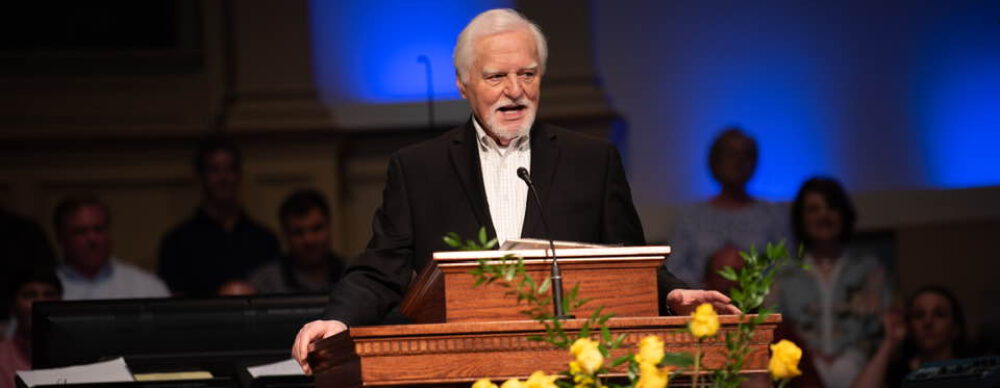
My Father

Can you be thankful and sad at the same time?

Carl J. McKeever died this morning.

That is the saddest sentence I have ever typed.

He was born April 13, 1912 in the Slick Lizard community just outside Nauvoo, Alabama. His mother, Bessie Lowry McKeever was 17 and his father George was 20. Carl was the first of their 12 children. George would die in his mid-40s of a heart attack, leaving Bessie carrying the yet-to-be-born Georgelle.

Carl dropped out of school in the 7th grade to help earn a living. He carried water for a planer mill for two years, then went to work inside the coal mines, working for his father, doing a man’s work for a man’s wages. For the next 35 years, he worked the mines in North Alabama, Virginia, and West Virginia, without missing one day from accident or sickness. That’s not to say he did not have an accident or wasn’t sick; it’s more a tribute to his work ethic. We found out after his retirement from disability that he had broken his back in those difficult years of the 1940-1950s and had just gone on to work.

In 1930 when Carl met Lois Jane Kilgore at the New Oak Grove Free Will Baptist Church, two miles north of Nauvoo, everything changed for him. Her family life was the essence of stability. This was a church-going, salt-of-the-earth farm family. John Wesley “Virge” Kilgore and his wife Sarah Noles Kilgore had nine children–Lois was in the middle of the pack–each one a winner and each devoted to the others. Carl did a good thing when he married into this family on March 3, 1934.

Early on in their relationship, Dad made a profession of faith and was baptized in the creek that runs between the church and the Kilgore place, three miles up the Poplar Springs Road. He joked that thereafter the creek was called Blackwater. Which it is.

I will not attempt to try to capture in a few words all that this man was. He was a contradiction on many levels, in many ways. Until his middle years, his language was profane (but not obscene; there’s a difference) and he had a temper. When he disciplined his six children–I’m number four–it became an experience you would not soon forget. I would not say he had a love for the bottle in those early years, but a weakness for it would be closer to the truth. He never missed a day of work, always took care of his family, but Mom used to say he could come within a mile of a still and become intoxicated. Thankfully, he gave up even the occasional drink nearly 50 years ago. But I still remember some of those times. You don’t forget them.

Continue reading

Luke 14:14 — Worth Treasuring

One of the ways I know the Lord is sending me a message is when I’m reading a familiar scripture and suddenly, something I’d never seen jumps off the page and grabs my attention. That happened Thursday morning of this week.

In a passage where our Lord is urging His audience to turn their focus from the rich and well-to-do toward the needy and helpless, Jesus says, “When you give a party (reception, banquet), do not invite those who can return the invitation. Instead, invite the poor, the crippled, the lame, the blind.” These people do not have the means to repay you, Jesus says, however, “you will be repaid at the resurrection of the righteous.”

That line stood out in bold print: “You will be repaid at the resurrection of the righteous.”

All the bells went off inside. What a great promise. Jesus looks into the distant future and sees a time when debts will be paid, when rewards will be handed out, when the faithful will receive the recognition God has promised.

The line from Proverbs comes to mind: “He who gives to the poor lends to the Lord and He will repay him for his good deed.” (Pr. 19:17) Jesus is foreseeing that precise moment when God pays the debt in full. It’s a thrilling thought.

Later that morning, a pastor friend in Kentucky emailed me about his work with a commission seeking to curtail gambling in that state. They also deal with other moral issues, including the control of alcohol and drugs. He sent some pretty disturbing statistics, enough to discourage many a volunteer in this line of work.

I wrote him back that he must not get discouraged, that anything he can do to protect children and families from these scourges is a great work. That’s when Luke 14:14 came to mind. “You will be repaid at the resurrection of the righteous.” I said to him, “You may never know this side of the judgment just how many lives you save, how much good you do, how many children you bless.” He agreed that it means working by faith, knowing you’re doing the work of the Lord and trusting Him to use it.

That’s tough, as we both know so well.

Continue reading

I Will Pray Anyway

(A little something based on the 7 portions of Luke 18)

“Pray or quit,” the Lord said. I don’t pray easily–it’s an uphill effort to stop my pace, quieten my mind, and force my thoughts toward God–but I certainly do not want to weaken and quit. I will pray anyway.

Jesus told a story we call the parable of the unjust judge. Every Bible teacher I know has his own twist on this–some saying it teaches persistence, some that it is giving a reverse image of reality, that God is not like the judge, we are not like the widow, and prayer is not about breaking down God’s reluctance but laying hold of His willingness–but I know one thing for sure.

Sometimes I feel God is not listening to a thing I say. I will pray anyway.

The Lord told of two men who went up to the temple to pray, one a self-righteous Pharisee who walked up and addressed God as an equal, the other a bashful tax-collector too ashamed to come near or look up. Both were praying, but Jesus said only the one who admitted to his sin made contact with a forgiving God that day.

Sometimes I feel self-righteous and sometimes unworthy. I will pray anyway.

When the parents brought little children for Jesus to bless, the disciples were protecting Him and hurrying them away, lest the noise and hubbub disturb the Lord. He put a stop to that and held the children up as the very models of what God wanted in each of them.

I’m usually like the erring disciples, and often not very childlike. I will pray anyway.

A man we call the rich young ruler approached Jesus with the question every soulwinner lives for: ‘What must I do to inherit eternal life?’ When the Lord told him, he didn’t like the answer and went away sad. That set off a discussion among the disciples over who can be saved and who cannot. Surely, they had thought, someone so obviously blessed by the Lord as this man had a leg up on the rest of us. Turns out he didn’t and that his wealth was actually an obstacle to his faith. Who knew?

Sometimes I trust in the wrong things to make me right before God. I will pray anyway.

Continue reading

What We’re Up Against

District Attorney Eddie Jordan says he has resigned, but the Secretary of State’s office says no one has notified them, and nothing happens until they get the word. Meanwhile, Keva Landrum-Johnson has presumably taken over the office. She’s a highly respected prosecutor, we’re told, and a hire of the former DA, Harry Connick, Senior.

Meanwhile, no one still has any ideas as to how the DA’s office can pay the $3.7 million judgment as a result of Jordan’s discriminatory firing of whites and hiring blacks. He’s gone, but the damage is done, and the bill has to be paid. With the talk of asset seizure, the newspaper points out that taking over desks and computers in the office of the district of attorney will not come close to raising that amount of money.

The NBA Hornets began their first full season in New Orleans since Katrina, and the last I heard, they still had lots of empty seats to fill. Only 7,000 season tickets have been sold, leading some to question whether this city can support more than one professional sports team. Pastors have started receiving promotions in the mail, encouraging them to bring church groups to the games. Point of Grace, the popular Christian trio, will be featured one evening when they hope to attract lots of our folks.

Those who keep up with the goings-on in New Orleans or who get their N.O. news only from this blog will recall the lawsuit against the police force of the West Bank town of Gretna. In the awful days following Katrina, when the city was being featured on national television–exposing the misery at the Superdome and Convention Center, the chaos inside and out, people drowning in their homes, and first-responders rescuing people from their housetops–some residents of New Orleans who were trying to flee the city were turned back from crossing the downtown bridge (proper name: The Crescent City Connection) leading into the Algiers section of New Orleans and on to Jefferson Parish. Members of that police department and deputies from the Jefferson Parish Sheriff’s office closed the bridge to pedestrians.

Back then–and ever since–the defenders of this completely irrational act insisted that the West Bank had nothing to offer the people of New Orleans. I find that incomprehensible beyond belief. The West Bank had something New Orleanians needed badly–high, dry ground!

Continue reading

Butterflies in our Fair City

The pastor stood in the pulpit of one of our churches last Sunday and gave a perfect description of what stress does to a body.

“I was going over my calendar,” he said, “checking on dates and places. And then I saw something that caught my attention. A month earlier, I had an appointment to speak at a certain place. And I realized that I had forgotten it. I failed to make that appointment.”

Every preacher knows that fear. That’s why we live and die by our calendars.

He said, “There was nothing to do but to call the brother who invited me and apologize. I got him on the phone and told him what had happened. I told him I have no excuse. I just forgot it. I hope you will forgive me. There was a long pause on the other end.”

He continued, “Finally, the man spoke up. He said, ‘Pastor, you came. You didn’t forget. You spoke to our group. I distinctly remember what you said. You had just come back from the Southern Baptist Convention and you told our group why believing in the Bible was so important to you.”

The pastor said, “I couldn’t believe it. How could I have gone there and spoken to that group, and now not remember a single thing about it.”

Someone reported that to me, so the next day, I mentioned it to him. “This is all about stress, isn’t it.” He admitted that it was, then told me of the circumstances that had filled his life with stress to the breaking point at that time.

Continue reading

Outcries in our Fair City

Today, Tuesday, New Orleans’ District Attorney Eddie Jordan resigned. There may be a few people sad, but not all that many. Jordan is the former U. S. Attorney who put four-time governor Edwin Edwards into the state penitentiary for racketeering, and was a hero to a lot of people. Now he leaves his office in disgrace.

What happened was this.

Jordan won election to this post after long-time D.A. Harry Connick, Senior, had retired. Connick is a white, one of the few Anglo office-holders in New Orleans the last few decades. If anyone had a problem with how Connick ran things, other than the usual gripes you hear about anyone in city government, I never heard. But when Jordan came in, he took over with a vengeance.

He fired 36 employees in the D.A.’s office, all of them white, then hired a whole battery of new employees, all of them African-American. He assured everyone there was nothing racist about that. Now, there may have been a day when an incoming politician could get by with that, but these days, there are laws against racial discrimination. I don’t know Mr. Jordan, but friends who do say he is the kindest, nicest gentleman you will ever meet. Even so, it may not have occurred to him that laws against racial discrimination work both ways.

The fired employees hired lawyers and took it to the courts, and without batting an eye, the court ruled against Jordan. His office was to pay nearly $2 million in actual and punitive damages.

Jordan kept insisting he was not a racist and not guilty of this charge, and so appealed the ruling. The state supreme court ruled unanimously that the lower courts had done right and he was liable for the damages, which by then had accrued to over $3 million.

Meanwhile, as this was being fought in the courts, New Orleans became a battle ground for gangs and drug pushers and multiple overnight killings became the rule. The DA’s office was never able to keep up with all the crime and most killings went unsolved. The public was outraged.

Occasionally, an assistant DA would get a conviction of some minor criminal and the public would howl again, wondering why they weren’t finding the murderers and ending the killings. Jordan responded that he could only prosecute what the police department brings to him, that his people are not the investigators. But the perception was there.

Next came wholesale departures from the DA’s office. Poor wages, heavy work loads, and bad public relations conspired to encourage assistant district-attorneys to seek employment elsewhere.

When the supreme court ruled that the DA’s office had to pay the $3 million, Jordan turned to the city for help, insisting his office did not have the money. City Council President Arnie Fielkow said, “No way.” The city is still in a crisis situation and needs infusions of money, he pointed out, and does not have the money to bail out Jordan’s office. Talk surfaced about impeaching Jordan.

Then last week came the final straw.

Continue reading

Your Church and the Others

There is a sense in which an “association of churches” does not exist. Even though I work for one in an office inside a building with the name “Baptist Association” on the outside, in a real sense there is no such thing as an association of churches. All it is, is just your church and the one down the street and those across towns. Just the churches.

The reason I make this rather obvious point is that in our denomination there are church leaders who see the association as something “other” than the churches. They see it as a useless layer of denominationalism and thus a barrier to doing the Lord’s work. One more hindrance to effective Christian brotherhood and meaningful discipleship.

Nothing could be further from the reality.

Even if you fired me and shut down our offices and canceled every associational meeting, you would still have an association. Because all it is, is your church and the one down the street and those across town. It’s just the churches.

In the same way the pastor is not the church, the director of missions is not the association, and most assuredly not the denomination. The DOM, as we call him, is the servant of the churches, the pastor of the pastors, and to the degree we will allow him, our leader. But he has no authority over anyone, with the possible exception of the employees in his office.

But not everyone gets that.

Continue reading

The Renewing of the Ninth Ward

Wednesday of this week, a friend from North Carolina who serves his association as its director of missions, the same assignment I have in New Orleans, flew in to town, stayed eight hours, and returned home at suppertime. In between, he saw the following: the headquarters of NAMB’s Operation NOAH Rebuild and talked to the staff there; the Lakewood section of New Orleans and the First Baptist Church; our associational offices, where he met with David Rhymes our evangelism strategist; lunch at Cafe Roma with three of our young pastors; the campus of New Orleans Baptist Theological Seminary where he met with Dr. Ken Gabrielse; New Orleans East as seen from Interstate 10, then St. Bernard Parish where he saw the Chalmette High School and toured Hopeview Church which is now serving as our Volunteer Village; Delacroix Hope Church in lower St. Bernard Parish where he met with Pastor Boogie Melerine; back through Poydras and a tour of the FBC of Chalmette; a tour of the worst hit place in our city, the lower 9th ward, mostly vacant lots these days; the section of new homes on Alvar Street variously called Musician’s Village and Baptist Crossroads; the Baptist Friendship House where Karina America gave him a quick tour; and finally, the Vieux Carre’ Baptist Church in the French Quarter where he visited with Pastor Greg Hand and assistant, Greg Wilton. Then, on to the airport.

I’m confident he collapsed once he sat down to wait for his plane. He’s interested in bringing groups down to help rebuild our city, and we wanted to be good stewards of his time.

At the multicolored Habitat homes on Alvar Street (and several blocks in and around there), I talked to several people who were working. She was from Chicago: “My husband grew up here, and he really has this city on his heart.” He was from Berkeley, California: “Our company brought some of us in here to work.” And Matt was from Seattle: “I’ve been here before. What keeps me coming back is the Baptists.” (Really. He said that.) “I’ve never known such wonderful people with such great hearts.”

Then, Thursday morning, the Times-Picayune ran a long article about these homes. Here are excerpts. And keep in mind, that what we call Baptist Crossroads, many others call Musicians’ Village. Jim Pate of Habitat told me they don’t try to differeniate.

Staff writer Leslie Williams wrote:

“On Alvar Street in the Upper Ninth Ward, the landscape speaks volumes about rebuilding efforts guided by Habitat for Humanity verses those of the free market and government.”

“Brightly colored homes–tangerine, powder blue, sienna, and yellow–with porches and gardens line the Habitat side of Alvar from North Roman to North Johnson Streets.”

Continue reading

Conversation With the Director of Missions: Stand In His Council

“I’m just a consensus builder, that’s all.”

“Nothing wrong with that,” I said.

“Then why all the flack? You’d think the church would be happy.”

“My perception, pastor, is that they are happy with you, just dissatisfied with what they perceive as a lack of leadership from you.”

“But I don’t get it. I’m trying to get everyone together on the same page before we go forward. I like unity and harmony in the church. Who can have a problem with that?”

“On the surface, that looks right.”

“Implying that underneath the surface, it’s wrong? Is that what you’re saying?”

“Possibly. But not necessarily. Things that are right underneath also look right on the surface.”

“Come on, you’re hedging. Get to the point.”

“Well, sooner or later, you’re going to have to take a stand. To go before the church and say ‘This is what I perceive the Lord is leading us to do.’ It’s called leadership.”

“You don’t understand.”

“What?”

“That’s hard for me. I don’t like to make people unhappy. Going back to childhood, my nature has always been to please people. If I could do something to make my parents happy, I did it.”

“Pastor, I have some bad news for you.”

Continue reading

The Best-Kept Secrets in New Orleans

All day Tuesday, a group of 15 or 20 of us who comprise the board of New Orleans Baptist Missions met at the Baptist Friendship House at 813 Elysian Fields Avenue for our semi-annual get-together. It’s hard to tell who’s a board member and who a missionary of the North American Mission Board; we’re all on the same team. Dr. Wanda Lee was present. She’s a veteran missionary of the International Mission Board and the executive-director of Southern Baptists’ Woman’s Missionary Union, based in Birmingham. Dr. Richard Leach and Dr. Jean White of NAMB (Alpharetta, Georgia) were present. From our state convention, Mike Canady.

Local missionaries Larry Miguez, Linda Middlebrooks, Kay Bennett, Karina America, Jennifer Fannin, Skider Chatham, Dr. Tobey Pitman, David Maxwell, and Freddie Arnold were on hand. That leaves president of the NOBM board Dr. David Crosby, Loretta Rivers, Dr. Guy Williams, Gwen “Miss Chocolate” Williams, Mel Jones, and me. I’m sure I’m leaving someone out.

We heard reports about the ongoing ministries of the Rachel Sims Baptist Center and the Carver Center, both located in the uptown area of New Orleans and ministering to inner city children. Larry Miguez is over both centers, with Linda Middlebrooks assisting him at Rachel Sims and Jennifer Fannin at Carver. They are incredible servants of God, pouring out their lives for Christ in some difficult situations.

Lots of positive things to report. Rachel Sims and Carver are providing ESL (English as a Second Language) classes for some 22 participants at the moment. They have programs to prepare people to take their GED exams. Puppet ministries, after school homework clubs, and discipleship classes. They host volunteers in their buildings–i.e., church teams from outside our area–who come to minister in the inner city. Director Larry Miguez reports that the centers are almost totally booked for the summer of 2008. With Pastor Kelly O’Connor, they’ve started a mission church at Carver.

At the same time, these neighborhoods are experiencing an unprecedented level of violence. “Why such an increase in violence?” Larry Miguez was asked.

Continue reading