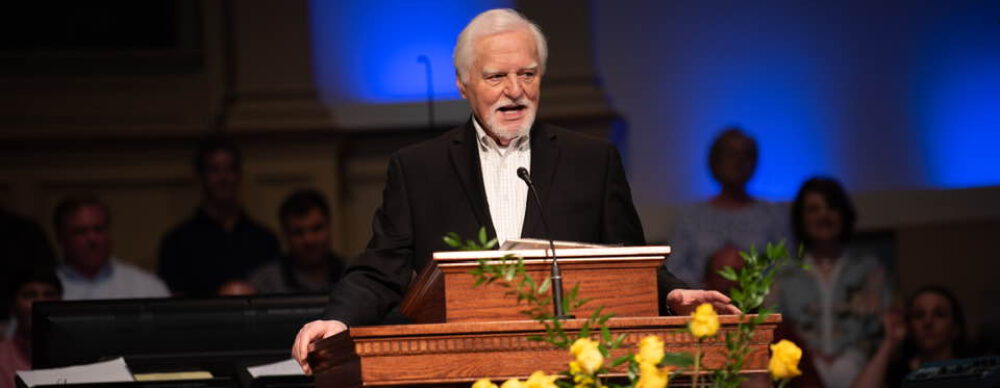
Preaching a Sermon the Second Time (and Third and Fourth)

As a young pastor, I could never repeat a sermon any more than I could eat yesterday’s breakfast again. Each sermon was a one-time thing. When it was over, it was gone forever.

And then, the invitations began to come in to preach in churches pastored by friends who thought I had something worth sharing with their people. That’s when I had to get serious about repeating a sermon. After all, my friend’s members have not heard my stories or sermons. Anything I did would be new to them.

Those early attempts to preach repeats in my late 20s and early 30s were fairly pathetic, I’m thinking. Since my sermon notes were always one thing and the actual sermon something else entirely, nothing in writing told me what I had preached the first time so I could reproduce it verbatim. So, I had to go from memory, or better, get with the Lord anew on that sermon.

These days–I’m now 70 and retired–almost every sermon I preach is on a topic I’ve preached before (with the occasional exception; hey, I’m not living on reruns here!). As a result, I have more or less figured this thing out, at least to my satisfaction.

Maybe pastors wll find something of benefit here.

Continue reading

What the Pastor Hopes the Visiting Minister Will Do

You are the pastor. Next Sunday and for a few days the first of the week, you are turning over your pulpit to a visiting minister. He’s either a full-time vocational evangelist or a pastor of a church somewhere or a retired minister. You do this for a lot of reasons, the main one probably being that the church expects it of you.

These meetings go by names such as revivals, spiritual renewals, awakenings, Bible studies, and such. As the pastor with a number of years and several churches “under your belt,” so to speak, you have heard all kinds of visiting preachers and experienced the good/the bad/and the ugly of these meetings. You know about what to expect, you feel, and by now, you have learned to choose your guest preacher carefully. They’re not all as responsible as they ought to be and some are more concerned with the large numbers of CAO they can report afterwards (“converts, attendance, offerings”).

These days, I’m that guest preacher. I see you sweating, pastor. I remember how you feel.

I pastored six churches over a period of 42 years. I know the pastor’s heart, his hopes, and his fears.

As the pastor, you want to have great expectations for this meeting. However, having been disappointed so many times in the past, you are afraid to elevate the hopes and expectations of your people–and yourself–too high. Those lows at the end of disappointing meetings can be mighty deep. Explaining to the deacons why the church invested several thousand dollars into a meeting which accomplished so little is no fun.

That’s the reason for this letter. I’d like to put some things on the table here. Let’s see if we are talking the same language, pastor.

Continue reading

What the Young Pastor Learns

Sometimes pastors lament that the most important lessons of the ministry were not taught in seminary. The only workable answer to that is: it’s impossible to teach them all in classrooms; most are learned on the field and nowhere else.

My friends Trace and Missy are finding this out.

In their first pastorate after seminary, they are having to learn the hard way how to pace themselves, how to find and protect time for themselves, how to protect their home life from the intrusion of church members, and how to be friends with everyone without letting a few take over their lives.

No one can cover all this stuff in a book. The lessons are too numerous, the personalities too varied, and no two situations are alike.

Missy sent me a note telling me the latest situation that has arisen. “It’s so silly, we’ll probably laugh at this one day,” she said. But she’s not laughing at the moment. No one can laugh at pain when it’s hammering at your door 24/7. Only after it has departed and you realized how powerless it was and how pointless its threats are you able to smile.

On Wednesday nights in Trace’s church, the youth would like to meet in the sanctuary in order to have access to the multi-faceted hi-tech sound system. The adults, who normally meet there, don’t need it for their simple Bible study and prayer time. So, at the request of the youth minister, Pastor Trace did the reasonable thing and made the call.

And that’s when the fur began to fly.

Continue reading

I Love a Good Story!

Got a few minutes for a couple of stories?

The only thing I love better than hearing a good one is to be the guy telling it! That’s a rather unflattering admission, I fear, but completely accurate.

The first is a story from my son, of the time last Saturday when he stopped to help a woman who had a flat tire and almost killed her in the process. It’s almost funny–but not quite–and makes a good point that in helping people we must be careful not to do them harm.

The other story comes from a non-pastor friend who decided to insert himself into a conversation at a nearby table in the restaurant where he was having lunch.

Knowing how, as Robert Frost said, one road leads to another (meaning: one story makes me think of another), I will probably end up dropping in another tale or two before this is concluded.

Anyway, here’s what happened to my son Neil last Saturday morning.

Continue reading

The Finest Intimacy: Pastor and People

Not long ago, on a Sunday when I wasn’t preaching anywhere, I dropped in on a church service not far from my house. A luxury of being retired from pastoring and denominational service is that–with the okay of my pastor–sometimes I visit churches led by friends of mine.

That day, I saw something that struck me as precious and extremely rare.

During the sermon, listening to the preacher and watching the interplay between him and the congregation, it occurred to me how finely tuned the people and minister were to one another. In fact, I had the feeling that I was sitting in on a private conversation between the pastor and his flock.

It was as impressive as anything I’ve seen in a church in years.

I grabbed my pen and jotted down the following notes:

Relationship.

History. (They have a history together.)

Trust. (he has earned the right to talk straight to the people.)

The sermon is one part of a continuing conversation between them.

This is the best. It’s not a TV sermon.

So, today, I went to lunch with that pastor and picked his brain on the subject.

Continue reading

Looking Like a Winner

Saints Coach Sean Payton gets it.

Watching a football game on television the other day, I noticed the camera showing a dispirited player on the bench with his head hung low. He had clearly had a bad game–interceptions, fumbles, something–and his team was losing. The problem is, his facial expression and his bodily posture were signaling to both his team members and opponents that he was finished here. The game was over as far as he was concerned.

I called out to the screen, “Get your head up, boy! The game’s not over! Do you have any idea what you are doing, looking that way?”

In this morning’s Times-Picayune, sportswriter Jeff Duncan tells how Coach Sean Payton stresses the same lesson to his players.

As I watched San Diego Chargers quarterback Philip Rivers throw a conniption fit at midfield in Kansas City last week a thought occurred to me. This would never happen with the New Orleans Saints.

I can’t remember the last time a Saints player lost it on the field. Of course, there’s not a lot to get upset about when you start a season 13-0 and win the Super Bowl. Still, the Saints, by and large, are as demonstrative and emotional as snipers when they take the field. Their insides might be bubbling cauldrons of emotion but it rarely shows.

There’s a good reason for this, Duncan says.

Body language is a big part of Payton’s coaching curriculum. Maybe more than anyone in the NFL, Payton believes in the power of nonverbal communication. He talks about it in team meetings, preaches it during practice and demands it during games.

When Dwight Freeney beat left tackle Jermon Bushrod for a sack in the Super Bowl and the Saints’ left tackle trotted off the field with his head down, Payton stormed into his face and barked, “Get your head up!”

When Garrett Hartley missed a late field goal attempt against Tampa Bay last season, Payton upbraided him for sulking on the sidelines.

“He harps us on all the time about it,” Bushrod said. “If something goes wrong, he doesn’t want us to show it.”

Let’s talk about this business of our posture and demeanor when things are going badly. The lesson has unusually strong applications to the believers’ life and ministry.

Continue reading

Tactic for Pastoral Success: “Make a Mistake”

In his book, “Everybody’s Normal Till You Get to Know Them,” John Ortberg makes a confession. You get the impression that it was not easy in coming.

Here it is in his own words:

The church where I work videotapes most of the services, so I have hundreds of messages on tape. Only one of them gets shown repeatedly.

This video is a clip from the beginning of one of our services. A high school worship dance team had just brought the house down to get things started, and I was supposed to transition us into some high-energy worship by reading Psalm 150.

This was a last-second decision, so I had to read it cold, but with great passion: “Praise the Lord! Praise God in his sanctuary; praise him in his mighty firmament!” The psalm consists of one command after another to praise, working its way through each instrument of the orchestra.

My voice is building in a steady crescendo; by the end of the psalm I practically shout the final line, only mispronouncing one word slightly:

“Let everything that has breasts, praise the Lord.”

Ortberg tells what happened next.

A moment of silence. The same thought passes through four thousand brains: Did he just say what I think he did? In church? Is this some exciting new translation I can get at the bookstore?

Then, everybody in the place just lost it. They laughed so hard for so long, I couldn’t say a thing. It was zygomatic. I finally just walked off the stage, and we went on with the next part of the service.

I have been teaching at that church for eight years. Of all the passages I have exegeted and all the messages I have preached, that is the one moment that gets replayed before conferences and workshops. Over and over.

That moment forever endeared Pastor John Ortberg to the congregation of Willow Creek Church.

In fact, the power of that moment was so strong, it would have been worthwhile for him to have planned the flub.

Continue reading

I Mystery-Shopped Your Church

Have you ever been a mystery-shopper?

Some years back, a college classmate contacted me to say he worked for a marketing firm and needed a mystery shopper for Seiko watches in my town. He sent along a script and the addresses of several stores carrying displays of those time-pieces.

I would walk into the store, and tell the clerk, “I’m looking for a man’s watch in the medium-price range.” If he or she took me first to the Seiko display, I announced, “Congratulations! I am the Seiko mystery shopper, and you have just won 10 dollars.” (It’s probably more now, with inflation.) They signed their name on my form, I handed them the money, and went on my way.

That was a fun thing to do.

I’ve known of pastors to invite a friend with a love for the Lord and skills in discernment to mystery-shop their church. They drive up to the church as a typical visitor and take notes on every aspect–the appearance of the campus, the availability of parking, whether it was obvious which door to enter, whether greeters were on hand, how they were greeted, and a hundred other things.

Not long ago when our association did a self study and complete reorganization, one of our pastors made it abundantly clear he wanted us to form such a task force that would be available on request (stress that!) to mystery shop churches.

The task force has not been formed and I’m retired from the leadership of the association, so the decision is in the hands of others, but here’s what I’ve been doing.

I’ve been mystery-shopping every church I have spoken in over the past year and 3 months of retirement.

Here is my report, pastor.

Continue reading

When A Pastor Should Quit

In the last few days, I’ve had three communications from church leaders raising the question of when a pastor should step down.

One asked it about a minister who was found to be participating in pornography.

Another raised the question about her minister who had stolen money from the church and repaid it, but who was still engaging in questionable activities. They were about to vote on his staying at the church.

The third raised the question about himself. He was in the worst pastorate in his life, the leadership was opposing him in every way, and he felt his wife is slowly dying spiritually. Should he resign and walk away, he asked.

All of these issues, while different in a hundred ways, have certain things in common: they all involve the work of Christ through a church, they reflect upon the name (the glory, the reputation) of the Lord Jesus Christ in that community, and they have to do with the continuing minister of a God-called servant.

Let’s talk about them.

Continue reading

Pastors and Deacons: Herding the Flock

Even though I have logged several decades of ministering to the Lord’s people through His church, there’s still so much I have yet to figure out. One of them is the proper, biblical and healthy relationship of pastors and deacons.

What exactly does the Lord have in mind here?

Since gracious (or too-trusting) leaders keep inviting me to address their assemblies of pastors-and-deacons, it seems obvious that the Lord is giving me ample opportunity and motivation to figure it out.

Here’s where I am at the moment.

The image of cowhands moving the herd from the ranch to the railhead is my metaphor du jour for the key roles in church leadership.

Often the trail-drive was an ordeal of several days or even weeks duration. In the process of herding the animals, the ranchhands illustrate the key roles of leadership of the Lord’s people.

Someone has to ride POINT. In the church as it’s set up in my part of the Kingdom, that person is the pastor. The one riding point sets the direction for all who come behind him. Jesus said, “When the shepherd puts forth his sheep, he goes before them” (John 10:4). It’s impossible to direct the herd from a safe spot in the rear.

Someone has to ride FLANK. The other members of the ministerial staff and key lay leadership assist the point-rider, the pastor. Flank-riders keep the herd together, see that they do not stray too far to the right or left, and rescue any in trouble.

And, someone has to ride DRAG. This may be the toughest job of all.

Riding drag becomes the chief role of the deacons. The drag-rider makes sure there are no stragglers, that no one is left behind. He rescues the animals in trouble and prods those that want to drop out. Since this worker eats the dust of the herd, the job usually goes to the youngest or newest member of the team or the poor guy who is in trouble with the ranch foreman. Sorry, deacons. You get the hardest assignment.

It will interest you to know that these positions are found in Scripture, in one way or the other.

Continue reading