Put An Edge On It, Pastor

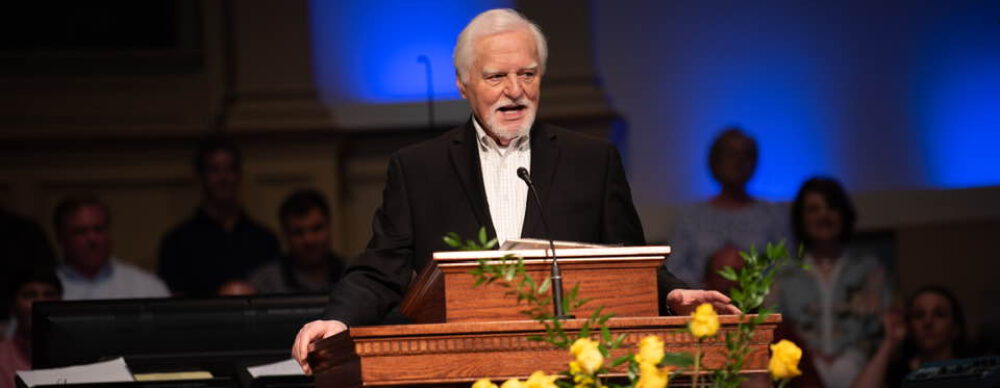
A preacher stands to his feet and walks to the pulpit. It’s the biggest moment of the week for him. This could be a life-altering experience for a lot of people, if he does it well and does not get in God’s way.

Everything–his study and praying and working throughout the week–now comes down to what he is about to do. Over the next 30 minutes, more or less, he will be prescribing remedies for what he has diagnosed in the church and community the last six days.

Pray he doesn’t drop the ball.

There are so many ways he can mess up. He can lie (by delivering someone else’s sermon and calling it his), he can almost-lie (by exaggerating and playing loose with the truth), he can offend needlessly (by getting more personal than was necessary), and he can bore the congregation to tears (by boring the congregation to tears!).

All of these are wrong and terrible, but the greatest of these may be the last: to bore the people who look toward the pulpit expecting a word from God.

Search the Bible. Do you find one boring sermon? Wherever Jesus preached, members of His audience wanted to stone him or worship him. When Paul preached, everyone chose up sides; no one was neutral, although some said, “We’d like to hear more on this subject.”

How exactly would one go about taking the greatest message in the history of this small planet and making it boring?

It’s hard to do, but some manage to pull it off.

Continue reading

A Mirror for the Preacher

Once in a while we will come across something from the morning news that has nothing in the world to do with preachers or Christians or the church, but which is as good a mirror as one could ever find for us to find our own reflection.

So this morning.

Mackie Shilstone is described in the (New Orleans) Times-Picayune as a “noted sports trainer (who) has been working with tennis star Serena Williams the past 18 months.”

Anyone who has anything to do with professional sports knows his name. He’s a New Orleanian, is often on TV and radio, and is evidently the answer to the prayers of a lot of athletes regarding their conditioning.

Over the last week or so, while the U.S.Open tennis championship has been being played out in New York City, Shilstone has been sending a “postcard” to our newspaper. At least, that’s what the paper calls it. Today’s was the first column of his I’ve seen.

It’s evidently the last one, too, since Serena Williams lost in the semifinals against Kim Clijsters in a profanity-laced tirade that got her fined and provoked an investigation into the possibility of additional penalties.

Okay, enough background. I want you to see a portion of Mackie Shilstone’s column in which he is supposed to be talking about the tennis star, the championship, and the competition. Today would have been a great time for him to give us his take on what Serena did. But nope. She’s paying him the big bucks.

Here’s something of what he said….

“Over my last 27 years of working with more than 3,000 pro athletes, and in every pro sports venue from being in the dugout of the San Francisco Giants in the World Series, the sideline of the Pittsburgh Steelers in Super Bowl IX, to working the corner of championship boxing matches, I must say that being part of Team Serena will go down as a cherished memory.”

One wonders how much Shilstone paid the Times-Picayune for that self-promoting ad?

Mostly I wonder, can we preachers read that and see ourselves in its reflection?

Continue reading

The Game’s Not Over Til It’s Over

Thinking of my years in the ministry as a football field, let’s suppose I’m in the red zone now. The final twenty yards before arriving in the end zone.

A lot of great friends have blocked for me, some have shoved me forward, and I’ve been thrown for losses a few times. Couple of times I tripped over my own feet. Sometimes, a friend gave me a hand up and each time I stood back up and groggily re-entered the game.

Now, when you’re in the red zone is no time to be looking back and counting your accomplishments. You still have a job to do. So, you’ll get none of that here.

After all–ask any football player–my assignment is not to take out a notebook after each play and count up the yards I’ve gained and jot them down. Someone above is watching and recording it, is counting and taking notes.

When the game ends there will be plenty of time for looking back, for interviews, for regrets and back-slapping, for celebrating in the locker room.

Continue reading

Drawing the Line in Advance

The line defining what is moral, ethical, and biblical–and just as important, what isn’t–is almost impossible to discern close up. Only from a distance can that border be seen clearly.

That’s why the time to make those moral, ethical, and biblical choices is when you’re not involved in a crisis, not when the devil is banging your door down, and before you are beset by excruciating temptation.

If you haven’t settled these matters in advance, once the temptation arrives, you are sunk before you start.

The news this week told of a young pastor who was shot to death by the cops in a drug crackdown. From all reports, he was not buying or selling the stuff. So how did he get involved and how in the world did it lead to his death?

Everyone wants to know; every pastor needs to know and to learn from this guy’s mistakes.

Cops say they were monitoring the behavior of a few suspicious characters who were indeed dealing dope. They spotted a young man with a woman in his car nearby. Recognizing the woman as a druggie, they approached the car with guns drawn. Now, bear in mind, these are undercover cops and not wearing police uniforms. So, in a panic, the car speeds away and almost hits one of the narcs. The law enforcers interpret that as assault with a deadly weapon, we’re told constantly by police departments. It’s like handing them a license to kill. So, they did. They shot the young man who turned out to be a pastor. He died in the hospital later.

Preliminary reports, as I recall–I couldn’t find the article in my newspaper or on the internet this morning, so I’m going by memory here–indicate that no drugs were found with the man of God or in his system. The woman in his car tested positive.

The pastor’s sister was quick to defend him. “He would never ever touch drugs or alcohol. He had to have been there to try to save that woman’s soul. I’ll believe that to my dying day.”

Personally, with no information otherwise, I have no trouble accepting that. What I do have trouble with, however, is this: what in the sam hill was he doing there with a woman in his car in the first place?

Continue reading

Before the Sermon Preparation Begins

A friend who teaches seminary students the art and craft of sermon-building and delivery sent out an SOS the other day to a lot of his pastor friends. “What is the single most important piece of advice you would give to beginning preachers?”

What I said was important, but certainly not “the most important piece of advice.” What I said was that once he gets the sermon, he should go for a walk or a drive and preach it to himself. And not one time, but several times over several days.

The advantage of this is that by preaching it aloud, he is able to see where the message is weak, where it dies, where it needs strengthening, and where he has to close an exit because he was about to chase a rabbit down that dead-end lane.

The reason I chose that piece of advice, it should be clear, is that I wish someone had told me that when I was beginning to preach.

Instead, what I would do is labor over a scripture, hammer out an outline, work some subpoints into it, and then hope for the best. However “the best” never came along. It was always mediocre.

In the weeks since my friend asked and I gave that piece of advice, I’ve thought of something far more urgent in preparing a sermon. In fact, what I’m going to suggest comes before the sermon even begins to be prepared.

Continue reading

The Pastor’s Secrets About Those Stories

Under the influence of the tabloids at the super market checkout, I toyed with the notion of calling this “What Pastors Don’t Tell You About Those Stories They Tell.”

It’s all of that. In fact, what I’m going to say about stories we pastors tell from the pulpit is not universally accepted as the right thing to do. Some might accuse us of dishonesty or worse. I beg to differ.

Read it, then give us your assessment at the end.

1) Some stories the pastor tells as happening to someone else actually occurred to him.

Case in point. Last Saturday morning, while leading a deacon retreat for a church I once pastored, one of the men volunteered a testimony that gave me far too much credit for his coming back to Christ and getting active in the church. He’s in insurance, and was the agent for the fellow who had hit me and injured me slightly. At one point, he said–I have no memory of this–I asked if he thought the insurance company would be willing to replace my broken glasses. Something about that, evidently, impressed him, that I was not greedily grabbing for all I could squeeze out of the insurance company, and God used it to get his attention.

As I say, I have no memory of any of it; I barely remember the accident.

When I arrived back home, my wife said, “You can’t tell that story, though.” I agreed. In a sermon, it would appear self-serving or self-promoting, as in “look how wonderful I am.” So I won’t tell it.

Oops. I just told it, didn’t I? But it was to make the point: if I ever put it into a sermon, the story would work better camouflaged. I would tell it as though it happened to “a good friend of mine.” It did, of course; I’m a good friend of me.

That little technique–relating a personal story in the third person–allows a minister to make excellent use of some of his best illustrations without appearing to be boasting.

2) Some stories are composites.

Continue reading

Pastor, Leave the False Humility Behind

We’ve all seen it and some of us have done it.

The pastor strides to the pulpit, opens the Bible, reads his text, announces his subject, then begins with an apology. “I have no right to speak to you on this subject.” “Many of you know more about this subject than I do.” “I’m not sure why the Lord laid this on my heart, but I’m going to give it a try.”

That sort of thing.

It feels to the well-meaning pastor like transparency, like he’s leveling with his people, admitting what they already know–that he’s human and fallible. A fellow struggler. One of them.

It feels to most of the congregation like, “Well, if you don’t know, we sure don’t. Get it over with and let’s go home.”

I rise this evening, pastors, to say to you that this kind of false humility has no place in the Kingdom of God. It most certainly has no place in the pulpit where God expects His servant to be bold and His people expect their pastor to be faithful.

What it does is cut the ground out from under everything the minister is about to share. It diminishes the authority with which God fully intends him to proclaim His Word. He ties his own hands and weakens his effectiveness before he even begins.

Continue reading

Things The Pastor Cannot Do

Ed was emphasizing to his church leadership why having a pastor’s residence next door to the church is not necessarily the best thing. They had always enjoyed the luxury of having the minister on the premises, they told him and would hate to relinquish that blessing. That’s why, when the hurricane destroyed the pastorium and the congregation had to make a decision about rebuilding, Pastor Ed thought this would be a good time to move the pastor’s residence.

“Let me ask you something,” Ed said to the five men and women seated around the table. “How many of you have ever taken a vacation and stayed at home?” Every hand went up.

“Well,” he said, “that’s something a pastor can never do. If he’s at home, and everyone in town can see he’s at home, he’s always on call.”

The good folk seated at the table admitted they had never thought of that before.

“And it’s not just the church,” Ed emphasized. “The community comes knocking, too. And I love that — don’t get me wrong. It’s just that sometimes it gets wearisome.”

As his director of missions, I complimented Pastor Ed on explaining that to them. When lay leaders understand the uniqueness of the pastor’s burdens, often they can be counted on to do the right thing and help to ease them.

As a result of hearing Pastor Ed’s account of this meeting, I began to reflect on other things a pastor cannot do as a result of his unique position in the church and community, things “normal” people do without a thought.

Continue reading

Why Pastors Don’t Laugh at Politicians

Saturday, when Barack Obama introduced Joe Biden at a rally in Springfield, they each made slips-of-the-tongue that had to have been embarrassing.

In presenting Biden, Senator Obama said, “Let me present to you, the next president of the United States—er, the next Vice-President of the United States, Joe Biden.”

Then, when Biden was concluding his remarks, he really blew it. “Let me pay tribute to the next President of the United States–Barack America.”

That’s what he said. Ew. How embarrassing was that.

Reminds me of the time Senator Ted Kennedy was trying to get Obama’s name out–back when it was unfamiliar to all of us–and he called him Osama Bin Laden or something. Hard to live down, I betcha.

Preachers understand. We’ve been there and done that.

I once called the groom by the best man’s name in the middle of a wedding.

I’ve stood at the front door at the end of the worship service, greeting people and calling them by name, and gotten more than a few names wrong. I once called a young woman up to the podium to give a testimony on a mission trip she had made and called her the wrong name.

My pastor friend Larry went to the wrong Mrs. Sullivan’s house to inform her that her husband had been killed that day. She refused to believe him, thankfully, because it turned out she was right. The secretary who sent the pastor to that house was in hot water, however.

Two or three people have forwarded to me the “youtube” video of Barack Obama addressing a crowd without a teleprompter and losing his fabled eloquence. In the clip, he stumbles verbally, has trouble expressing himself, can’t find the word he’s looking for, and begins again several times before finally giving up on the point he was trying to make.

I didn’t laugh. As Molly used to tell Fibber in the old radio show, “Tain’t funny, McGee.”

Continue reading

Advice for the Young Pastor

Josh is 24 years old, midway through his masters degree at the seminary, and this is his first pastorate. For 90 minutes tonight, he met with an ordination council made up of eight ministers. We heard his testimony and asked questions on his beliefs and probed his understanding of the work God has thrust him into.

I was impressed by his maturity and the depth of understanding of concepts it took me decades to grasp.

As the group discussed Josh’s work in the small church he is leading and offered advice for future ministry, I searched my memory for some story to leave with him, something he will remember, an insight to latch onto during some future crisis.

Then I remembered.

Joe Cothen is retired now after a long ministry of pastoring churches, teaching seminary students, and lastly, serving as academic dean at our local seminary. His distinguished brother Grady served as president of a Baptist college, of Lifeway Christian Resources, and of New Orleans Baptist Theological Seminary. A third brother was also a Baptist minister, as was their father before them.

Dr. Cothen remembers the day his father sat his three young preacher boys down in the back yard and gave them advice on the Lord’s work they would remember the rest of their lives.

“Boys,” he said, “the Lord has put a delicate balance in the church. He has put just enough headstrong, ornery church members to keep you the pastor humble. And He has put just enough sweet godly saints to keep you from quitting.”

Joe would tell that, let it soak in, then add, “Every church I ever pastored, I found both groups.”

I looked across the room at Josh and said, “Now, if a pastor focuses on the negative group–the critics, the naysayers–he will become discouraged and want to quit.”

“And if he focuses only on the positive, supportive group–the ones who adore him and think he can do no wrong–he will become too enamored with himself and become puffed up.”

“Either way, he will be unusable to the Lord.”

“The key is to keep your focus on the Lord Jesus Christ and Him alone.”

Continue reading