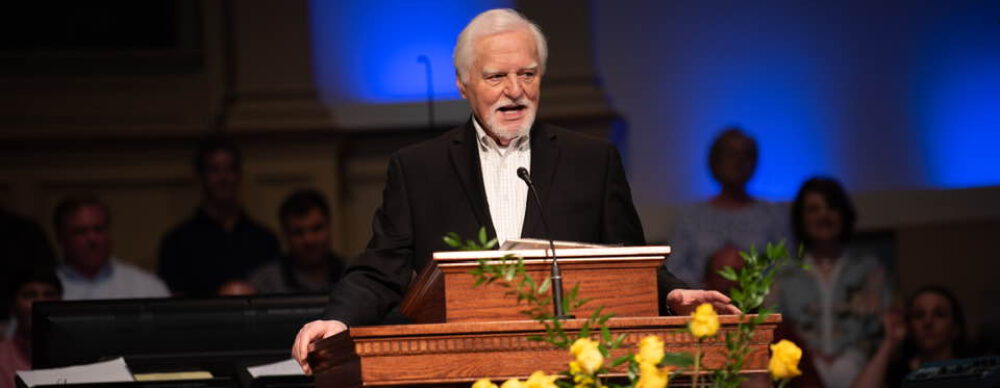
My worst Christmas sermon

I was 21, a college senior, engaged, and had been called into the ministry.  But so far, no opportunities to preach had opened up.  After all, I was attending a Methodist college and planning to be a Baptist pastor. Not exactly standard preparation.

Then, Rock Creek Baptist Church outside Double Springs, Alabama, called. Well, actually, Pastor Everett Wilson called.  My brother Ron was his Sunday School superintendent and no doubt had put a bug in his ear.

After Margaret and I spent the night at my folks’ farmhouse, on Sunday morning we drove to Rock Creek, arriving in time for Sunday School. (Hey, no one had told me the preacher did not have to attend Sunday School!)

We sat in with the young people, which was our custom at West End Church in Birmingham and it seemed the thing to do. What I did not count on, however, was my presence intimidating the teacher. So, she took the easy way out.

She asked me to teach.

Continue reading

It’s Sunday, you’re the preacher, and you feel out of sync

Ever have one of those days?

Ever have one of those Sundays and you’re the preacher?

I sat in church last Sunday wondering if my pastor was struggling in his sermon.  He’d chosen a difficult subject, one I’d had trouble with during my years in the pulpit, although Pastor Mike on a sub-par day is like Peyton Manning or Drew Brees when they’re less than a hundred percent:  still very good.

Every pastor has those times, Sundays when they don’t feel good physically, maybe they had trouble sleeping, perhaps something in the church is troubling them, they’re worried about a relative, or it’s nothing they can identify.  We’ve all been there.

What is a pastor to do then?

Answer: You preach.

Continue reading

God did not call me to preach

“Fulfill your ministry” (2 Timothy 4:5).

“I want to say a word to my pastor friends who say their passion is preaching.  May I suggest a better way to say this is that preaching is the expression of your passion for Jesus.  Keep the focus on Him.”

I posted that on Facebook earlier today and was surprised at the reaction, all of it positive. Several pastors indicated that coming to this position represented a maturing in their ministry. One said the Lord showed him that he was making preaching his idol. “He delivered me from that idolatry,” he said.

As a senior in college, majoring in history and political science and hoping to teach history on a college level one day, God called me into the ministry.

He did not call me to preach. Not specifically.

Continue reading

The cure for the common sermon

“Now when they heard the preaching of Peter and John, they were marveling and began to recognize them as having been with Jesus.”  (A free paraphrase of Acts 4:13)

Hey, pastor, next Sunday let’s hit one out of the park.

Let’s preach a sermon that will thrill your own soul, knock the dozing member out of his lethargy and onto his feet, and bless the hearts of your sweetest, finest people.  Let’s have a sermon that will stun your critics, surprise your mama, gladden the heart of God, and grab the undivided attention of the unsaved.

Let’s put an end to the common sermon.

You know what a common sermon is, I’m sure.

It’s uninspired in its conception, boring in its plan, and dull in its delivery.  In preparing it, you have to force yourself to stay awake.  When you preach it, the congregation takes a holiday. When it’s over, you wonder if you shouldn’t find some other line of work.

When common sermons follow common sermons like rail cars behind the locomotive, the preacher is probably in a rut.  And we all remember what a rut is–a grave with the ends knocked out.

In a “common sermon,” the outline is often uninspired and may look something like this: 1) The Power, 2) The Point, and 3) the Product.  Or, pehaps 1) The Application, 2) the Attraction, and 3) the Adoration. The introduction, the message, the conclusion.

Bo-ring.  But then, you knew that.

Continue reading

Things no pastor should ever have to worry about

The title might be a little misleading. To not “worry” about something does not mean the pastor does not know about it.

A good staff will handle the minutiae of the ministry–the problems that arise that they are able to address without the involvement of the shepherd himself–in order to free up the pastor for his major assignment of church leadership.

The pastor who tries to micromanage his church is attempting the impossible and choosing to desert his post.

A wise pastor–who has the resources–can bring on staff capable and trustworthy assistants to free him up to do the three big, big things in his ministry:  Preach/teach the Word, give direction to the entire church program, and care for his flock.

Continue reading

Why the pastor is the last one who should deal with personal attacks

Someone–Sister Dee Structive or Brother Big Shott–is stirring up dissension in the church, accusing the pastor of this silliness or that foolishness.

On the surface, their criticism appears to be nonsense, and yet some people will believe anything negative. The congregation is disturbed by this business and outsiders are looking around for other churches to visit.

Somebody ought to do something and do it quickly.

We have said on this website that when someone in the church attacks the pastor and is stirring up strife in the church, a small group of Godly members should visit the troublemaker and do two things: a) ask “what’s going on?” and then b) listen to their complaint.  If they have a legitimate beef, or if it appears they may have one, the members of the task force return to the pastor and, with his involvement, begin the process of dealing with it.  However, if the individual does not have a sound reason for what they are doing, the visitors kindly but firmly ask them to “cease and desist.”

“Sister Structive, we are asking you to stop this now. It should end.”

To my surprise, several readers went found much to disagree with in this approach.

Continue reading

A creative pastor will find ways to teach his people

(This is a followup to the previous article: “The ability to teach.”)

That pastors should teach their people is a no-brainer. It’s explicit in the Scriptures and implicit in our  being called “shepherds.”

A wise pastor will be creative in finding ways to teach his congregation, recognizing that many who will listen to his sermons are not coming to any class or small group, no matter how he browbeats them or how enticing he makes it.  He will have to find other ways to teach them.

That’s what this is about, finding ways to teach the Lord’s people.

1) Pastors will teach in sermons, of course.  But they should work at doing it well.

Continue reading

Requirement for a pastor: The ability to teach!

“An overseer (episkopos) then must be above reproach, the husband of one wife, temperate, prudent, respectable, hospitable, able to teach….” (I Timothy 3:2)

Most preachers would rather preach than teach.

Even the names say that, don’t they?  We call pastors “preachers,” not “teachers.”  And yet….

In seminary, we used up an entire class period one day trying to figure out the difference in preaching and teaching.  By the end, we had given up.

Each of us has our own understanding of how they differ. Here’s mine.

Think of preaching as exhorting and proclaiming in order to change lives; think of teaching as imparting information and insights in order to inform the mind and change the heart.

Teaching can be an important but minor part of preaching, and exhorting may be one component of good teaching. But the major chord of preaching is proclaiming, and the major thrust of teaching is conveying insights and truths.

“Yes, but….”

Continue reading

Ignorance plus arrogance? Move back and give it some room!

“A little knowledge is a dangerous thing.” (Is that in the Bible? It ought to be. Smiley-face goes here.)

Here’s one that is: “I am also convinced that you yourselves are full of goodness, filled with all knowledge, and able also to admonish one another.” That’s Romans 15:14, and we sure wish we knew whether the Apostle Paul had tongue firmly planted in cheek when he said this or was dead serious.  It appears to us that the recipients of this Roman letter, as with so many of the others Paul wrote, were deficient in some areas of knowledge of spiritual things. We’re glad they were, of course, because in addressing these issues for them, Paul ended up instructing us.

One wonders what it must be like to be “filled with all knowledge.”

After all, “knowledge puffs up” (I Corinthians 8:1).  Modern translations say, “knowledge makes arrogant.”

Ignorance does too, oddly enough.  In fact….

Ignorance coupled with arrogance makes for a deadly combination.  When you see that monster coming down the road, get out of the way because it bloodies everything it touches.

Continue reading

The toughest thing preachers have to know

“This very night an angel of the God to whom I belong and whom I serve stood before me and said, ‘Do not be afraid, Paul; you must stand before Caesar; and behold, God has granted you all those who are sailing with you'” (Acts 27:23-24).

I had planned my Bible study message for the little interdenominational group that meets each Wednesday in a local restaurant.  I knew what “the Lord laid on my heart” and had gone over it earlier that morning during my walk.

And yet, that’s not what I shared.

Here’s what happened.

Continue reading