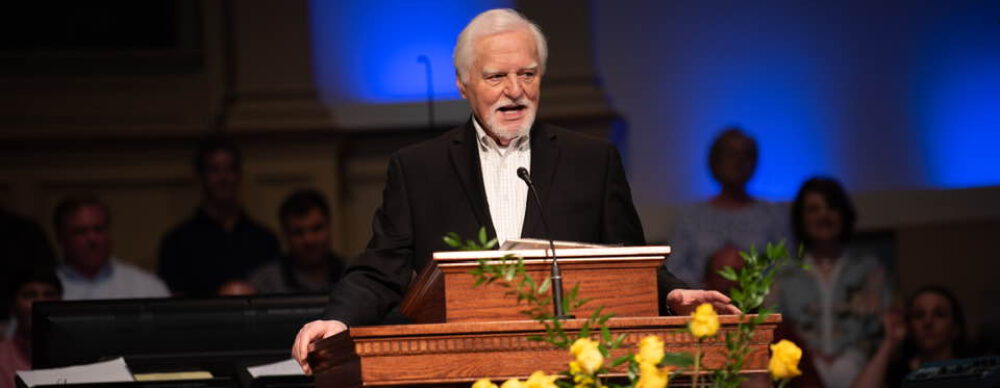
The Jasper Alabama Daily Mountain Eagle has published a fine article and some great pictures of this incredible lady
Leadership Lesson No. 56–“Moral Courage, True Leadership”
In his book on the Korean War, General Matthew Ridgway paid tribute to perhaps the 20th Century’s pre-eminent American military leader, General George C. Marshall. He called him the greatest our country had seen since Washington. He quotes Marshall as calling for “moral courage,” illustrated as “that time when an officer lays his commission on the line.”
Peggy Noonan, in her biography “Ronald Reagan,” wrote: “In a president, character is everything. A president doesn’t have to be brilliant; Harry Truman wasn’t brilliant, and he helped save Western Europe from Stalin. He doesn’t have to be clever; you can hire clever… But you can’t buy courage and decency; you can’t rent a strong moral sense. A president must bring these things with him… A vision is worth little if a president doesn’t have the character–the courage and heart–to see it through.”
Everyone knows what courage is–when a person risks his life or safety in some noble cause. John Wayne said, “Courage is being scared to death–and saddling up anyway.”
But what is moral courage?
My working definition is: “A firm spirit that does the right thing at great risk.” In this case, you risk not bodily harm or your life but perhaps your reputation, success in your chosen field, or the support of friends and family.
My friend Bob was teaching in a Christian college, mind you, when he was informed by the dean and then the president that he should not be giving his Christian testimony to his students. Someone of another faith might be offended or feel discriminated against. Bob responded that he felt it was important for students to know who their professor is and to learn his world-view if they are to make sense of his teaching. Besides, he insisted, I thought we were a Christian school. They made sure Bob did not get tenure and eventually, God led him on to another institution.
Moral courage is standing up for the hard right against the easy wrong. Moral courage means refusing to stand idly by while others engage in wrong or hurtful acts.
Moral courage speaks truth to power.
Its opposite is cowardice in the name of getting along, silence in the face of cruelty and persecution, acquiescence in the cause of unity or personal advancement.
Why Some Marriages Last Against All Expectations
My 92-year-old mother asks if when couples come to see me with marriage plans, do I try to talk them out of it. She is teasing, but that’s not entirely a joke. If the preacher can, he perhaps ought to.
The problem is by the time they get to the pastor’s office, their minds are made up and no one can talk them into changing their plans. Unfortunately, in many cases, neither can you talk them into changing their mindsets.
But, we keep trying.
We deliver sermonettes to them in the office, counsel them on what they’ve learned about themselves and each other, and hand them books to read, all in an attempt to get some new ideas into their minds and some growth into their relationship.
We give them Gary Chapman’s book, “Five Love Languages,” and say, “Don’t come back until you’ve read it. We’ll be talking about its insights at the next session.” Once, when the groom-to-be said he had not had the time to read it, I lowered the boom on him. “Remember I told you I’m not charging you anything for my services? Well, if I’m going to sacrifice a little, you ought to, also!” I looked at him and said sternly, “Read the book!”
My mom says, “Do you ever think about canceling your part in a wedding?” I said, “Every pastor thinks of it, but the reason we don’t is that we don’t know which marriages will make it and which won’t. Some I thought would last forever did not survive five years. And some I wouldn’t have given a plug nickel for have lasted forty years now.”
I didn’t say it, but I thought her own wedding to Dad is a case in point. These days, many pastors would not have married them. She was 17, he was 21, they hardly had a dime to their names, they had little actual preparation for marriage, and were more than likely being unequally yoked. If Dad was a Christian then, he wasn’t much of one. Mom, on the other hand, was raised in church. It was years before they came together on spiritual matters. And yet the marriage lasted. When Dad died, in November of 2007, they were looking toward their 74th anniversary and told each other–and anyone who would listen–how much they loved each other.
What makes a marriage work and actually last when from all appearances it doesn’t stand a chance? Here are some observations I’ve made over nearly half a century of joining couples in wedlock.
1. Someone is determined to make this marriage work.
Pillars of the Church
Sometime in the mid-1990s when I was teaching a class for pastors at New Orleans Baptist Theological Seminary, I made up a list of suggestions for the conduct of young pastors and distributed them to the students. One item was: “Wear a suit to the office during the week, with a white shirt and a nice tie. It conveys a sense of professionalism.”
If any pastor from that class is now reading this, I’d like to say: “You may ignore that. It’s no longer necessary.” As if you need me to tell you!
The dress code for ministers is one of the most drastic changes my generation has seen. When I began in the Lord’s work in the early 1960s, the minister dressed up for everything.
I recall one afternoon in the mid-1970s, I was on my way home from playing tennis and ran by a downtown restaurant for something. I hesitated, wondering if I should do this, since I was dressed in the traditional tennis uniform: white polo shirt, white short pants, white shoes, white socks. A pastor should not be seen in public dressed this way, I thought. But I decided it was safe, and walked inside.
Immediately, I ran into some of the matrons from our church, having their afternoon tea. I felt naked before them, and as I recall, they looked as shocked as though I were.
How times change.
These days, the only time many pastors take that traditional black suit out of the closet is for funerals or the occasional wedding. All other times, casual is the order of the day.
I understand that’s true for society across the board. Men are wearing fewer ties and suits, period.
Next time you watch an old film clip from the Depression years, notice the men. No matter how poor they were, whether they were striking a factory or standing in a bread line, they’re all wearing hats. Every single one of them. No more.
Fifteen years ago, some pastor somewhere decided one Sunday to wear jeans and sneakers, and because he was bold and confident and effective in his ministry, the church grew and the word got out and pastors all across the land decided the way to grow a great church was to wear blue jeans and old sneakers.
Reading on Leadership
Think of this as a confession.
Each year, when magazines like “Preaching” and “Christianity Today” come out with their books of the year–the ones their editors decide all successful and thoughtful ministers should be familiar with–invariably, I will have read only one or two of them. “That one looks interesting,” I will think. “I’ll have to get it.”
When friends like Don Davidson ask, “So, what are you reading at the moment,” I always feel that I’m not reading what a man in my position–veteran pastor, denominational servant, reasonably intelligent Christian–should be spending time on.
Sometimes it’s a novel on World War II, such as those by James R. Benn, James Dunning, or Philip Kerr. At times, it’s a biography, such as “A Rose for Mrs. Miniver” on Greer Garson or “Adlai Stevenson” by Porter McKeever (no relation). I’ll read a book on the making of “Casablanca,” and then hole up with any Lauran Paine western I can get my hands on. (He’s the author of what may be the best western of our generation, “Open Range.”)
My grandchildren look at the stack of books on the floor by the side of my bed and ask how I can read all of those at the same time. I feel I’m being a poor role model for these young readers who, thus far, know only to open a book and read it all the way through without laying it aside to begin one or two or ten more.
But this week, the book was “The Coldest Winter: America and the Korean War,” by David Halberstam. Plowing through any kind of book on that war is not something I had planned. I was 10 years old when that “conflict” began, 13 when it ended, and vividly recall the frustration and depression with which Americans dealt with that event. For good reason, it has been called “the forgotten war,” although anyone who was in it will never forget it.
The book was published last year and contains nearly 700 pages. I bought it on-line for $8 plus shipping and handling, and read it in three days this week while dealing with a strained muscle in my lower back which kept me home much of the time.
What drew me to read the book, though, was a half-hour I spent in the waiting room at Ochsner’s Hospital recently. I had gone by to visit two friends who were dying of cancer–one has since gone to Heaven and I did her funeral–and afterwards, got a cup of coffee from the lobby cafe and settled down in a comfortable chair to relax. On the table to my left, the Smithsonian magazine, always one of our favorites, carried an excerpt from Halberstam’s book which dealt with General Matthew Ridgway. I read a few paragraphs and was hooked.
I didn’t swipe the magazine, although I thought seriously about it.
The Ride of Your Life
In his massive work on the Korean War, “The Coldest Winter,” David Halberstam tells of Bruce Ritter, a radioman whose regiment was decimated by the Chinese Communists. When the little group he hooked up with arrived at the banks of the Peang Yong Chon river, an officer suggested they leave behind a wounded man named Smith they had been assisting. Ritter and the other soldiers looked at each other and rejected that alternative. They lifted Smith into their arms and carried him across to the other side, then helped him along as they searched for safety and shelter.
Once, when they ran into a band of enemy soldiers and engaged in a firefight, one of the men assisting the wounded soldier, George White, was hit in the foot. Now, with two wounded men, they moved even more slowly. Finally, they ran into a corpsman who got both Smith and White to a hospital.
Halberstam writes, “For a long time Ritter heard regularly from White, who would always sign off his letters saying, ‘Thanks for the ride.'”
The Lord Jesus looked at the mass of humanity spread before Him and His heart broke. On the outside, the people looked whole and respectable enough, but underneath the exterior, Jesus thought they resembled sheep that have been ravaged by a pack of wolves, sheep direly in need of a shepherd. He called out to them, “Come unto me, all you who are weary and heavy-laden, and I will give you rest.”
He continued, “Take my yoke upon you and learn from me, for I am gentle and humble in heart, and you will find rest for your souls. For my yoke is easy and my burden is light.” (Matthew 9:36 and 11:28-30).
The world would have abandoned all those needy souls by life’s raging river. The Lord gets under them and lifts them and brings them along with Him.
And that’s when the ride of their life has its beginning.
Blueberries from the Farm
Friday, July 4, I drove to Nauvoo, Alabama to spend 48 hours with my Mom. The 14th is her 92nd birthday. Thank you to those of our readers who have sent (or are sending) her birthday cards. She got three in Saturday’s mail while I was there. They go into the basket on the dining room table and will a) be read again and again and b) never be thrown away!
The farm hasn’t looked this green in a generation. Patricia and her husband James always have a nice garden and this year they’ve outdone themselves. Carolyn and her husband Van–they’re buying Mom’s place and beginning to farm it–have turned the land around the farmhouse into a lovely garden also. Sunflowers in the field just beyond the pear orchard. Scarecrows hanging from trees to scare off the deer. “The deer love okra,” said Van. Who knew? Maybe they’re making gumbo.
I timed my visit just right for the blueberries. Patricia has some 20 or 30 bushes in two fields, and they’re loaded. I brought back what probably amounted to four gallons. James works in Birmingham and co-workers buy all he can bring to town. He sells them for $8/gallon which we’ve told him is much too low. Anyone who has spent 30 minutes picking a gallon will tell you that 50 dollars ought to be the minimum.
I’m by blueberries the way I have always been by peanuts. Whether they’re good for you or not, we’ll let the experts decide. But I eat them almost every day of my life just because I love them.
When you leave our house and head down Poplar Springs Road toward Nauvoo, where you intersect with Highway 5 (which runs from Jasper to Haleyville), just in front of you in that big barren space is where our family lived in the early 1940s. My earliest memories of life on this planet date back to that house owned by the coal company. I recall when the state paved that highway in 1946 and electricity came through about the same time.
Patricia and I would sometimes go into the woods behind the house picking blueberries. They grew wild, the plants no higher than your knee, only a few berries per bush. To me, they were like blue jewels. Patricia showed me how to crush them in a pint jar, and add water and sugar. The result was the sweetest, most wonderful taste I’d ever experienced. It was so special that I decided to save some for later. I stuck that jar half-filled with the nectar of the gods in the back of the pantry and checked on it from time to time. For a six-year-old, this was better than money in the bank. Then one day, I pulled out the jar and found myself staring at an inch of mold on top. I was broken-hearted to learn we had to throw the whole thing away.
Thus I began to learn about this fallen world we live in.
Purely Children vs. Real-World Adults
“Kit Kittredge, An American Girl.” The movie, not the doll. It opened this week, and the reviews are enough to make one gag. “Saccharine.” “Hokiness.” “Relentless sweetness.” “Flimsy plot.”
What I wonder is what in the sam hill are newspapers doing sending 40 year old men to cover movies for 10-year-old girls? In the movie, Kit is trying to get the Cincinnati newspaper to run her writings. So, why–this is such a no-brainer that even editors should have thought of it–why not get a 10 year old girl to review this movie?
Who wants to know what the local drama expert thinks of a children’s movie? I for one don’t.
Friday afternoon, I took our 11-year-old granddaughters, Abby and Erin, to see this movie. Until a few days ago, I had no inkling that a series of dolls exist in the name of this little girl or that to pre-teens, Kit Kittredge is as big as Nancy Drew (or maybe Barbie is a better comparison) was to earlier generations.
I was unable to take JoAnne, 10, who lives in New Hampshire or Darilyn, 10, but 11 later this month, who lives in North Carolina, with us. But wouldn’t that have been a hoot, taking all four granddaughters of that age! Anyway, I did the best I could and took the two who are nearby. It was a fun two hours.
Okay, being your typical grandpa, I would have enjoyed sitting on a park bench for two hours with those two (and moreso, those four). So the fact that I had a good time tells you nothing about the movie.
Okay, the movie. I did what you do before choosing a movie, and checked it out on some of the internet rating places. Today, after seeing “Kit Kittredge,” I’d like to go back to some of the reviewers who called it “simplistic” or “formulaic” and say to them, “Hey–it’s a child’s movie! It’s not for grownups and certainly not for movie critics.”
The truth is that “Kit Kittredge” is more purely a child’s movie than most that claim that for themselves. So many cinematic offerings in that category–whether from Disney or Pixar or other well-respected houses–are fakes. The parents are sitting there enjoying the movie along with their young-uns, and getting all the little innuendos and inside jokes that were inserted for big people and no one else. Meanwhile, the kids are wondering what all the laughter is about.
In this movie, if a kid doesn’t get the joke, it was thrown out. Movie critics don’t know what to do with that.
Christian Fellowship X: “Case Study in Shy People”
Following the last article on fellowship in our churches, the one about shy people, my son Marty connected me with a website in which a college professor was sounding forth on the difficulty he and his wife–both shy people–are having locating a church in their new city on the West Coast. They’re looking for one of their denomination, one of the old-line liberal churches, and are quite specific as to what they like and cannot stand.
Below are the eight points he makes. Rather than posting my comments on his website, the way bloggers invite readers to do–in fact, we treasure those comments and invite them here–I’ll leave my conclusions here. I’m confident the professor would not appreciate much I have to say, my being Southern Baptist and no doubt a fundamentalist Bible-thumper to his way of thinking. Besides, he’d probably tell me if I’m going to write this much about what he said, I should get my own website. (I told a writer that recently. He/she came back and said, “Sorry. I don’t keep up with all the places I blog.”)
Well, since I have my own website, here we go…. Let’s call the professor Henry and his wife Hankette.
1. Please, please keep your hands off my wife and off me.
Henry doesn’t like hugging, and worse, he abhors people he has just met who stand there stroking his arm, shoulder, or back. Hankette is worse about this than he.
2. Do not call us out by name in front of the entire congregation.
Hank writes, “Our modus operandi when we’re trying out a new place is to take in the full service, then decide whether to fill out the visitors’ card.” He says, “Handshakes? Smiles? Absolutely. But if we tell you our names, don’t say to the whole congregation, ‘Be sure to welcome Henry and Hankette who are sitting on the back row!'”
3. We’ll come to the post-service potluck if we want to.
Sense and Nonsense About Prayer
It would appear from the stories our Lord gave in Scripture that a good way to teach prayer is by negative examples, that is, “how not to do it.” Jesus told of prideful Pharisees bragging on themselves in prayer, mean-spirited tyrants asking for forgiveness but unwilling to forgive others, and a powerless widow hounding a merciless judge until he caved in and gave her what she wanted.
All illustrate wrongs way to pray.
I’ve previously mentioned in this website Lehman Strauss’ book “Sense and Nonsense About Prayer.” Well, after owning the book for three decades–it was first published in 1974–and frequently citing its lessons, I decided the time had arrived to go back and re-read it. I did that Monday.
The twelve chapters that deal with our subject–Strauss has a section at the end on the Lord’s prayer and the prayer life of Jesus–are worthy of your consideration and study. At the end of these chapters, he invites the reader to agree or disagree with him at any point, but in love. I found myself disagreeing with facets of one or two principles in this list, but overall, the list is excellent and I commend it to you.
At the end, we’ll include three of his non-sensical stories on how not to pray.
1) It does not make sense to pray if there is unconfessed sin in the heart. Psalm 66:18
However, it makes sense to confess our sins if we expect God to hear us.