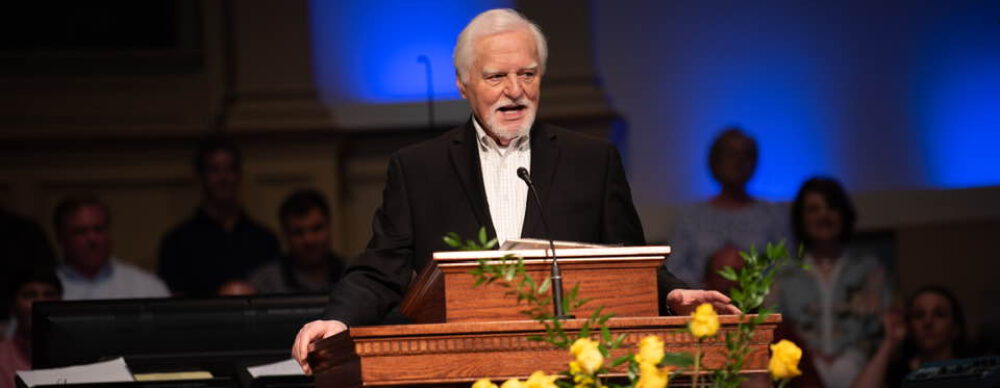
“Here’s what the publisher of this book does.” The speaker was John Van Diest. The setting was the meeting hall of the Louisiana Baptist Convention in Alexandria, where a roomful of authors and would-be-writers had gathered to sop up the creative drippings from the mind of this “Publisher of the Year,” so named by his peers in that industry. He was speaking of the first book from the pen of one of our most popular Christian pastor-writers.
“He has put out many books since this first one, each a best-seller,” Van Diest said. “But the publisher who has the rights to the first book keeps on reprinting it. Each time he does, he redesigns the cover, re-formats the book, and raises the price.”
“Aha,” I thought. “So that’s why I have multiple copies of the same book by this guy.”
One smart publisher. One dumb reader. One successful author.
Van Diest was speaking of current trends in Christian publishing. “The Christian bookstore is dying. They’re being put out of business by the internet and megastores such as Barnes and Noble.” He called our attention to the cover story in Christianity Today (April 2008) titled, “How to Save the Christian Bookstore.” The subtitle reads “(Hint: Stop making it so religious.)”
Let’s see now. The Christian bookstore is dying. And here we are, meeting for two days trying to figure out how to get our Christian books published. What’s wrong with this picture?
“My books sell for fifteen dollars.” The conference speakers had displayed a sampling of their books, some self-published and thus necessarily self-promoted. The plan, as I understand it, calls for the writer to engage a printer who might charge five dollars per book. The writer, then, makes ten bucks for each one he sells. If he sells them. “It’s up to you,” the author told a class. “You have to get out there and call on libraries and churches, speak to civic organizations and senior adult groups, and promote yourself.”
Readers of this blog have picked up my stories of Rudy and Rose French over the past two years. They came from Canada not long after Katrina and invested the next two years of their lives with us. When they relocated to Paris, Tennessee, some months ago, I encouraged Rudy to “write a book.” He did. It’s being published even as we speak.
We had a little hand in Rudy’s book. I gave him the names of a couple of publishers, he asked me to draw the cover, and I wrote the foreword. Lynn Gehrmann, our office’s administrative assistant, took the photo of Rudy and Rose that appears on the back. And we are determined to help them get the book in circulation. Whe it comes out, I’ll tell our readers how to order one.
Promoting and selling your book is the hardest part, everyone agrees. That’s why so many self-published writers end up with boxes of their creation cluttering the garage. It’s why some such printers are referred to as “vanity” publishers: they’re catering to the ego of someone who would never see his book in print otherwise.
“But there’s another aspect to this,” our speaker noted. Go the traditional route and have a well-known Christian publisher take your book, and two years will elapse before it hits the bookstores. Even then, you might receive 10 percent from the sales. “If you publish it and sell it yourself, all the profits are yours. You could make as much as 10 dollars per copy.” Good thing, because you will have a substantial bill from the printer to come due shortly.
How much is a thing worth? A book to read, a gallon of gas, a bottle of water, a house to live in? These days, the answers are uncertain, ever-changing, eye-popping.